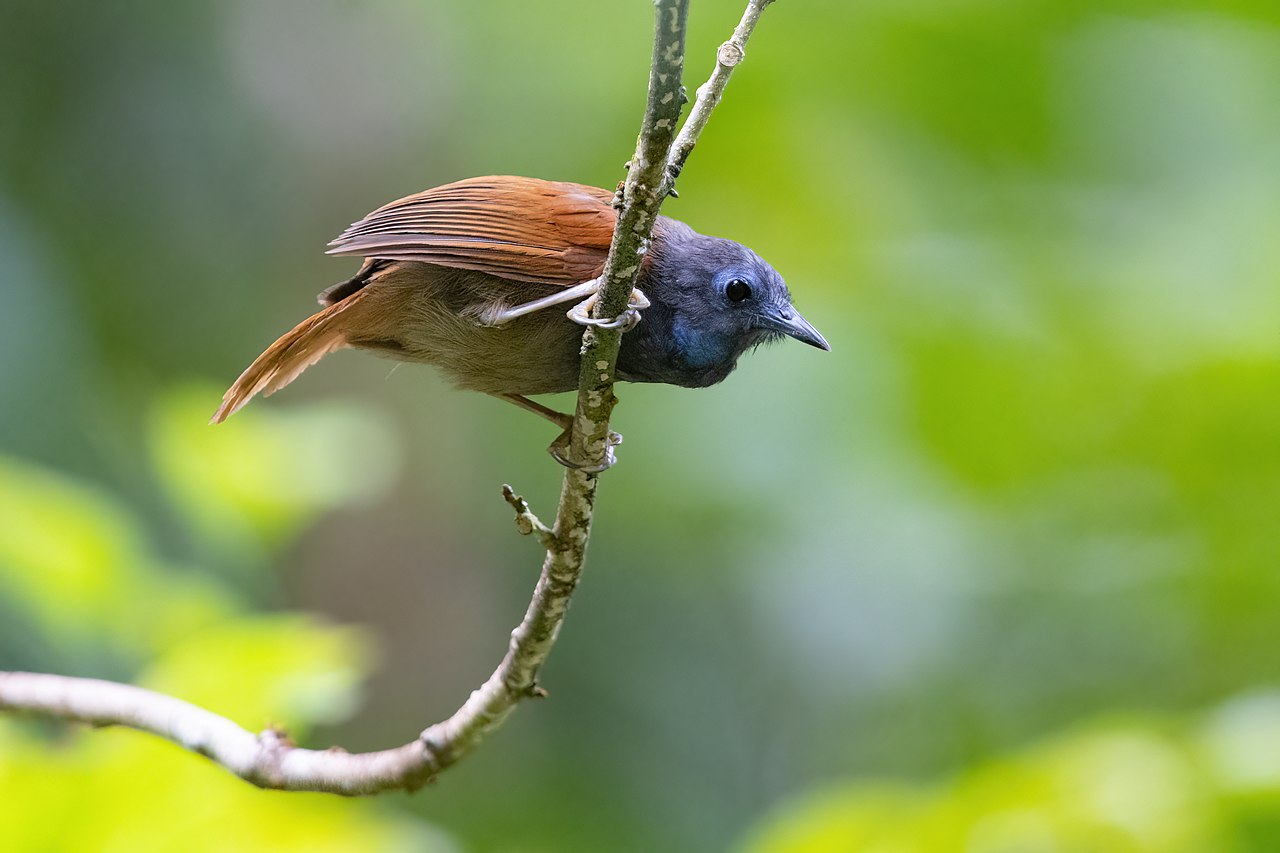
The chestnut-tipped toucanet is a near-passerine bird in the toucan family Ramphastidae. It is found in Bolivia, Colombia, Ecuador, and Peru.
Region
Andes Mountains
Typical Environment
Occurs on the humid east slope of the Andes from southern Colombia through Ecuador and Peru into northern Bolivia. It inhabits foothill and lower montane evergreen forests, cloud forest edges, and mature secondary growth. Birds typically keep to the mid- and upper canopy but may descend to forest edges and fruiting trees along rivers and clearings. It is a year-round resident within suitable habitat, moving locally to track fruit availability.
Altitude Range
400–2200 m
Climate Zone
Tropical
Ease of Keeping
Beginner friendly: 2/5
The chestnut-tipped toucanet is a vibrant Andean toucanet best recognized by the rufous-chestnut tips on its tail. It frequents fruiting trees and often travels in small, noisy parties in the mid- to upper canopy. Like other toucanets, it nests in tree cavities and plays an important role in seed dispersal across montane forests.


Temperament
social and active
Flight Pattern
short rapid wingbeats with undulating, darting flights between canopy gaps
Social Behavior
Usually seen in pairs or small family groups and occasionally joins mixed-species flocks. Nests in natural cavities or old woodpecker holes, with both parents participating in incubation and chick-rearing. Territorial calling and bill-clacking are common during the breeding season.
Migratory Pattern
Resident
Song Description
Vocalizations are a series of low, gruff croaks and frog-like notes delivered at steady intervals. Also gives rattling grrs and harsh kek calls when interacting at fruiting trees.
Plumage
Mostly bright green with a bluish wash to the throat and face; tail shows distinct rufous-chestnut tips and undertail. Bill is relatively long with a dark upper surface and pale or yellowish culmen line, and a narrow whitish line at the base. Underparts are green with slight yellowish tones; wings deep green.
Diet
Primarily frugivorous, taking a wide variety of fleshy fruits and berries, which it plucks and swallows whole before later regurgitating seeds. Supplements its diet with insects and other arthropods gleaned from foliage and branches. Occasionally consumes eggs or small vertebrates, especially during breeding.
Preferred Environment
Feeds in the mid- and upper canopy of humid foothill and montane forests, especially at fruiting trees. Common along forest edges, gaps, and riverine corridors where fruit resources are concentrated.