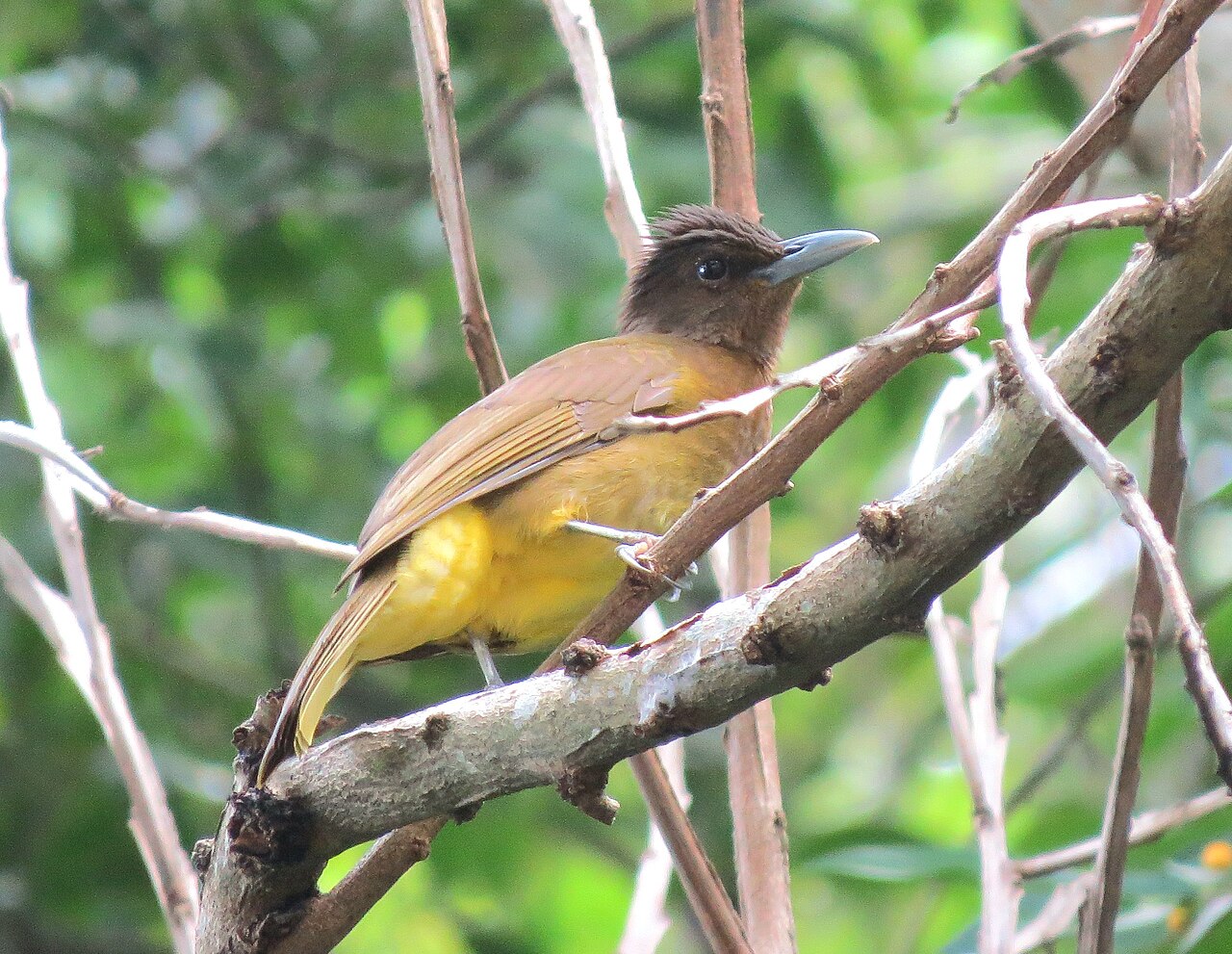
The Cambodian laughingthrush is a species of bird in the family Leiothrichidae. It used to be considered conspecific with the white-necked laughingthrush, G. strepitans. It is found in southwestern Cambodia. Its natural habitats are subtropical or tropical moist lowland forests and subtropical or tropical moist montane forests.
Region
Mainland Southeast Asia
Typical Environment
Occurs in evergreen and semi-evergreen forests of southwestern Cambodia, favoring dense thickets, bamboo patches, and forest edges. It uses both lowland and lower montane habitats where leaf litter and tangled understory provide cover. Secondary growth and degraded forest with thick shrub layers may also be used. It typically avoids open areas, remaining close to dense vegetation.
Altitude Range
Sea level to 1500 m
Climate Zone
Tropical
Ease of Keeping
Beginner friendly: 2/5
A skulking, loud member of the laughingthrush family, it moves in tight family groups through dense undergrowth. Formerly lumped with the white-necked laughingthrush, it is now treated as a distinct species restricted to southwestern Cambodia. Its noisy, laughing choruses carry far through forested hills, making it easier to detect than to see.

Temperament
social and wary in dense cover
Flight Pattern
short rapid wingbeats, usually low through understory
Social Behavior
Typically travels in small, noisy parties or family groups, often keeping to thick shrub layers. Pairs maintain contact calls while foraging and may engage in cooperative vigilance. Nests are shallow cups placed low in dense vegetation; clutches are small and both parents attend the young.
Migratory Pattern
Resident
Song Description
A rich series of chuckles, churring notes, and explosive scolds, often delivered antiphonally by group members. Alarm calls are harsher rasping notes, while contact calls are softer and repeated.
Plumage
Warm brown body with contrasting pale head and neck, and a dark facial mask; feathers appear smooth with minimal streaking. Underparts are slightly paler with rufous tones on flanks and vent.
Diet
Feeds on insects and other small invertebrates gleaned from leaf litter and low foliage, including beetles, ants, and larvae. Also takes berries, small fruits, and occasionally seeds, making it an opportunistic omnivore. Will probe bark crevices and turn leaves while foraging on or near the ground.
Preferred Environment
Forages in dense understory, bamboo tangles, and along forest edges and trails. Often uses shady gullies and streamside thickets where cover is abundant.