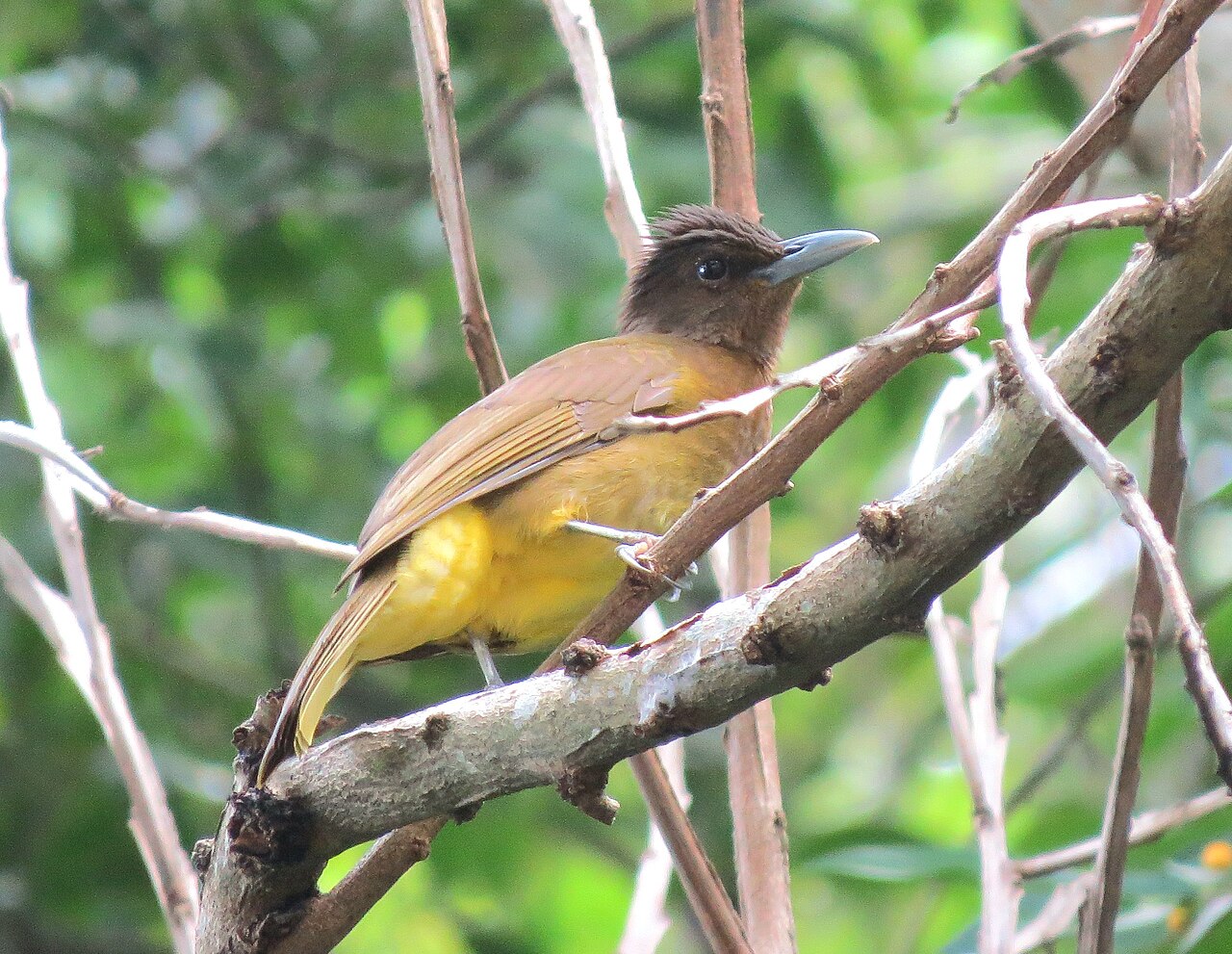
The Cameroon sunbird is a species of bird in the family Nectariniidae. It is found in the Western High Plateau and Bioko.
Region
Cameroon Highlands and Bioko (Gulf of Guinea)
Typical Environment
This species inhabits montane and submontane zones of western Cameroon and the island of Bioko (Equatorial Guinea). It favors forest edges, clearings, secondary forest, and shrublands, and readily visits flowering trees and ornamental gardens. It also uses riparian strips and ecotones where flowering resources are concentrated. On Bioko it ranges from foothills into higher elevations along forested slopes.
Altitude Range
900–2500 m
Climate Zone
Highland
Ease of Keeping
Beginner friendly: 1/5
The Cameroon sunbird is a highland nectar specialist that helps pollinate many montane shrubs and trees. It occurs primarily in the Cameroon Highlands and on Bioko, where it frequents forest edges, secondary growth, and gardens rich in flowers. Males often show subtle iridescence in good light, while females are plainer and more camouflaged. It may make short altitudinal movements following flowering peaks.

Temperament
active and territorial around flowers
Flight Pattern
short rapid wingbeats with brief hovering at blooms
Social Behavior
Usually seen singly or in pairs, defending rich flowering patches. Pairs are likely seasonal monogamists and build compact, pendant nests from plant fibers and spider webs. Nests are placed in shrubs or low trees, often near foraging routes.
Migratory Pattern
Resident
Song Description
High, thin tsi-tsi notes interspersed with rapid twitters. Calls accelerate during territorial chases around flowering trees.
Plumage
Compact sunbird with mostly olive to olive-brown upperparts and paler underparts; males can show a subtle metallic green sheen on the head and darker breast tones. The bill is long, slender, and decurved, suited to probing tubular flowers. Females are duller, with more uniformly olive-brown tones and less sheen.
Diet
Primarily nectar from tubular and brushy flowers, which it accesses by probing with its curved bill. It supplements nectar with small insects and spiders, especially during breeding for protein. It may occasionally take small fruits or sip from sap flows. Foraging often follows flowering phenology along elevational gradients.
Preferred Environment
Feeds at flowering shrubs and trees along forest edges, in secondary growth, and in montane gardens. It also gleans insects from foliage and hawks small prey in light gaps.