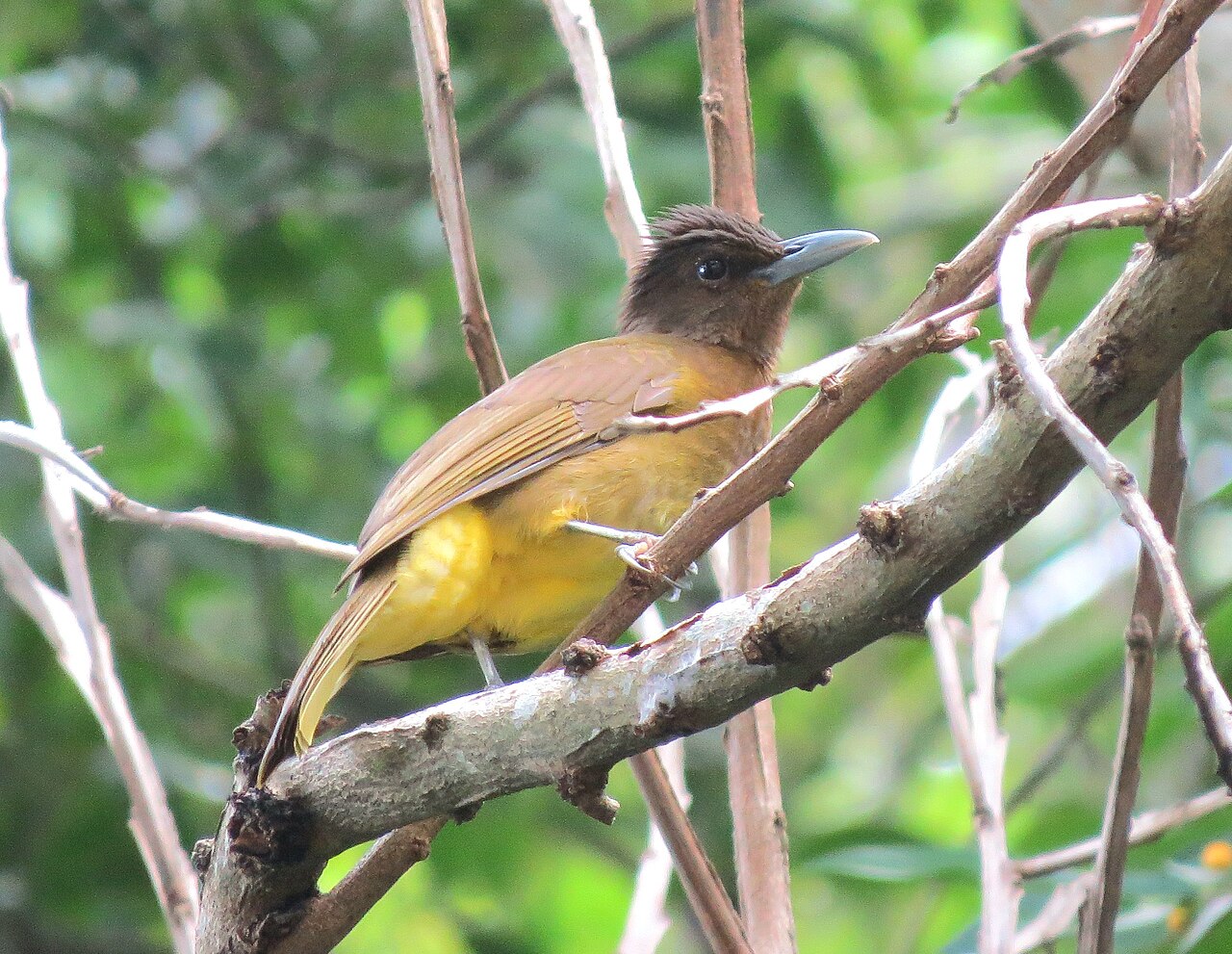
The Cambodian tailorbird is a species of bird endemic to Cambodia, likely confined to a single dense shrub habitat in the floodplain of the Mekong river. It was first discovered and recorded by scientists in 2009 in Phnom Penh, the capital of Cambodia, during avian influenza checks. In 2013, it was determined to be a unique species and formally described. It is a very small bird, about 10 cm long, with an orange-red tuft on its head.
Region
Southeast Asia
Typical Environment
Endemic to central-southern Cambodia, primarily around Phnom Penh and the lower Mekong floodplain. It favors dense, seasonally flooded scrub, reedbeds, and secondary thickets along river margins, islands, and wetlands. The species also occupies urban edge habitats with thick shrubbery and regenerating scrub on vacant lots and construction sites, provided cover is dense. It avoids closed forest and expansive open grassland, keeping close to low, tangled vegetation.
Altitude Range
0–50 m
Climate Zone
Tropical
Ease of Keeping
Beginner friendly: 1/5
Discovered in 2009 during avian influenza surveys in Phnom Penh and formally described in 2013, the Cambodian tailorbird is restricted to dense shrub habitats along the Mekong floodplain. Its species name refers to the Chaktomuk, the confluence of rivers at Phnom Penh. Like other tailorbirds, it crafts a delicate pouch nest by “sewing” leaves together with plant fibers or spider silk. Despite living near a major city, it remains shy and prefers thick cover.

Temperament
skulking but active
Flight Pattern
short rapid wingbeats with quick dashes between cover
Social Behavior
Usually found singly or in pairs, remaining low in dense scrub where it forages and keeps hidden. Pairs defend small territories and communicate with sharp contact calls. Nests are classic tailorbird pouches, sewn from leaves and lined with soft fibers, typically placed low in shrubs.
Migratory Pattern
Resident
Song Description
A thin, high-pitched series of notes and trills, often repeated in short phrases. Scolding calls are sharp and metallic, delivered from within cover rather than exposed perches.
Plumage
Olive-green upperparts with pale grey to whitish underparts; fine, sleek feathers suited for moving through thickets. Crown shows a small rufous-orange tuft that can be raised. Tail is long, narrow, and often cocked; overall appearance is neat and compact.
Diet
Feeds mainly on small insects, larvae, and spiders gleaned from leaves, stems, and tangled vines. It probes and picks methodically through low vegetation and occasionally hawks tiny insects in short sallies. Diet may include small arthropods associated with wetland edges and floodplain shrubs.
Preferred Environment
Low, dense shrubs, reedbeds, and secondary thickets along river margins and seasonally flooded ground. It also exploits dense urban scrub and regenerating patches where human disturbance leaves tangled growth.