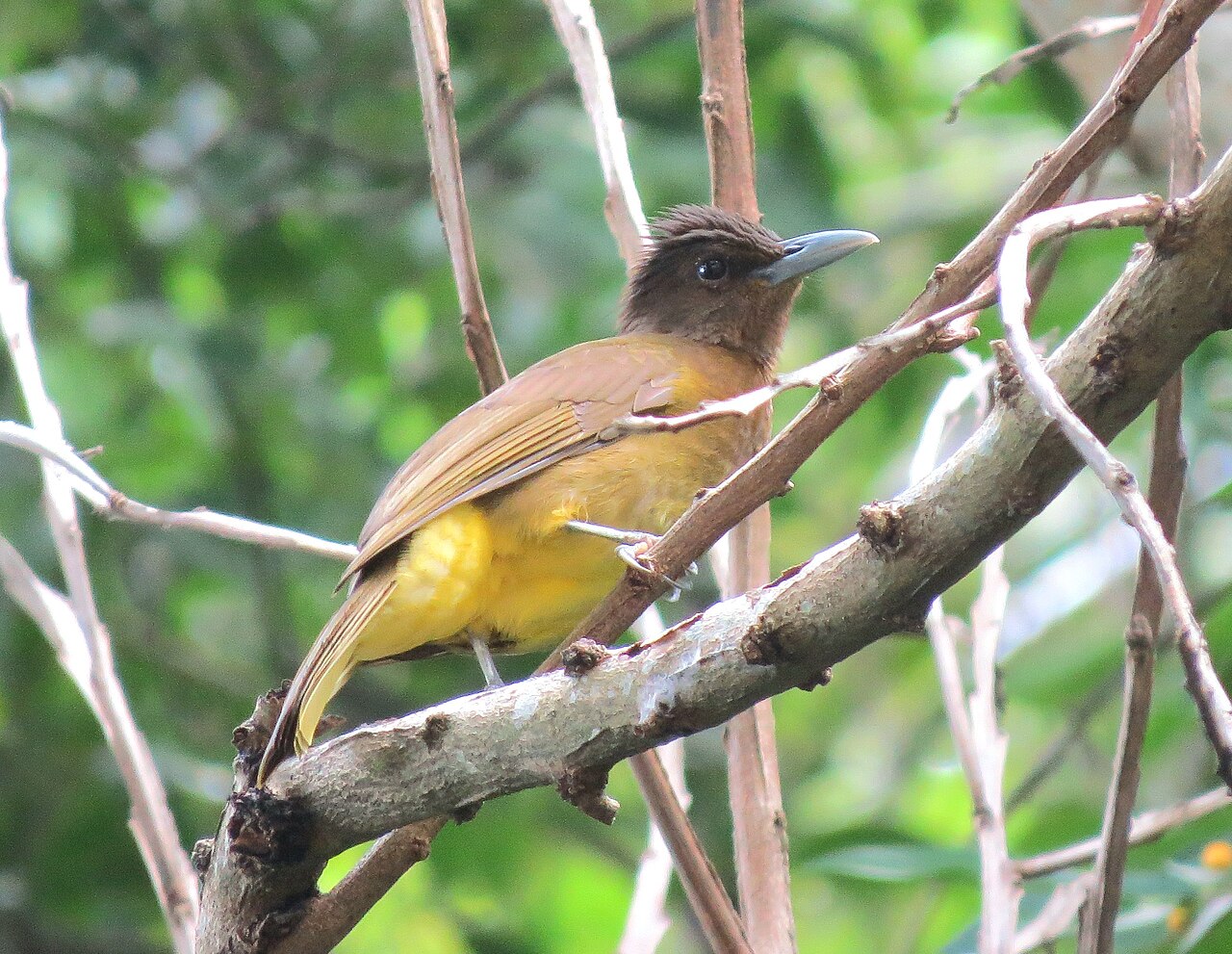
The Cameroon mountain greenbul is a species of the bulbul family of passerine birds. It is found in the Cameroonian Highlands forests. It is suspected to become rarer due to habitat loss, largely from agriculture, although this is not enough to approach the thresholds for Vulnerable status.
Region
West Africa (Cameroon–Nigeria Highlands)
Typical Environment
Occurs in the Cameroonian Highlands forests of western Cameroon and extends into adjacent highlands of southeastern Nigeria. It inhabits subtropical and tropical moist montane forest, forest edges, secondary growth, and bamboo or brushy thickets. The species forages from the understory to the mid-canopy, frequently along forest edges and clearings with fruiting shrubs and trees. It tolerates moderately degraded forest but persists best where continuous canopy and mid-story cover remain.
Altitude Range
900–3000 m
Climate Zone
Highland
Ease of Keeping
Beginner friendly: 1/5
The Cameroon mountain greenbul is a montane songbird of the bulbul family, confined to highland forests of western Cameroon and adjacent Nigeria. It often joins mixed-species flocks and is more often heard than seen, giving rich, fluty whistles from mid-story perches. Although tolerant of some habitat disturbance, it depends on remaining montane forest patches, making it sensitive to continued agricultural expansion.


Temperament
skulking and alert
Flight Pattern
short rapid wingbeats
Social Behavior
Usually seen in pairs or small family groups and commonly joins mixed-species flocks while foraging. It builds a neat cup nest concealed in dense vegetation. The species is presumed monogamous with both parents contributing to care.
Migratory Pattern
Resident
Song Description
Delivers rich, fluty whistles and mellow phrases, often repeated in short series. Calls include soft chatters and scolding notes used to keep contact within flocks and during foraging.
Plumage
Olive to olive-brown upperparts with slightly darker wings and tail; underparts yellow-olive, brightest on the vent and undertail coverts. The head can appear duskier with subtle greyish tones around the ear-coverts. Feathers are plain overall with minimal streaking, giving a smooth, uniform look.
Diet
Feeds on a mix of small fruits and berries, including figs and drupes, supplemented by insects and other small invertebrates. It gleans prey from leaves and twigs and occasionally hover-gleans near foliage. Seasonal availability of fruit influences its movements within local forest patches.
Preferred Environment
Forages along forest edges, in secondary growth, and within mid-story layers of montane forest. Frequently visits fruiting shrubs and trees and follows mixed flocks through undergrowth and mid-canopy.