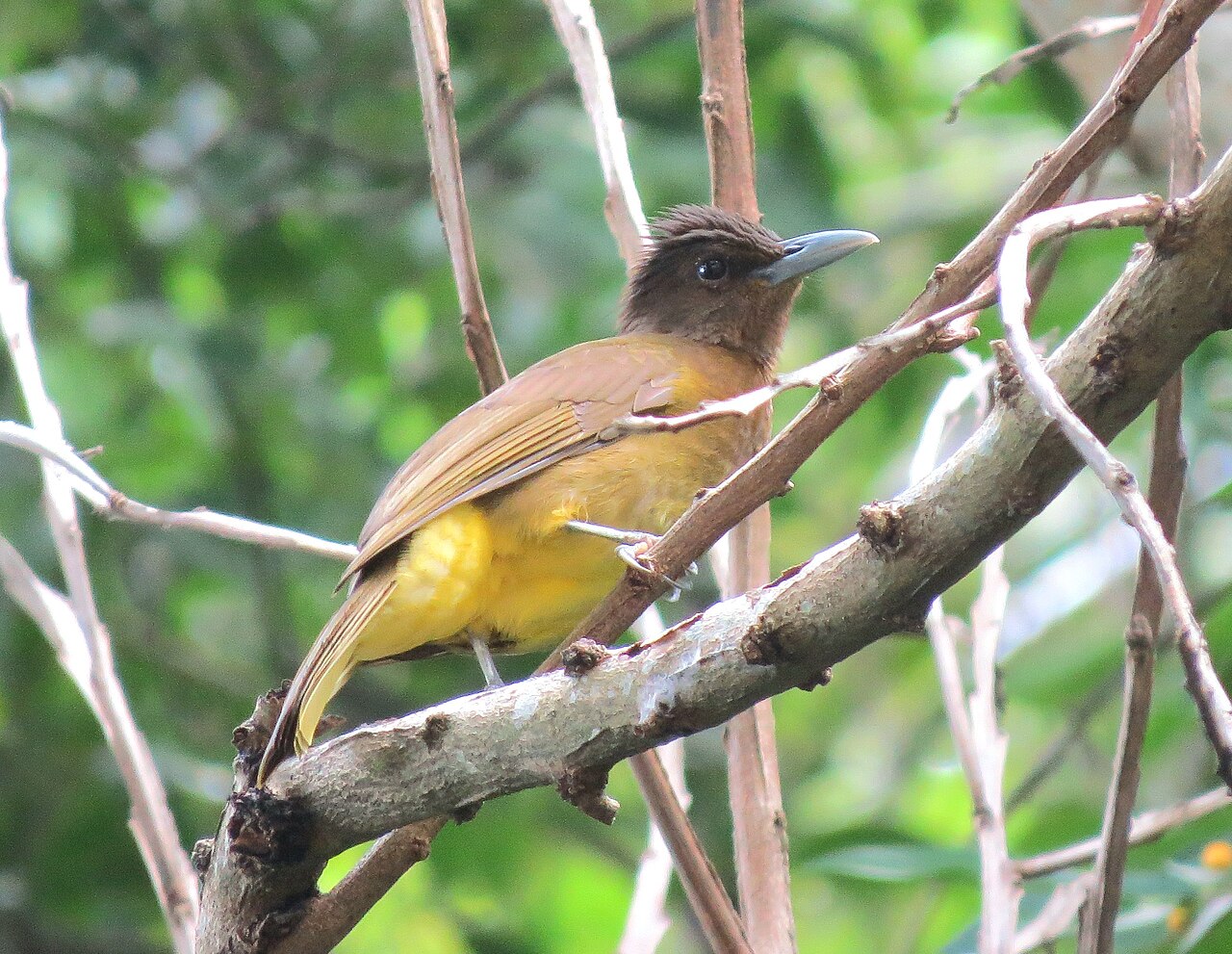
The Cameroon olive pigeon is a species of bird in the family Columbidae. It is found in the Cameroon line, and is found in pasture habitats with minimal vegetation cover as well as in montane forests. Its diet includes fruit from Polyscias fulva and waterberry trees.
Region
Cameroon Line and Gulf of Guinea Highlands
Typical Environment
Occurs in montane and submontane forests, forest edges, and secondary growth along the Cameroon Line, including Mount Cameroon, the Bakossi–Kupe highlands, and Bioko Island. It also uses open pasture or farmland with minimal vegetation cover when fruiting trees are present. Birds are most frequently encountered in the canopy but will move along ridgelines and gaps to exploit seasonally fruiting trees. Local movements track fruit availability across elevations and between adjacent forest blocks.
Altitude Range
900–3000 m
Climate Zone
Highland
Ease of Keeping
Beginner friendly: 1/5
The Cameroon olive pigeon is a highland forest pigeon of the Cameroon Line, also occurring on Bioko. It is generally shy and keeps to the canopy, but will descend to feed in open pastures with scattered fruiting trees. Its diet includes fruits of Polyscias fulva and waterberry (Syzygium) trees, making it an important seed disperser. Vocalizations are deep, resonant coos that carry across steep montane valleys.
Temperament
shy and wary
Flight Pattern
strong flier with rapid, direct wingbeats
Social Behavior
Usually seen singly, in pairs, or small loose groups at fruiting trees. Nests are simple twig platforms placed high in trees within dense montane forest. Courtship includes display flights and soft cooing, with pairs maintaining small territories around nest sites.
Migratory Pattern
Resident
Song Description
A series of deep, resonant hooting coos delivered at measured intervals, often from within the canopy. Calls may accelerate slightly into short sequences during display or territorial exchanges.
Plumage
Dark slate-olive upperparts with a vinous to maroon breast lightly spangled with pale speckles; neck often shows fine whitish spotting. Underparts grade to darker belly and vent; wings and tail are dusky with subtle pale edging. Overall impression is of a large, dark wood-pigeon with a glossy sheen on the neck.
Diet
Primarily frugivorous, taking a wide variety of fleshy fruits from canopy trees. Known food items include fruits of Polyscias fulva and waterberry (Syzygium) trees, along with figs and other native montane forest species. It occasionally ingests seeds and buds and may swallow small grit to aid digestion. By moving between fruiting trees, it contributes to seed dispersal across forest patches.
Preferred Environment
Feeds mostly in the upper canopy of mature montane forest and along forest edges. It also forages in adjacent pastures and secondary growth where isolated fruiting trees are available.