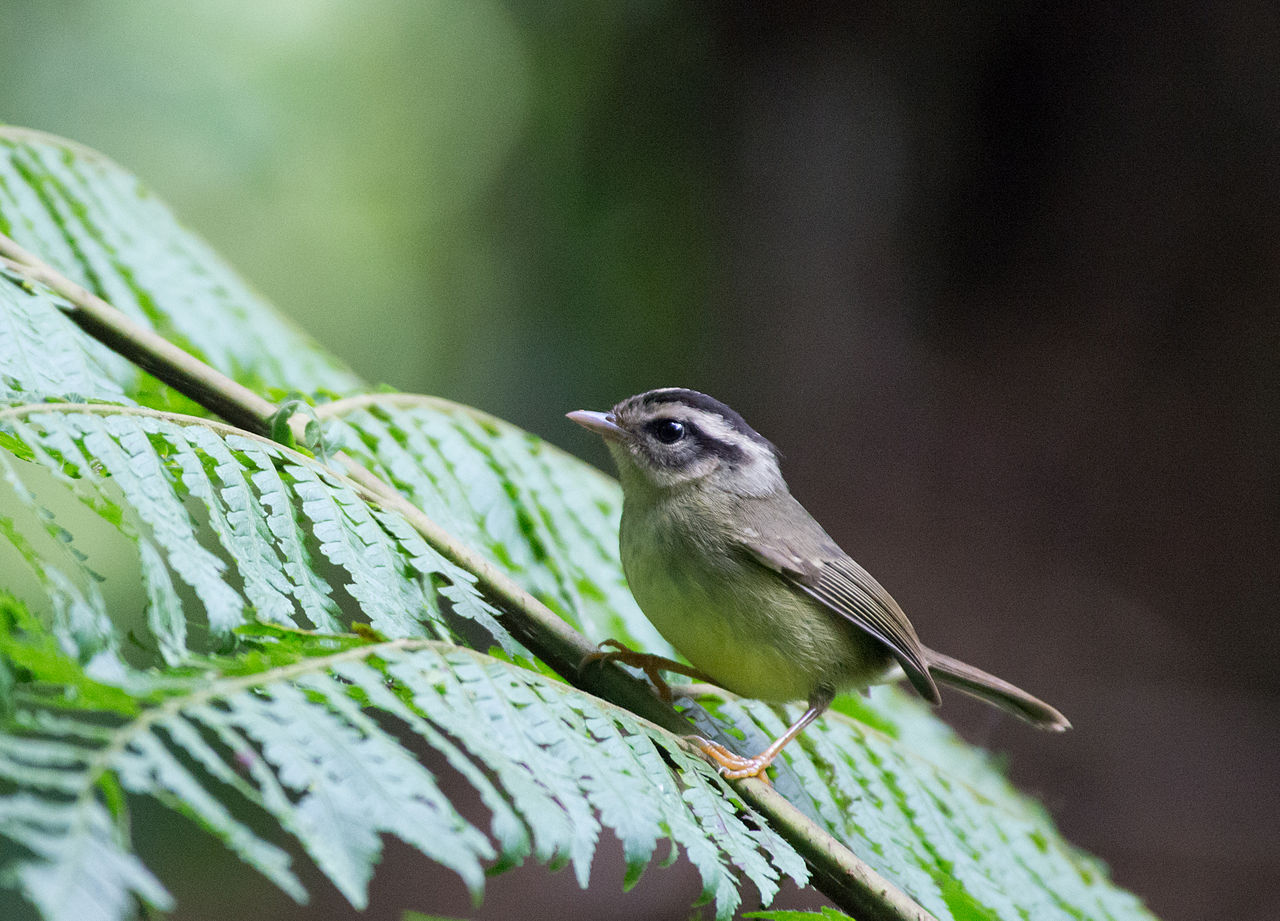
The black-eared hemispingus is a species of bird in the family Thraupidae.
Region
Andes Mountains
Typical Environment
Inhabits humid montane forests, cloud-forest edges, and dense secondary growth, often with abundant mosses and epiphytes. It frequents thickets and bamboo (Chusquea) patches along forest borders and along ravines. Birds are most often encountered in the midstory to understory, especially in mixed-species foraging flocks. It tolerates moderately disturbed habitats but remains tied to humid, mossy vegetation. Local elevational movements may occur along slopes, following food availability.
Altitude Range
1800–3500 m
Climate Zone
Highland
Ease of Keeping
Beginner friendly: 1/5
The black-eared hemispingus is a small Andean tanager notable for its dark ear patch that contrasts with a paler face. It often joins mixed-species flocks in mossy cloud forests, actively gleaning insects from foliage. Formerly placed in the genus Hemispingus, it is now widely treated as Sphenopsis based on genetic evidence.


Temperament
social and active
Flight Pattern
short rapid wingbeats
Social Behavior
Usually found in pairs or small groups and very frequently within mixed-species flocks moving through the understory and midstory. Nests are cup-shaped and placed low to mid-height in dense vegetation. Breeding is seasonal, coinciding with wetter periods in many parts of its range.
Migratory Pattern
Resident
Song Description
A series of thin, high-pitched chips and buzzy trills, delivered in short phrases. Calls include sharp tseet notes used to maintain contact within flocks.
Plumage
Olive-green upperparts with a grayish head and a contrasting black ear patch; underparts yellow-olive to yellowish with slightly paler throat. Wings and tail are darker olive with subtle edging. The face shows a pale supercilium that sets off the dark auriculars.
Diet
Takes small insects and other arthropods by gleaning from leaves and twigs, occasionally sallying short distances to grab prey. Also consumes small berries and other soft fruits, especially when insect prey is less abundant. Foraging is quick and methodical, often synchronized with the movements of mixed-species flocks.
Preferred Environment
Feeds in humid montane forest understory and midstory, particularly along edges, gaps, and bamboo thickets. It also forages in regenerating secondary growth where insect densities can be high.