
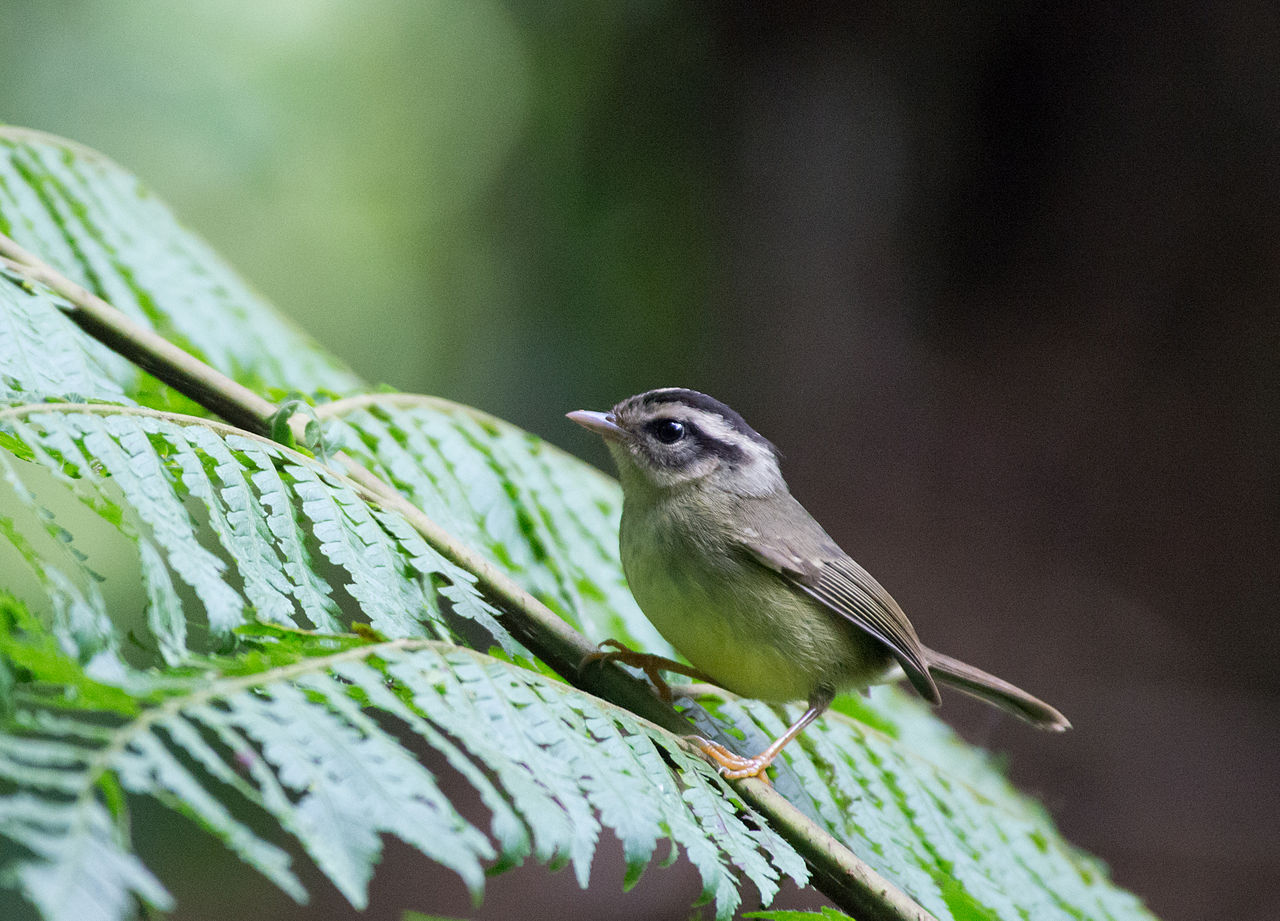
The black-eared warbler or Costa Rican warbler is a species of bird in the family Parulidae. It was previously considered conspecific with the three-striped warbler and the Tacarcuna warbler.
Region
Central America
Typical Environment
Occurs in the montane forests of Costa Rica and western Panama, especially in cloud forests and humid evergreen woodlands. It favors dense understory and edges along streams, landslides, and forest gaps. Birds are most frequently encountered in mossy, shaded habitats with abundant leaf litter and epiphytes. It is typically found in paired territories and often associates with mixed-species flocks in the understory. Human-altered habitats are used only where dense secondary growth mimics natural thickets.
Altitude Range
900–3000 m
Climate Zone
Highland
Ease of Keeping
Beginner friendly: 1/5
Also called the Costa Rican warbler, this species was split from the three-striped warbler complex and is notable for its dark ear patch. It is a lively understory forager of humid montane forests and often joins mixed-species flocks. It typically stays low to the ground, flicking its tail as it gleans insects from leaves and moss. The species is non-migratory and local to the highlands of Costa Rica and western Panama.

Temperament
active and somewhat skulking
Flight Pattern
short rapid wingbeats, low and direct
Social Behavior
Usually seen in pairs or small family groups, often joining mixed-species flocks in the forest understory. Territorial during the breeding season, with cup nests placed low, often on banks or in dense vegetation. Likely monogamous and attentive to nest concealment.
Migratory Pattern
Resident
Song Description
Song is a bright, musical series of clear chips and trills delivered from low perches in dense cover. Calls include sharp tsip or chip notes used for contact within pairs and flocks. Phrases are repeated in short bursts, especially at dawn.
Plumage
Olive-brown upperparts with yellow to yellow-ochre underparts and a clean yellow throat. Head shows bold striping with a pale supercilium and dark lateral crown stripes, plus a conspicuous black ear patch. Wings are plain without wingbars; tail often flicked, showing olive tones. Overall appearance is crisp-headed with strong facial contrast.
Diet
Primarily feeds on small insects and other arthropods, such as beetles, caterpillars, spiders, and their eggs. Gleans prey from leaves, moss, and twigs, often searching the undersides of foliage and probing into clumps of epiphytes. Occasionally takes small fruits or berries, but animal prey dominates. Foraging is methodical, with frequent tail flicks and short hops through low vegetation.
Preferred Environment
Forages in dense understory of humid montane and cloud forests, along streamside thickets, and in shady forest edges. Will use secondary growth where cover is thick and moist. Most feeding occurs within a meter or two of the ground.


