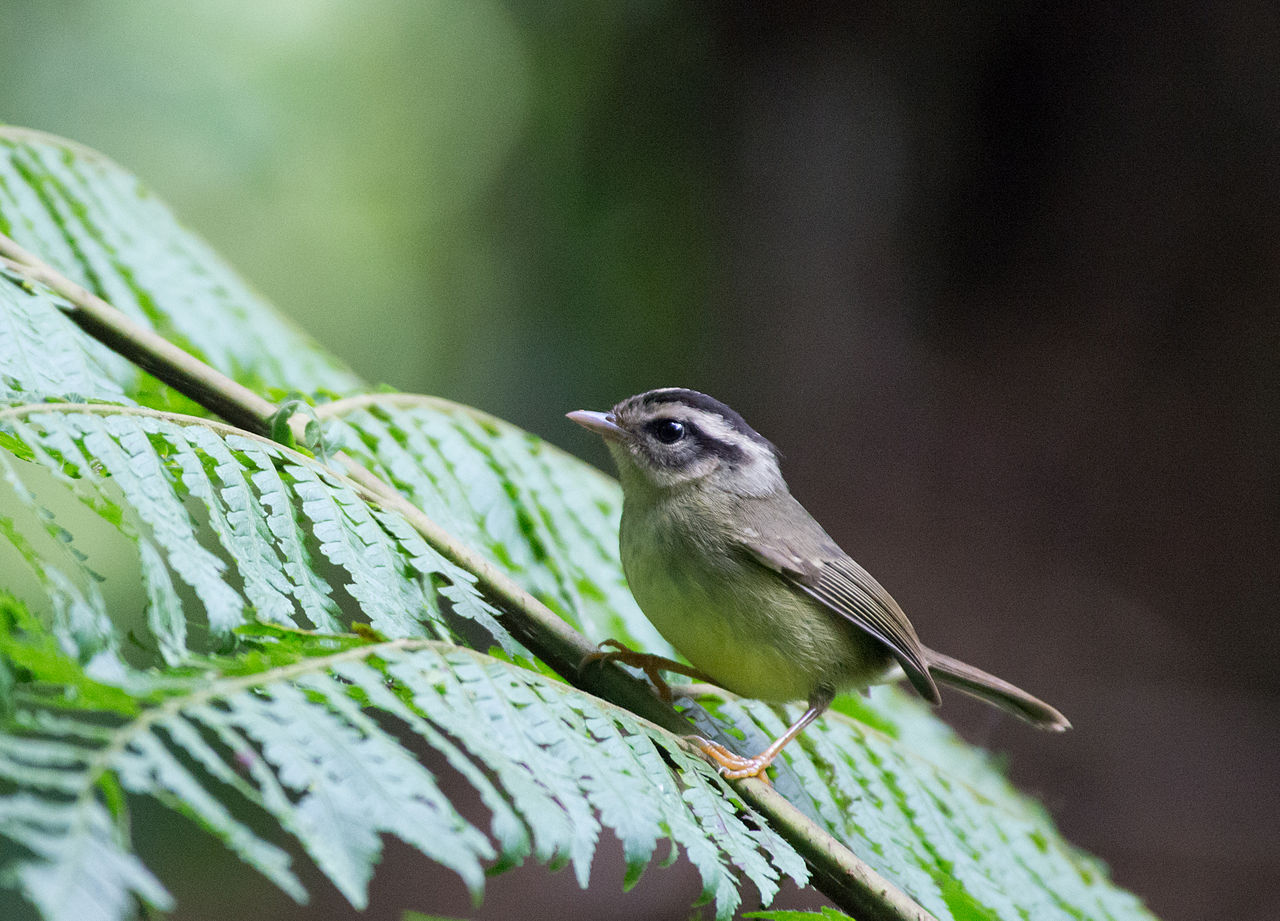
The black-eared shrike-babbler is a bird species in the vireo family, Vireonidae. It was traditionally considered as an aberrant Old World babbler and formerly placed in the family Timaliidae. It was long noted that their habits resembled those of vireos, but this was previously ascribed to the result of convergent evolution. It is found in Southeast Asia from the Himalayas to western Malaysia. Its natural habitat is subtropical or tropical moist montane forests.
Region
Himalayas and Southeast Asia
Typical Environment
Occurs from the eastern Himalayas (Nepal, Bhutan, northeast India) through northern Myanmar and southwest China (e.g., Yunnan) to the mountains of northern Indochina and the highlands of the Malay Peninsula. Inhabits subtropical and tropical moist montane broadleaf and evergreen forests, including rhododendron–oak belts. Uses forest edges, mature secondary growth, and mossy gullies. Often forages in the mid to upper canopy and along forested ridges.
Altitude Range
900–3000 m
Climate Zone
Highland
Ease of Keeping
Beginner friendly: 1/5
Once placed with Old World babblers, this species is now recognized as a vireo, reflecting its vireo-like foraging and vocal behavior. It often joins mixed-species flocks in montane forests and methodically gleans insects from leaves and twigs. Males show a bold black ear patch that gives the species its name, while females are duller and greener.


Temperament
social and active
Flight Pattern
short rapid wingbeats with quick, bounding movements through the canopy
Social Behavior
Frequently joins mixed-species foraging flocks, moving deliberately through foliage while gleaning prey. Breeding pairs defend small territories in the montane forest. The nest is a neat, vireo-like cup placed in a fork of a shrub or small tree, with both parents attending the young.
Migratory Pattern
Resident with local altitudinal movements
Song Description
Song is a series of clear, melodious whistles delivered in short phrases, often repeated. Calls include sharp chips and thin, vireo-like notes used to keep contact within flocks.
Plumage
Compact, vireo-like passerine with olive-green upperparts and cleaner, paler underparts. Male has a grey head with a bold black ear patch, contrasting with olive mantle and a pale throat; wings show pale wing bars or panels. Female is greener overall with a reduced or duller ear patch and less contrasting head. Both sexes have a stout, slightly hooked bill.
Diet
Primarily consumes insects and other small arthropods such as caterpillars, beetles, and spiders. Forages by careful gleaning from leaves, twigs, and clusters of dead foliage, occasionally hover-gleaning. May take small berries or soft fruit opportunistically, especially outside the breeding season.
Preferred Environment
Feeds in the mid to upper canopy of montane evergreen and broadleaf forests, along edges, and in mature secondary growth. Often forages alongside other small insectivores in mixed flocks along ridges and mossy branches.