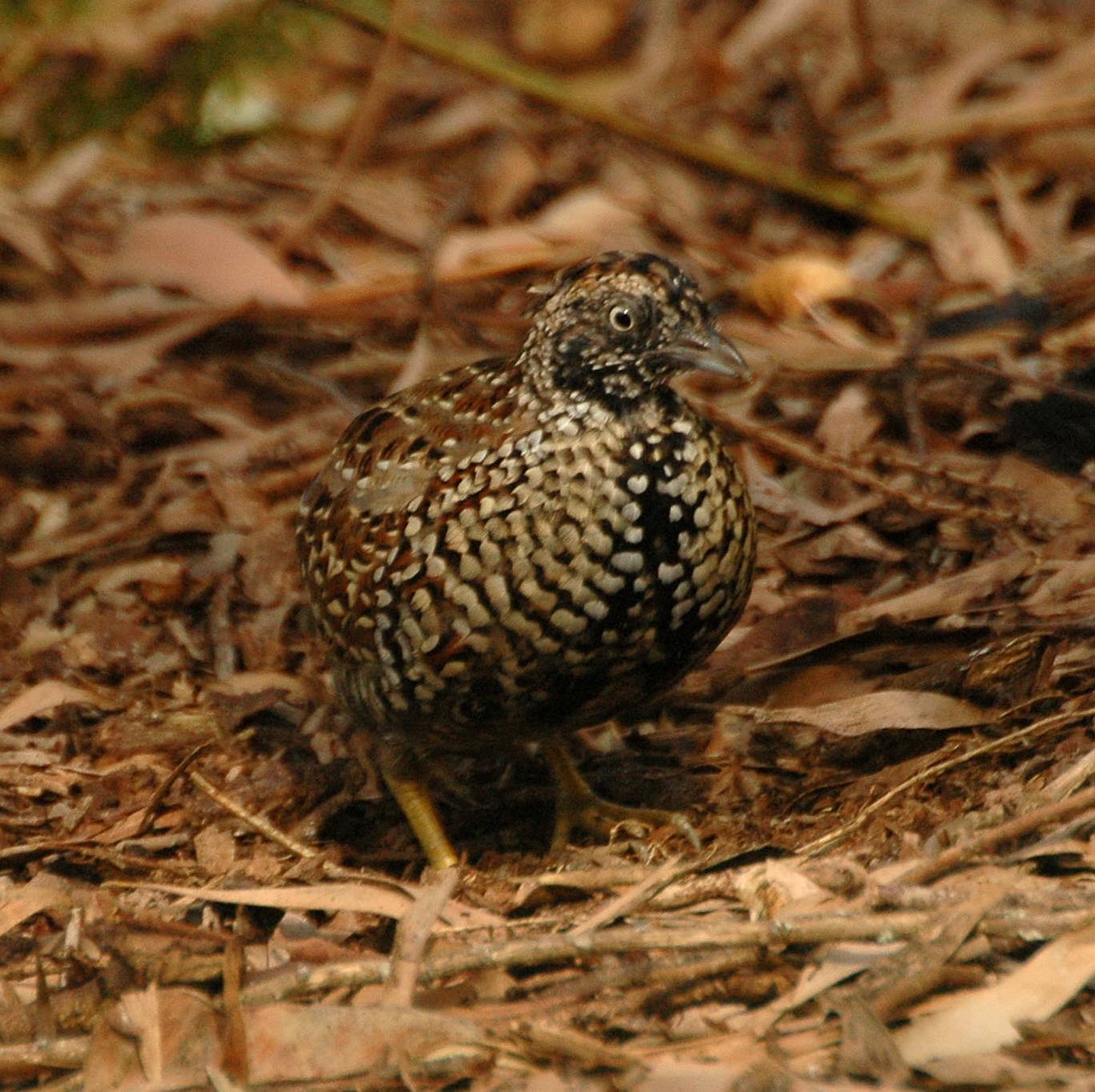
The black-billed wood dove or black-billed dove is a pigeon which is a widespread resident breeding bird in a belt across Africa just south of the Sahara Desert.
Region
Sahel and Sudanian Savanna
Typical Environment
Occurs in a broad belt just south of the Sahara from Senegal and Gambia east through Mali, Burkina Faso, Niger, northern Nigeria and Cameroon, Chad, and Sudan to Eritrea and Ethiopia, with extensions into South Sudan and northwestern Kenya. It favors dry savanna, open acacia woodland, thorn scrub, and farm edges, especially near water. The species adapts well to sparsely wooded villages and gardens with scattered trees. It is generally sedentary, though it may shift locally in response to rainfall and water availability.
Altitude Range
0–2400 m
Climate Zone
Tropical
Ease of Keeping
Beginner friendly: 2/5
A small, inconspicuous dove of the African savannas, it is best recognized by its entirely black bill and plain wings lacking metallic spots. Its soft, rhythmic cooing carries at dawn and dusk across thorn scrub and open woodland. Often flushes from the ground at close range, flying low into cover. It is easily confused with other wood-doves; the black bill and lack of green or blue wing spots are key clues.

Temperament
shy and wary
Flight Pattern
fast, direct flight with short rapid wingbeats
Social Behavior
Usually seen singly, in pairs, or small loose groups, especially at waterholes. Nests are flimsy stick platforms placed low in shrubs or small trees, where the pair typically lays two white eggs. Courtship includes gentle cooing, bowing, and short display flights.
Migratory Pattern
Resident
Song Description
A soft, rhythmic series of mellow coos delivered in slow pulses, often repeated for long periods. Most vocal at dawn and late afternoon, the song carries surprisingly far in open savanna.
Plumage
Plain sandy-brown to rufous-brown upperparts with a pale grey head and face, and a pinkish-buff wash on the breast shading to buffy underparts. Wings are unspotted and uniform, contrasting with the darker flight feathers. Tail shows a dark subterminal band with white corners that flash in flight.
Diet
Feeds primarily on small grass and herb seeds, fallen grains, and small fruits. It forages on the ground, picking seeds from bare patches and beneath shrubs and trees. Occasionally takes small invertebrates incidentally while foraging, but plant material dominates the diet. Frequently visits water to drink, especially during the dry season.
Preferred Environment
Prefers open ground under scattered trees, thorn scrub edges, tracks, and the margins of fields and villages. Often feeds near water sources and along dry riverbeds where seeds accumulate.