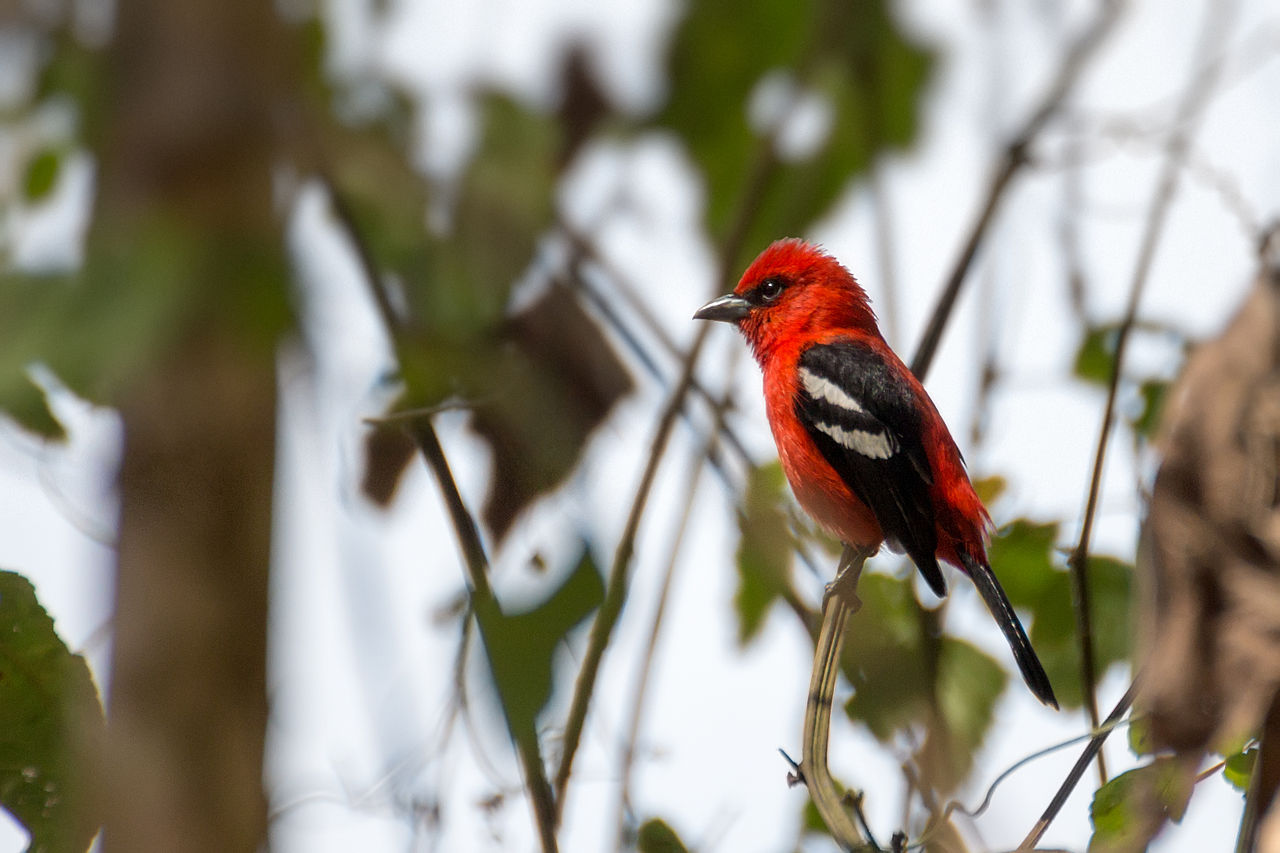
The white-winged robin is a species of bird in the family Petroicidae.
Region
New Guinea Highlands
Typical Environment
Occurs along the central and western highlands of New Guinea in both Papua New Guinea and Indonesian Papua. It inhabits tropical montane rainforest, including mossy forest, forest edges, and dense understory thickets. The species also uses secondary growth and forest gaps where cover remains. Typically found perching low and moving through shaded ravines and ridgelines.
Altitude Range
1000–3500 m
Climate Zone
Highland
Ease of Keeping
Beginner friendly: 1/5
The white-winged robin is a New Guinea montane forest specialist in the Australasian robin family Petroicidae. Its bold white wing patch is conspicuous even in dim understory light and helps with quick recognition. It forages low, often dropping to the leaf litter to snatch insects before returning to a perch. Pairs are typically territorial year-round in suitable habitat.

Temperament
quiet, alert and territorial
Flight Pattern
short rapid wingbeats between low perches
Social Behavior
Usually encountered as singles or pairs that defend small territories. Likely monogamous, with a cup nest placed low in dense vegetation or on sheltered ledges. Both parents participate in feeding the nestlings and fledglings. Mixed-species flocking is occasional but it often forages independently.
Migratory Pattern
Resident
Song Description
Song consists of clear, thin whistles and simple phrases delivered from a low perch. Calls include sharp ticks and soft contact notes used between pair members.
Plumage
Mostly sooty-black with a crisp, contrasting white wing patch; plumage appears velvety in good light.
Diet
Primarily captures insects and other small arthropods such as beetles, spiders, and caterpillars. It employs perch-and-sally tactics, dropping to the ground or gleaning from low foliage and logs. Occasional small berries may be taken, but animal prey dominates the diet.
Preferred Environment
Forages in shaded understory, along forest trails, on mossy logs, and within leaf litter. Prefers structurally complex microhabitats that provide cover and ambush perches.