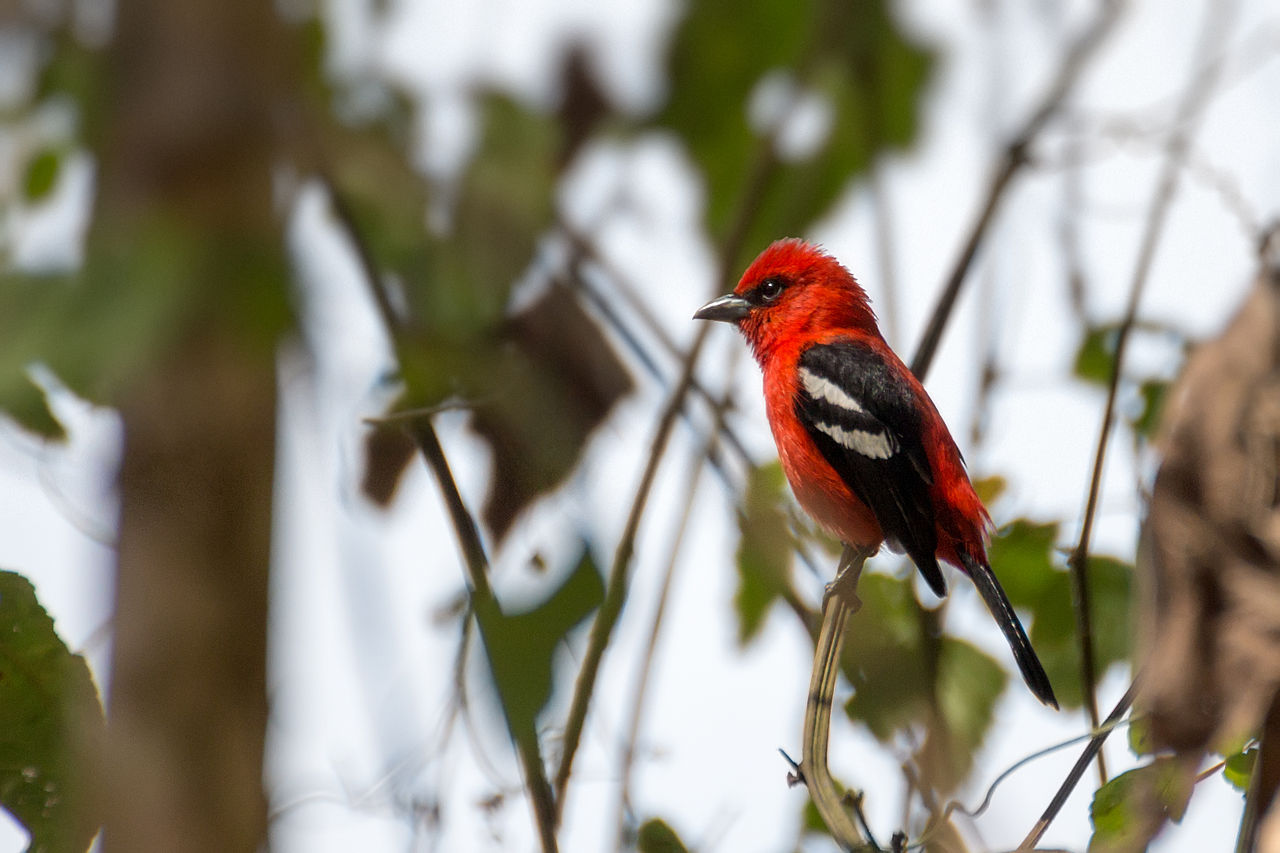
The white-winged tanager is a medium-sized American songbird in the family Cardinalidae, the cardinals or cardinal grosbeaks. It is found from Mexico, through Central America, across northern South America and as far south as Bolivia.
Region
Mexico, Central America, and northern South America
Typical Environment
Occurs from southern Mexico through Guatemala, Honduras, Nicaragua, and Costa Rica, and south through the Andes of Colombia, Ecuador, Peru, and into Bolivia. Favors humid to semi-humid montane forests, pine–oak woodlands, and cloud forests, especially along forest edges and clearings. Regularly uses second-growth and shaded plantations adjacent to native forest. Most activity is in the mid to upper canopy, where it gleans insects and takes fruit.
Altitude Range
600–2600 m
Climate Zone
Highland
Ease of Keeping
Beginner friendly: 1/5
Despite its name, the white-winged tanager belongs to the cardinal family (Cardinalidae), not the true tanagers. The species is best recognized by the male’s striking red plumage and bold white wing patch. It forages high in the canopy and often joins mixed-species flocks outside the breeding season. The name refers to the prominent white wing area formed by the wing bars.


Temperament
social and active
Flight Pattern
short rapid wingbeats
Social Behavior
Typically found in pairs during the breeding season and in small groups or mixed-species flocks at other times. Builds a cup-shaped nest high in trees, with both parents involved in care. Territorial around nesting sites but more tolerant and gregarious when not breeding.
Migratory Pattern
Resident
Song Description
A series of clear, sweet whistles and short phrases reminiscent of other Piranga species. Calls include sharp chips and contact notes used while moving through the canopy.
Plumage
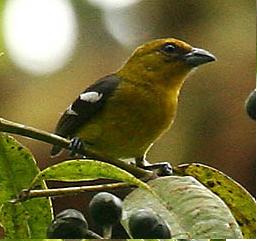
Male bright red with black wings and tail; conspicuous white wing patch formed by bold wing bars. Female and immature birds are olive-yellow above with yellowish underparts and clear white wing bars. Both sexes have fairly plain faces and a sturdy, conical bill.
Diet
Takes a variety of insects, including caterpillars, beetles, and other arthropods gleaned from foliage and bark. Also eats small fruits and berries, especially when insect prey is less abundant. Occasionally sallies to catch flying insects and may follow mixed flocks to exploit disturbed prey.
Preferred Environment
Primarily forages in the mid to upper canopy of montane forest, edges, and semi-open woodland. Will use second-growth, riparian strips, and shaded agroforestry systems adjacent to native forest.