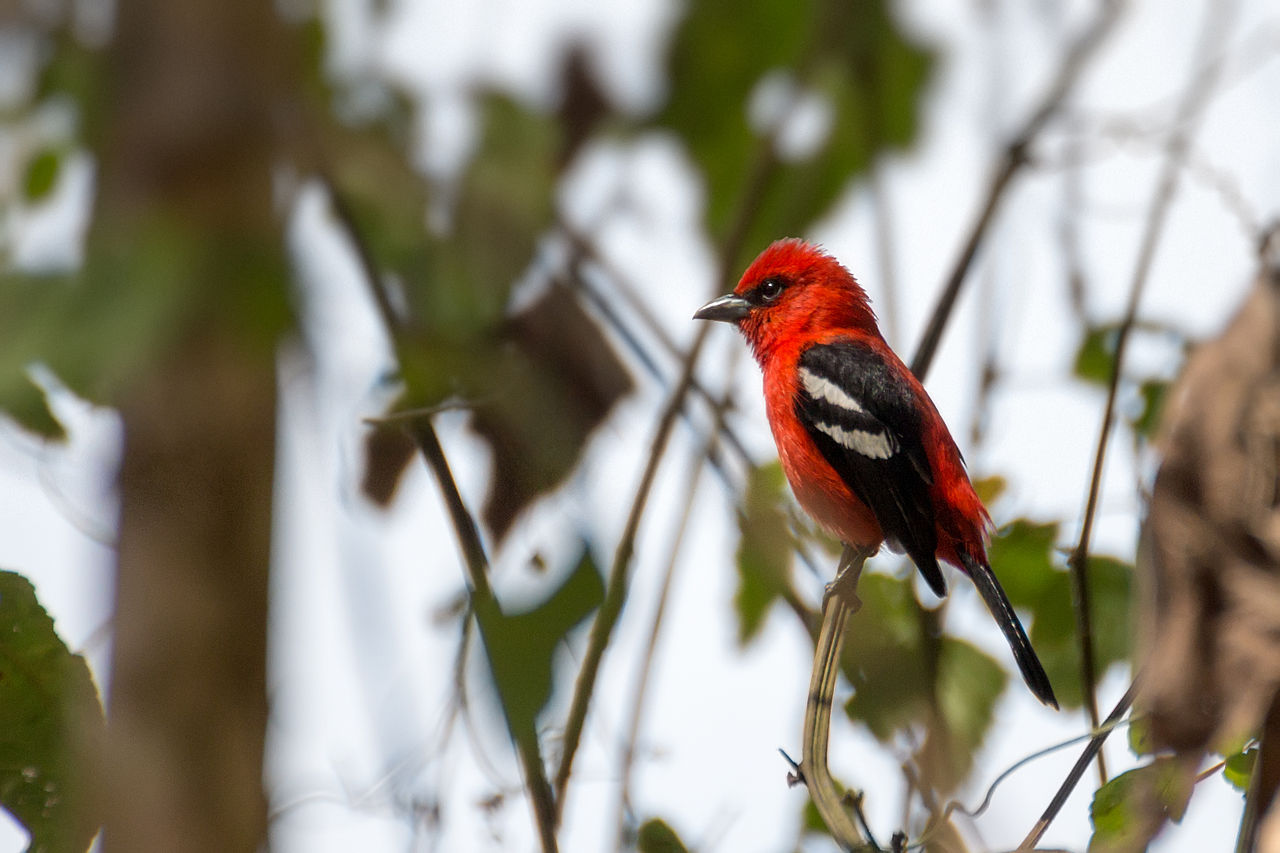
The white-winged potoo is a species of bird in the family Nyctibiidae. It is found in Brazil, French Guiana, Guyana, Peru, Suriname, and Venezuela.
Region
Amazon Basin and Guiana Shield
Typical Environment
Occurs patchily in lowland evergreen and semi-evergreen forests of Brazil, French Guiana, Guyana, Suriname, Venezuela, and eastern Peru. It favors forest edges, natural clearings, river margins, and canopy gaps where open flyways allow aerial foraging. By day it roosts on exposed snags or branches, relying on cryptic plumage to avoid detection. It is typically scarce and local even where present.
Altitude Range
0–800 m
Climate Zone
Tropical
Ease of Keeping
Beginner friendly: 1/5
The white-winged potoo is a small nocturnal insect-hunter that perches motionless on exposed branches, relying on superb camouflage by day. In flight, males show striking white patches in the wings used in display. Its huge, frog-like gape helps it snatch flying insects during short sallies from a perch. It is generally rare and local but widely distributed across northern South America.


Temperament
solitary and secretive
Flight Pattern
short rapid wingbeats with brief glides; buoyant sallies from a perch
Social Behavior
Usually seen alone or in pairs, especially during the breeding season. Pairs are thought to be monogamous, nesting on a simple natural depression atop a branch or stump and laying a single egg. Adults rely on stillness and camouflage to avoid predators, aligning with branches to resemble broken stubs.
Migratory Pattern
Resident
Song Description
A soft, haunting series of clear whistles delivered at night, often descending in pitch and spaced at intervals. Males give display flights with wing-flash accents, sometimes accompanying calls with a mechanical wing sound.
Plumage
Cryptically mottled gray-brown and buff with fine streaking and barring; very effective bark-like camouflage when perched.
Diet
Feeds primarily on flying insects such as moths, beetles, and termites, captured during short aerial sallies from an exposed perch. It scans for prey with large, light-sensitive eyes and uses its wide gape to net insects in flight. Foraging bouts are often repeated from the same vantage point before shifting to a new perch.
Preferred Environment
Edges of primary or tall secondary forest, canopy gaps, riverbanks, and clearings that provide open airspace for hawking insects. Typically forages from mid-canopy to subcanopy perches or prominent snags.