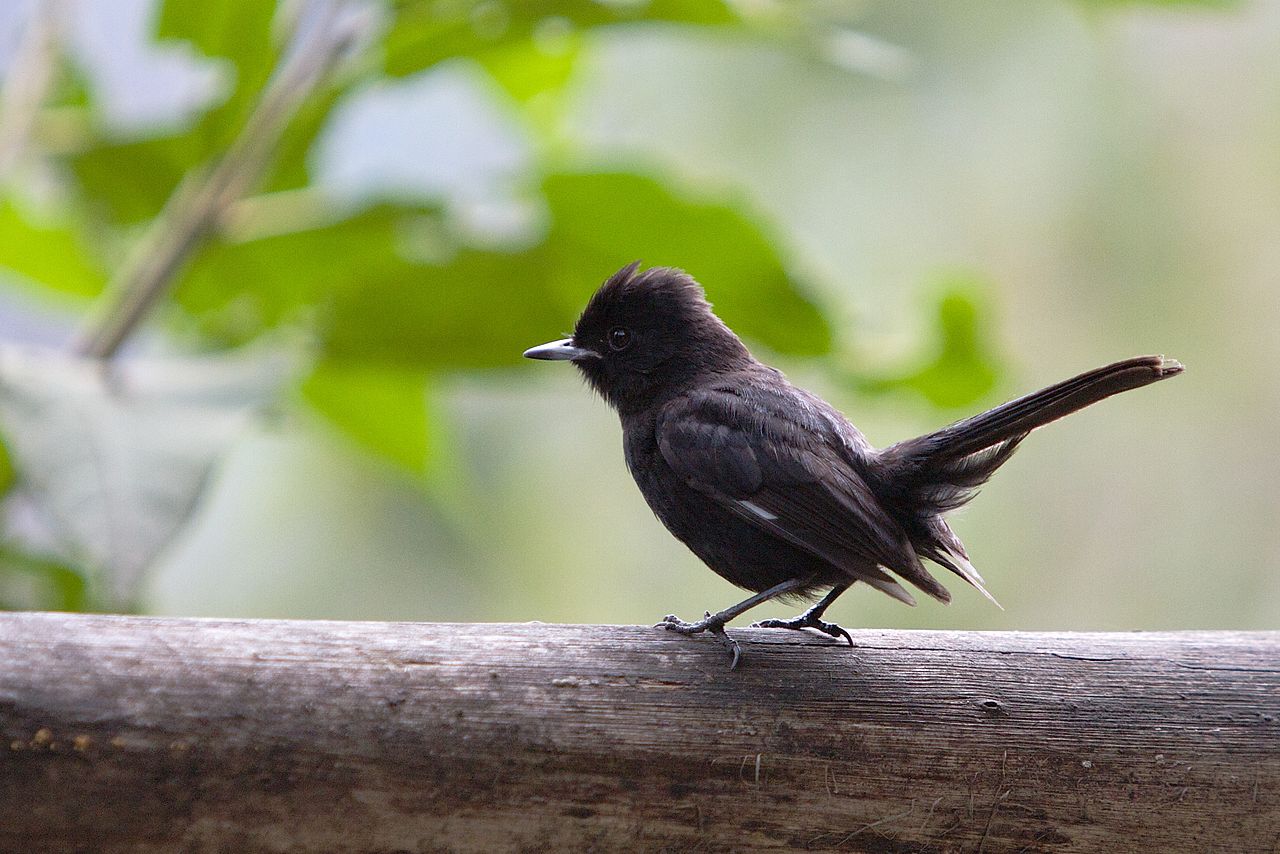
The white-whiskered puffbird, also called the white-whiskered soft-wing or brown puffbird, is a near-passerine bird in the family Bucconidae, the puffbirds, nunlets, and nunbirds. It is found from southeastern Mexico through Central America, Colombia, and Ecuador into Peru.
Region
Mesoamerica to the Chocó of northwestern South America
Typical Environment
Occurs from southeastern Mexico through Belize, Guatemala, Honduras, Nicaragua, Costa Rica, and Panama into western Colombia, Ecuador, and locally northwestern Peru. It favors humid lowland and foothill evergreen forests, tall secondary growth, and shaded forest edges. Most often found in dense understory tangles, viney thickets, and along ravines or streams. Tolerates some disturbance where understory remains intact, but is scarce in open or heavily fragmented habitats.
Altitude Range
Sea level to 1500 m
Climate Zone
Tropical
Ease of Keeping
Beginner friendly: 1/5
A sit-and-wait predator of the shady forest understory, it often perches motionless for long periods before sallying to snatch prey. The “whiskers” are elongated white malar feathers that make identification straightforward even in dim light. It nests in burrows excavated in earthen banks or sloped ground, where both parents share incubation and care. Despite a broad range from southeastern Mexico to northwestern South America, it is sensitive to heavy forest clearance.


Ventral view. San Francisco Reserve - Darien, Panama

Temperament
solitary and secretive
Flight Pattern
short rapid wingbeats with quick perch-to-perch sallies
Social Behavior
Usually encountered alone or in pairs holding territories in dense understory. Pairs excavate burrows in earthen banks for nesting and share incubation and chick-rearing duties. Territorial songs and calls are most frequent at dawn and dusk.
Migratory Pattern
Resident
Song Description
Delivers a clear, plaintive descending whistle, often a single peeeeu or a spaced series of similar notes. Songs carry well through humid forest and are given from low, shaded perches, especially at first light.
Plumage
Overall rich brown with slightly warmer, buffy underparts and fine mottling; wings show faint buff spotting. Throat pale to whitish, contrasting with darker chest. Prominent white malar ‘whiskers’ stand out on the face.
Diet
Primarily large insects such as beetles, grasshoppers, katydids, moths, and spiders; also takes small vertebrates like tiny lizards on occasion. Hunts by sitting quietly on a low perch and sallying to seize prey from foliage, trunks, or the ground. Will sometimes attend army-ant swarms or the fringes of mixed-species flocks to catch flushed arthropods.
Preferred Environment
Feeds in dense, shaded understory and along forest edges, ravines, and stream corridors. Often chooses perches 1–5 m above ground with good strike access to nearby foliage and leaf litter.