
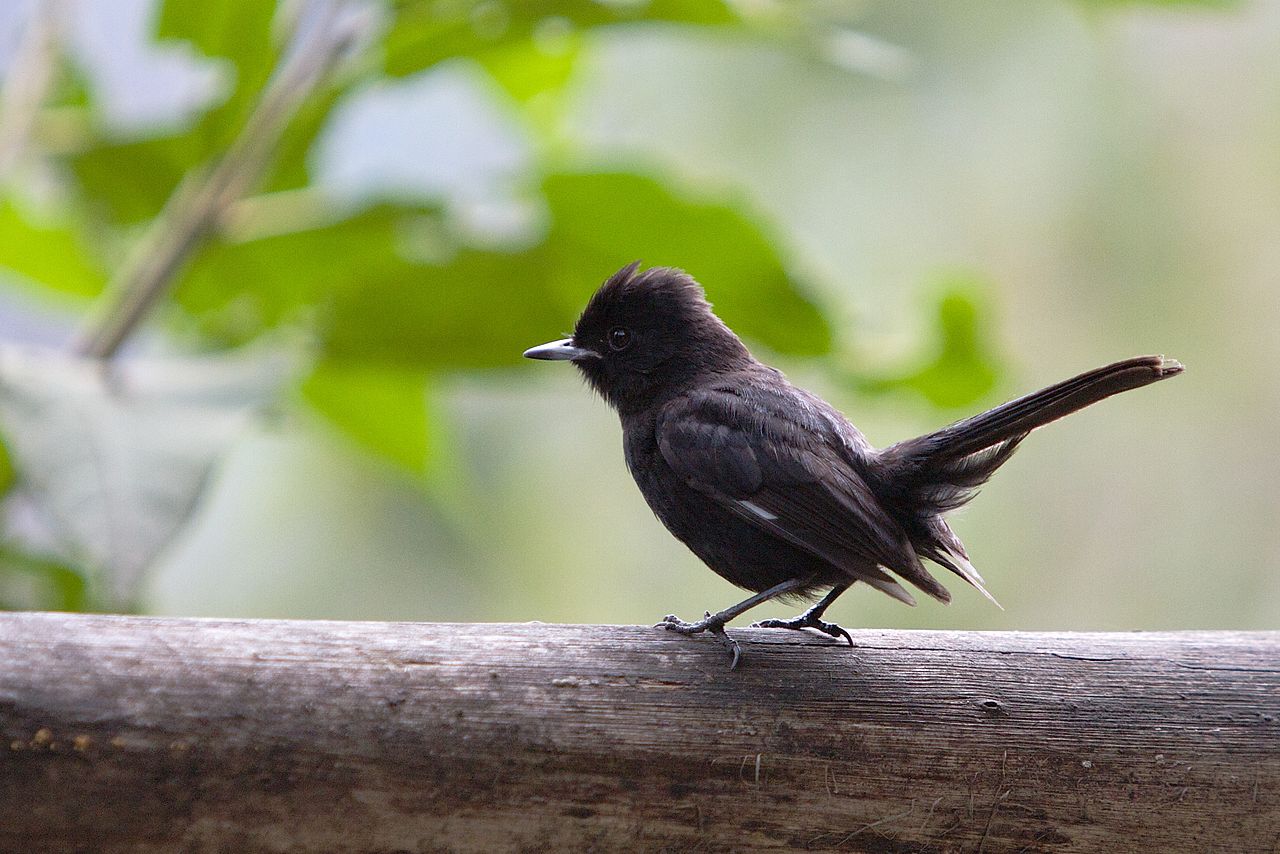
The white-winged black tyrant is a species of bird in the family Tyrannidae, the tyrant flycatchers. It is found in Argentina, Bolivia, Paraguay, Peru, and as a vagrant to Brazil and Chile.
Region
Southern Andes and Gran Chaco
Typical Environment
Found in Argentina, Bolivia, Paraguay, and Peru, with vagrants recorded in Brazil and Chile. It inhabits open woodland, dry scrub, Chaco grasslands with scattered bushes, forest edges, and second-growth. It readily uses human-modified landscapes such as pastures and ranchlands with fenceposts for perching. The species favors mosaics of open ground and low shrubs where aerial insect prey is abundant.
Altitude Range
0–3500 m
Climate Zone
Subtropical
Ease of Keeping
Beginner friendly: 1/5
The white-winged black tyrant is a striking flycatcher of open woodlands and scrub, with males showing a bold white wing patch that flashes in flight. It often hunts from exposed perches, sallying out to catch insects on the wing. Females are much browner and more cryptic, which can make the species appear sexually dimorphic. It occurs across the southern Andes and adjacent lowlands, occasionally wandering as a vagrant to neighboring countries.


Temperament
solitary and territorial
Flight Pattern
short rapid wingbeats with quick sallies from a perch
Social Behavior
Usually seen singly or in pairs, often perched conspicuously on posts or exposed branches. Breeding pairs defend small territories; the nest is a small open cup placed in shrubs or low trees. Both parents are thought to contribute to provisioning of the young.
Migratory Pattern
Partial migrant
Song Description
Vocalizations include sharp, dry ticks and chatters, along with simple whistles. The song is brief and somewhat scratchy, delivered from prominent perches, especially at dawn.
Plumage
Male is glossy black with a conspicuous white wing patch formed by white bases to the primaries; female and immature birds are brown to grayish-brown above with paler underparts and subtle pale wingbars.
Diet
Primarily feeds on flying insects such as beetles, flies, and moths, which it captures in aerial sallies. It may also glean from foliage or the ground when opportunities arise. Occasional small fruits may be taken opportunistically but form a minor part of the diet.
Preferred Environment
Hunts along woodland edges, open scrub, and fencelines where visibility and launch points are plentiful. Frequently uses exposed perches like posts and dead branches to scan for passing prey.


