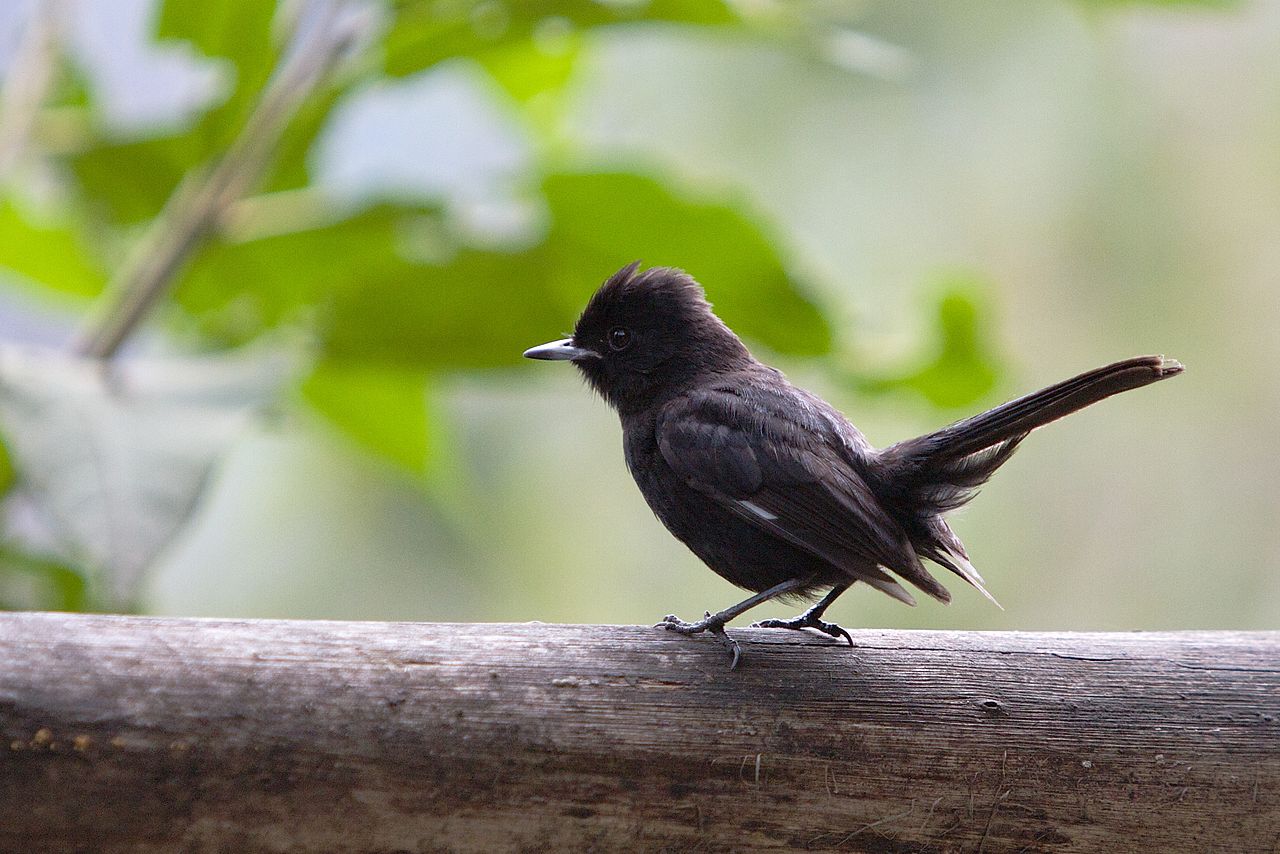
The white-winged becard is a species of bird in the family Tityridae, the tityras, becards, and allies. It is found in every Central American country except El Salvador, on Trinidad and Tobago, and in every mainland South American country except Chile.
Region
Neotropics
Typical Environment
Occurs from southern Mexico through Central America (absent from El Salvador) and widely across South America, including Trinidad and Tobago and most mainland countries except Chile. Prefers forest edges, gallery forests, secondary woodland, and semi-open habitats with scattered trees. Frequently uses riparian corridors, cacao and coffee plantations, and wooded savannas. Often found from the mid-story to canopy where it forages quietly and joins mixed flocks.
Altitude Range
0–1800 m
Climate Zone
Tropical
Ease of Keeping
Beginner friendly: 1/5
This widely distributed becard belongs to the family Tityridae, having been reclassified from the tyrant flycatchers. Males show bold white patches in the wings, while females are olive-brown with buffy underparts and pale wingbars, making the species notably sexually dimorphic. It inhabits forest edges and second growth and often joins mixed-species flocks. Several subspecies vary in plumage contrast and the extent of white in the wings.


Temperament
quiet and unobtrusive
Flight Pattern
short rapid wingbeats with quick sallies
Social Behavior
Usually seen singly or in pairs, and commonly associates with mixed-species flocks while foraging. Builds a large, enclosed pendant nest with a side entrance, typically suspended from a branch. Pairs are likely monogamous during the breeding season, with both sexes attending the nest.
Migratory Pattern
Partial migrant
Song Description
Song consists of soft, clear whistles and short, repeated phrases delivered from mid-canopy perches. Calls include thin tseet notes and buzzy chips given while foraging.
Plumage
Males are mostly dark slate to black with striking white wing patches and edging on the tertials; females are olive-brown above with buffy to yellowish underparts and pale wingbars.
Diet
Takes a variety of arthropods, including caterpillars, beetles, and spiders, by gleaning and short sallies. Also consumes small fruits and berries, especially during the nonbreeding season or when insect availability is lower. Occasionally hawks flying insects near the canopy and supplements its diet opportunistically.
Preferred Environment
Forages along forest edges, in secondary growth, riparian woodland, and agroforestry systems like cacao and coffee. Most activity occurs in the mid-story to canopy, often within mixed-species flocks.