The white-tufted grebe, also known as Rolland's grebe, is a species of grebe in the family Podicipedidae. Found in the southern and western South America, its natural habitat is freshwater lakes, ponds and sluggish rivers and streams.
Region
Southern and western South America
Typical Environment
Occurs from the Andes of Peru and Bolivia south through Chile and Argentina to Patagonia and the Falkland/Malvinas region, with populations also in Uruguay and adjacent lowlands. It inhabits freshwater lakes, ponds, marshes, and sluggish rivers with abundant emergent vegetation. The species also uses brackish lagoons and sheltered coastal marshes, especially outside the breeding season. It prefers mosaic habitats of open water interspersed with reeds and floating vegetation, which provide both foraging areas and nesting cover.
Altitude Range
Sea level to 4200 m
Climate Zone
Other
Ease of Keeping
Beginner friendly: 1/5
Also called Rolland's grebe, this small diving bird is noted for its striking white ear-tufts in breeding plumage. Adults often carry downy chicks on their backs while swimming. Like other grebes, it swallows its own feathers, which help protect the stomach and aid in forming pellets to expel indigestible material. It is typically wary and slips underwater rather than taking flight when disturbed.


In the Costanera Sur Ecological Reserve, Argentina
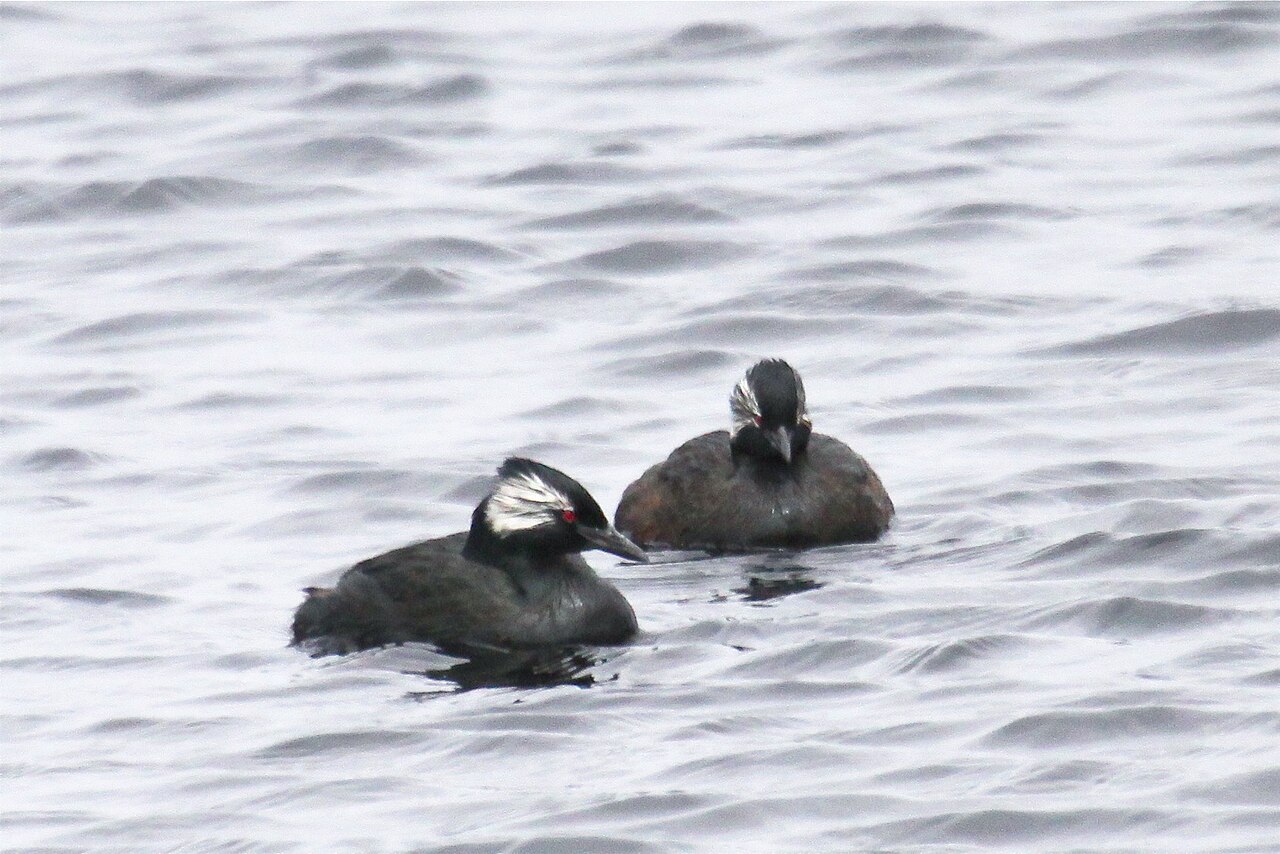
R. r. rolland, the subspecies found only in the Falkland Islands
Temperament
wary and secretive
Flight Pattern
short rapid wingbeats; reluctant flier, more often dives to escape
Social Behavior
Often seen singly or in pairs during breeding, and in small loose groups at other times. Pairs perform courtship displays with head-shaking and vocal duets. Nests are floating platforms anchored to emergent vegetation, and both adults tend the young, which frequently ride on the parents’ backs.
Migratory Pattern
Partial migrant
Song Description
Gives sharp, trilled and chattering calls that carry over water, often in duet between mates. Vocalizations are most frequent at dawn and dusk and during courtship, consisting of rapid rattles and whinnying notes.
Plumage
Sooty to blackish upperparts with contrasting whitish underparts and rufous-brown flanks; breeding adults show conspicuous white ear-tufts. Non-breeding birds are duller, with less distinct facial contrast. A white wing patch is visible in flight.
Diet
Feeds mainly on small fish, aquatic insects and their larvae, as well as crustaceans and other invertebrates. It forages by pursuit-diving from the surface, propelling itself with its feet. Prey is swallowed underwater or brought to the surface. Like other grebes, it swallows feathers that help protect the stomach and assist in pellet formation.
Preferred Environment
Forages along vegetated lake edges, reedbeds, and sheltered coves with patches of open water. It favors clear, calm waters where underwater visibility and cover are good, and will also use brackish lagoons.