
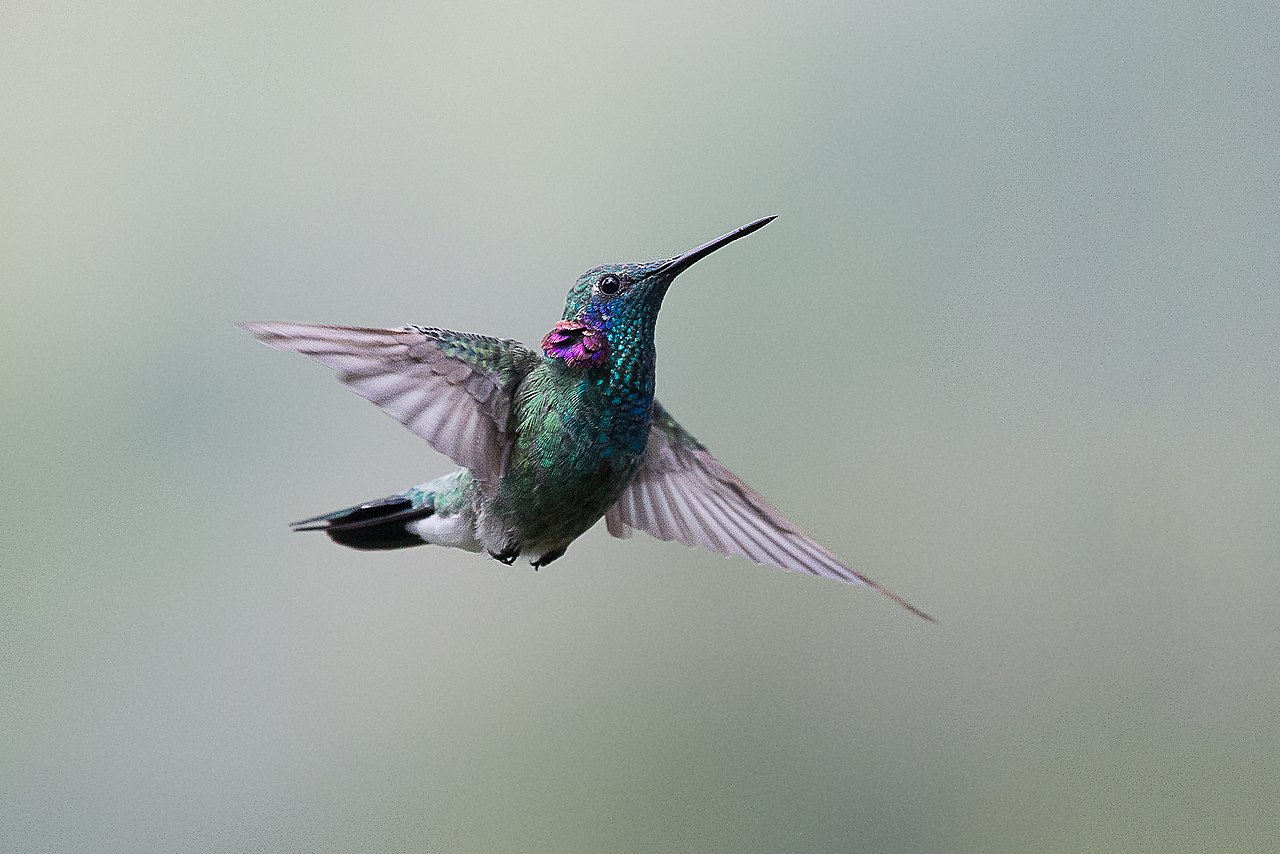
The white-vented violetear is a species of hummingbird in the subfamily Polytminae, the mangoes. It is found in Argentina, Bolivia, Brazil, and Paraguay. In April, 2024, one was also photographed at Batsu Gardens in Costa Rica.
Region
South America
Typical Environment
Occurs widely in central and eastern South America, especially in Brazil, eastern Bolivia, Paraguay, and northern Argentina. It favors open woodlands, cerrado savannas, scrubby edges, gallery forests, and urban parks and gardens. Birds follow flowering events and may appear in large numbers where nectar is abundant. Vagrancy beyond the normal range is rare but documented.
Altitude Range
Sea level to 2000 m
Climate Zone
Tropical
Ease of Keeping
Beginner friendly: 1/5
A medium-sized hummingbird named for its striking white vent and violet ear patch, which are key field marks. It frequents open habitats and gardens and readily visits flowering trees and feeders. Individuals often move locally to track blooming cycles, and vagrants are occasionally recorded far outside the core range.


A male white-vented violetear at São Luiz do Paraitinga, São Paulo state, Brazil

Temperament
territorial and active
Flight Pattern
short rapid wingbeats with agile hovering; fast, direct dashes between flowers
Social Behavior
Typically solitary at feeding sites, with males aggressively defending rich nectar sources. Courtship involves chases and display flights around flowering trees. The nest is a small cup of plant down bound with spider silk, placed on horizontal branches.
Migratory Pattern
Partial migrant
Song Description
Gives sharp, metallic chips and tinkling notes, often delivered persistently from exposed perches. Wing hum is pronounced at close range during hovering.
Plumage
Metallic green overall with a conspicuous violet patch on the ear-coverts and contrasting white undertail coverts (vent). Tail is dark bluish with a subtle subterminal band and slightly forked. Feathers are glossy with iridescent highlights that vary by light angle.
Diet
Feeds primarily on nectar from a variety of flowering shrubs and trees, including native blossoms and ornamental plantings. Also takes small arthropods for protein, gleaned from foliage or sallied after in mid-air. Will visit feeders offering sugar water where available.
Preferred Environment
Forages along edges, in open woodlands, savannas, and urban parks and gardens. Often concentrates at mass-flowering trees and along hedgerows or riparian corridors.


