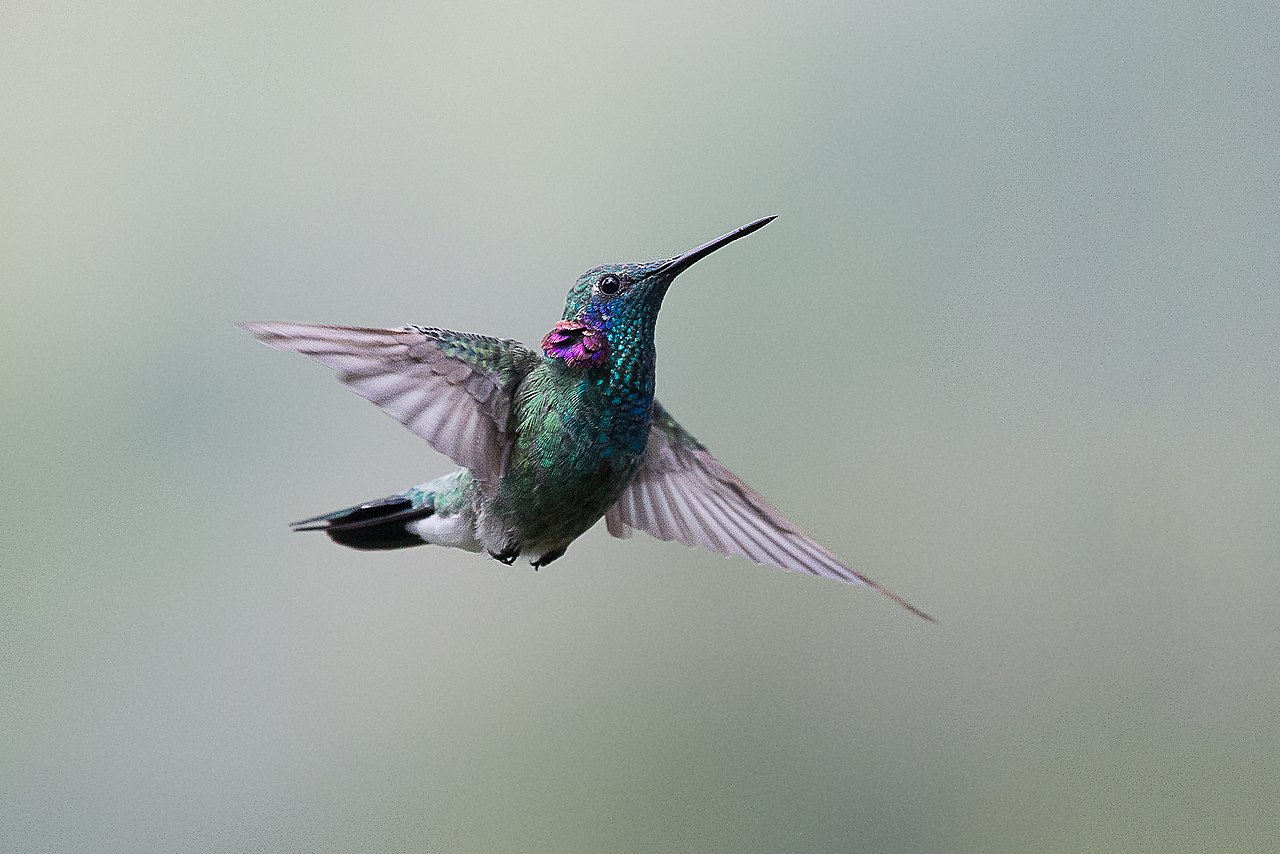
The white-tufted sunbeam is a species of hummingbird in the family Trochilidae. It is found only in Peru. Its natural habitats are subtropical or tropical moist montane forest and subtropical or tropical high-altitude shrubland.
Region
Andes Mountains
Typical Environment
Endemic to the Peruvian Andes, the species inhabits subtropical and tropical moist montane forest edges, elfin forest, and high-altitude shrublands. It favors sunny, flower-rich slopes, ravines, and hedgerows where tubular blossoms are abundant. The bird tolerates a mosaic of natural and lightly disturbed habitats, often using secondary growth and scrub. It is most regularly encountered in south-central Peru within the upper Andean valleys and intermontane slopes.
Altitude Range
2500–3800 m
Climate Zone
Highland
Ease of Keeping
Beginner friendly: 1/5
The white-tufted sunbeam is a medium-sized Andean hummingbird notable for a small, bright white tuft on the upper breast that contrasts with its rich coppery-bronze body. It is restricted to high elevations in south-central Peru, where males aggressively defend flower-rich territories. Like many hummingbirds, it supplements nectar with tiny insects for protein. It often frequents edges of montane forest, shrubby slopes, and human-altered hedgerows with abundant tubular blossoms.


White-tufted Sunbeam
Temperament
territorial and vigilant
Flight Pattern
rapid hovering with short darting flights
Social Behavior
Typically solitary at feeding sites, with males strongly defending flower patches from other hummingbirds. Courtship involves aerial chases and display flights near favored perches. The female builds a small cup nest, usually placed on sheltered branches or banks, and tends the young alone. Pairs are not known to maintain long-term bonds beyond the breeding period.
Migratory Pattern
Resident
Song Description
Vocalizations are thin, high-pitched chips and short, metallic trills. Calls are used frequently during territorial chases and while foraging, giving a sharp, tinkling quality in the canopy.
Plumage
Rich coppery-bronze to rufous body with an iridescent sheen; small, conspicuous white tuft on the upper breast; darker head and mantle with glowing highlights; tail slightly rufous and often dusky-tipped.
Diet
Primarily consumes nectar from tubular flowers of Andean shrubs and vines, including Fuchsia, Bomarea, and other montane bloomers. It also hawks small insects and spiders for protein, especially during breeding. The species moves methodically among favored flower patches, often returning to the same rich resources. Territorial birds will actively chase intruders from prime nectar sources.
Preferred Environment
Feeds along forest edges, shrubby slopes, and in clearings where sun-exposed flowers are plentiful. It also uses hedgerows and secondary growth in agricultural mosaics, particularly where native flowering plants persist.