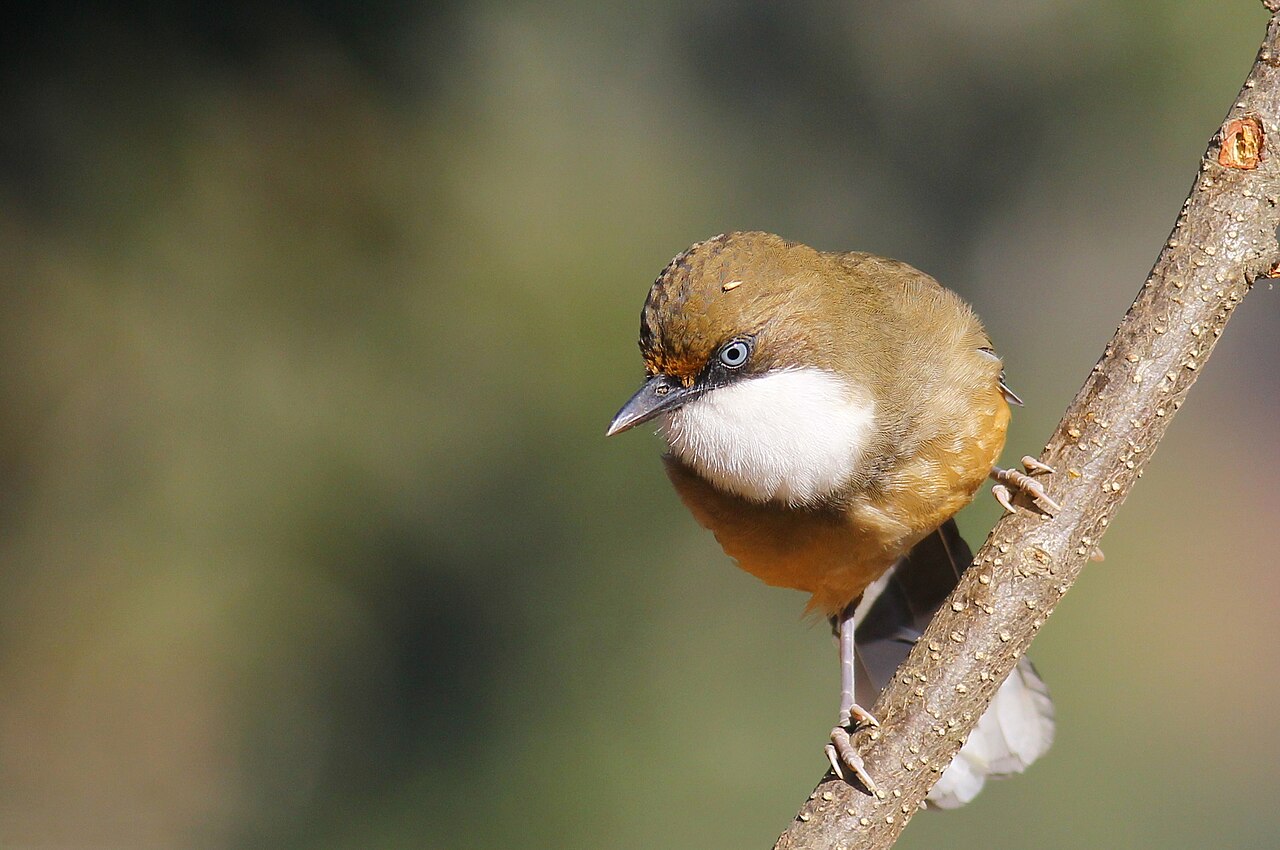
The white-throated jay, also known as the Omiltemi jay, is a species of bird in the family Corvidae. It is endemic to the Sierra Madre del Sur ranges of Mexico.
Region
Sierra Madre del Sur, Mexico
Typical Environment
Found in humid montane cloud forests and mature pine–oak–evergreen forests with dense understory and abundant epiphytes. It favors steep ravines, forest edges, and interior midstory to canopy strata. The species relies on well-preserved, continuous forest and is sensitive to logging and clearing. It may occasionally use second-growth adjacent to primary forest but requires tall, moist habitats. Encounters are typically local and patchy across its limited range.
Altitude Range
1800–3000 m
Climate Zone
Highland
Ease of Keeping
Beginner friendly: 1/5
Also called the Omiltemi jay, it is one of Mexico’s most range-restricted corvids, confined to humid montane forests of the Sierra Madre del Sur. It is shy and often stays in dense foliage, making it harder to observe than many other jays. Ongoing loss and fragmentation of cloud forest habitat pose the main threat to the species. Its name references Omiltemi, a locality in Guerrero where it has been recorded.


Temperament
secretive and wary
Flight Pattern
short rapid wingbeats with direct, undulating flights through forest gaps
Social Behavior
Usually seen in pairs or small family groups moving through mid-canopy foliage. It forages methodically, gleaning from leaves, mosses, and epiphytes, and may accompany mixed-species flocks. Nests are placed in trees, with a cup of twigs and plant fibers concealed in dense vegetation. Breeding activity is mainly in the local spring–summer rainy period.
Migratory Pattern
Resident
Song Description
Vocalizations are a mix of harsh, nasal jay-like scolds and buzzy notes, interspersed with soft whistles. Calls carry through the forest but are given intermittently, often when groups stay in cover. Alarm notes are sharper and more rasping.
Plumage
Mostly deep cobalt to navy-blue with a striking white throat and upper breast, contrasting with a darker face and crown; underparts become darker blue toward the belly. Feathers often appear velvety in texture in good light, with subtle darker mask around the lores and ear-coverts. Wings and tail are rich blue, and the back is slightly duller.
Diet
An omnivore that takes insects and other arthropods, especially beetles and caterpillars, as well as small fruits and berries. It occasionally consumes seeds and may take small vertebrates or eggs opportunistically. Foraging includes careful gleaning from foliage and branches, probing into moss and bromeliads, and short sallies to seize prey. It may cache food when resources are abundant.
Preferred Environment
Feeds within the midstory and canopy of humid montane forest, particularly in areas with heavy epiphyte growth. Often works along forest edges, ravines, and clearings adjacent to primary habitat. Uses dense cover to remain concealed while foraging.