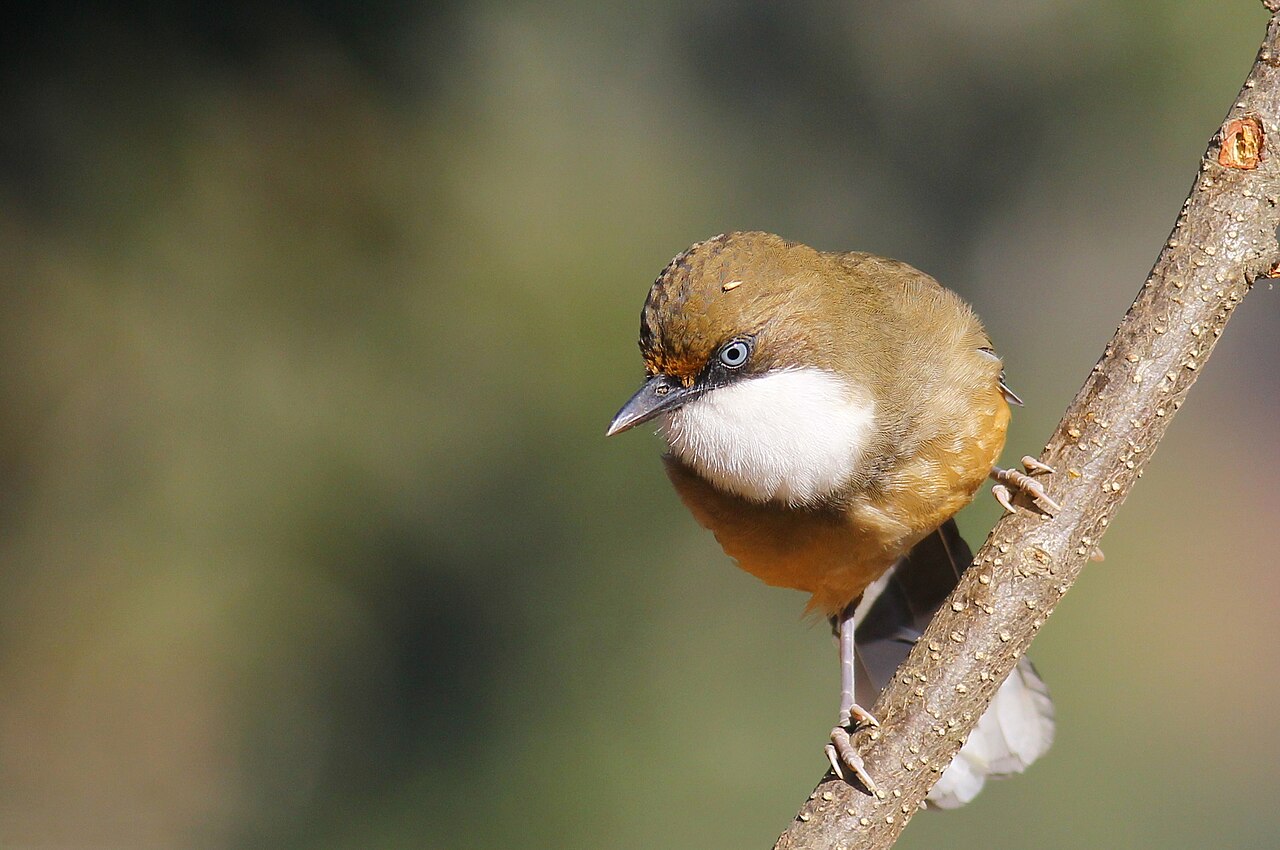
The white-throated jungle flycatcher, also known as the Negros jungle flycatcher is a species of bird in the Old World flycatcher family Muscicapidae. It is endemic to the Philippines and formerly on Guimaras before its extirpation there. The natural habitats of the white-throated jungle flycatcher are tropical moist lowland forests and tropical moist montane forests at altitudes of up to 1,350 meters. It is threatened by habitat loss.
Region
Southeast Asia
Typical Environment
Endemic to the central Philippines, mainly on Negros and Panay, formerly on Guimaras where it is now likely extirpated. Occupies primary and mature secondary tropical moist forests from lowlands into lower montane zones. Favors shaded gullies, riparian corridors, and dense understory with vine tangles and bamboo. Often occurs near streams and on steep ravine slopes where insect prey is abundant. Sensitive to heavy logging and extensive fragmentation, persisting best in large, contiguous forest blocks.
Altitude Range
Sea level to 1350 m
Climate Zone
Tropical
Ease of Keeping
Beginner friendly: 1/5
Also called the Negros jungle flycatcher, this shy understory bird is confined to the islands of Negros and Panay in the Philippines and has been extirpated from nearby Guimaras. It keeps to dense, humid forest and ravines, where it perches low and makes short sallies for insects. Ongoing deforestation is its main threat, and conservation focuses on protecting remaining lowland and montane forests. Its crisp white throat contrasts with otherwise brown tones, making brief views distinctive.


A skin from the Naturalis Biodiversity Center
Temperament
skulking and quiet
Flight Pattern
short rapid wingbeats with brief, low sallies between perches
Social Behavior
Typically solitary or in pairs in the breeding season, keeping close to dense cover. Nests are thought to be cup-shaped and placed low in shrubs or on banks near streams. Maintains small territories in suitable forest patches and may join mixed-species flocks outside breeding when food is abundant.
Migratory Pattern
Resident
Song Description
Soft, high-pitched whistles and thin tseep notes delivered from concealed perches. Call is modest and easily overlooked, with repeated high notes and short trills in the early morning.
Plumage
Plain brown upperparts with warmer rufous tones on tail and uppertail coverts, contrasting sharply with a clean white throat and upper breast. Underparts otherwise pale grayish to buff with slightly duskier flanks; head slightly darker brown. Feathers appear soft and unpatterned, aiding camouflage in shadowy understory.
Diet
Feeds mainly on small insects such as flies, beetles, ants, and moths, and will also take spiders and other small arthropods. Gleans from leaves and twigs and makes short sallies to snatch airborne prey. Occasionally drops to the ground to pick from leaf litter, especially along shaded stream edges.
Preferred Environment
Dense understory of humid lowland and lower montane forests, especially along ravines and riparian thickets. Frequently hunts from low, shaded perches within a few meters of the ground.