The white-throated magpie-jay is a large Central American species of magpie-jay. It ranges in Pacific-slope thorn forest from Jalisco, Mexico, to Northern Puntarenas, Costa Rica. Magpie-jays are noisy, gregarious birds, often traveling in easy-to-find flocks, mobbing their observers.
Region
Pacific slope of Mexico and Central America
Typical Environment
Occurs from Jalisco, Mexico, south through Guatemala, El Salvador, Honduras, and Nicaragua to northern Puntarenas, Costa Rica. Favors tropical dry forest, thorn scrub, and second-growth woodland, as well as forest edges and riparian corridors. Readily uses human-modified landscapes including pastures, plantations, and parks. Often seen foraging along roadsides and in open canopy mosaics.
Altitude Range
Sea level to 1500 m
Climate Zone
Tropical
Ease of Keeping
Beginner friendly: 2/5
The white-throated magpie-jay is a striking, long-tailed corvid of the Pacific-slope dry forests from western Mexico to northwestern Costa Rica. It is notably social and often travels in noisy flocks, frequently mobbing potential predators. Groups commonly practice cooperative breeding, with nonbreeding helpers assisting a dominant pair.


Upper body
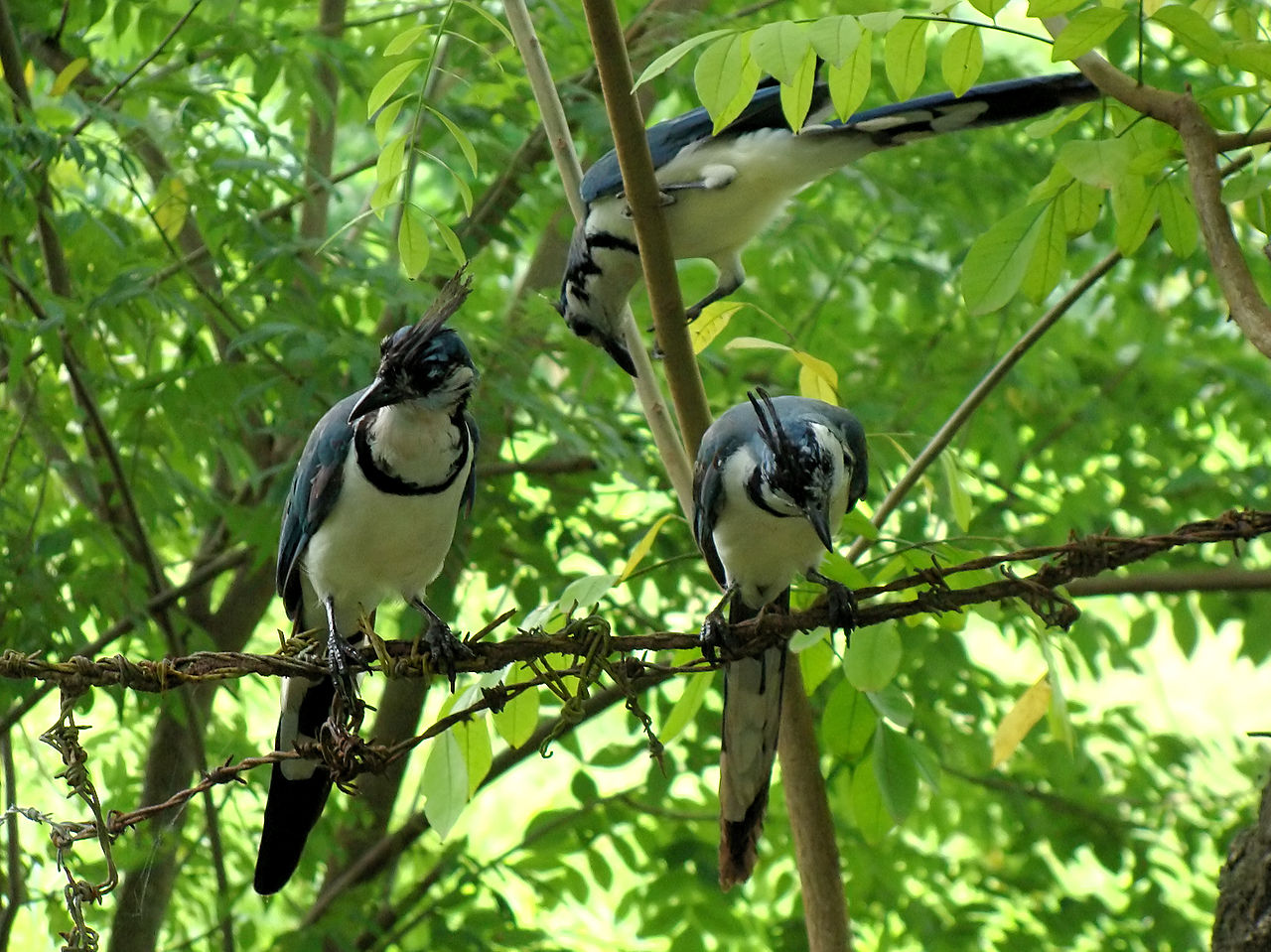
White-throated magpie-jay at Nicoya Peninsula, Costa Rica
Temperament
social and active
Flight Pattern
short rapid wingbeats with frequent glides
Social Behavior
Lives in gregarious groups that maintain territories and often mob predators. Typically exhibits cooperative breeding, with helpers assisting the dominant female at the nest. Nests are bulky, cup-shaped structures placed high in trees.
Migratory Pattern
Resident
Song Description
Vocal repertoire includes loud, ringing calls, harsh scolds, and chatters. Also gives whistled notes and variable squeals, often delivered in chorus by a flock.
Plumage
Blue upperparts with a long, white-tipped tail; white underparts and throat contrasted by a narrow black breast band. Prominent long, black crest and a bold black facial mask. Smooth, sleek plumage with strong contrast between blue, white, and black.
Diet
Opportunistic omnivore that eats large insects, spiders, and other invertebrates, along with fruits and seeds. Will take eggs and nestlings, small lizards, and occasionally other small vertebrates. Forages methodically, probing bark, foliage, and ground litter, and may cache food.
Preferred Environment
Most often feeds along forest edges, open woodlands, and scrub, including agricultural areas and gardens. Regularly uses mixed habitats where trees intersperse with open ground, and will exploit human-provided food around settlements.