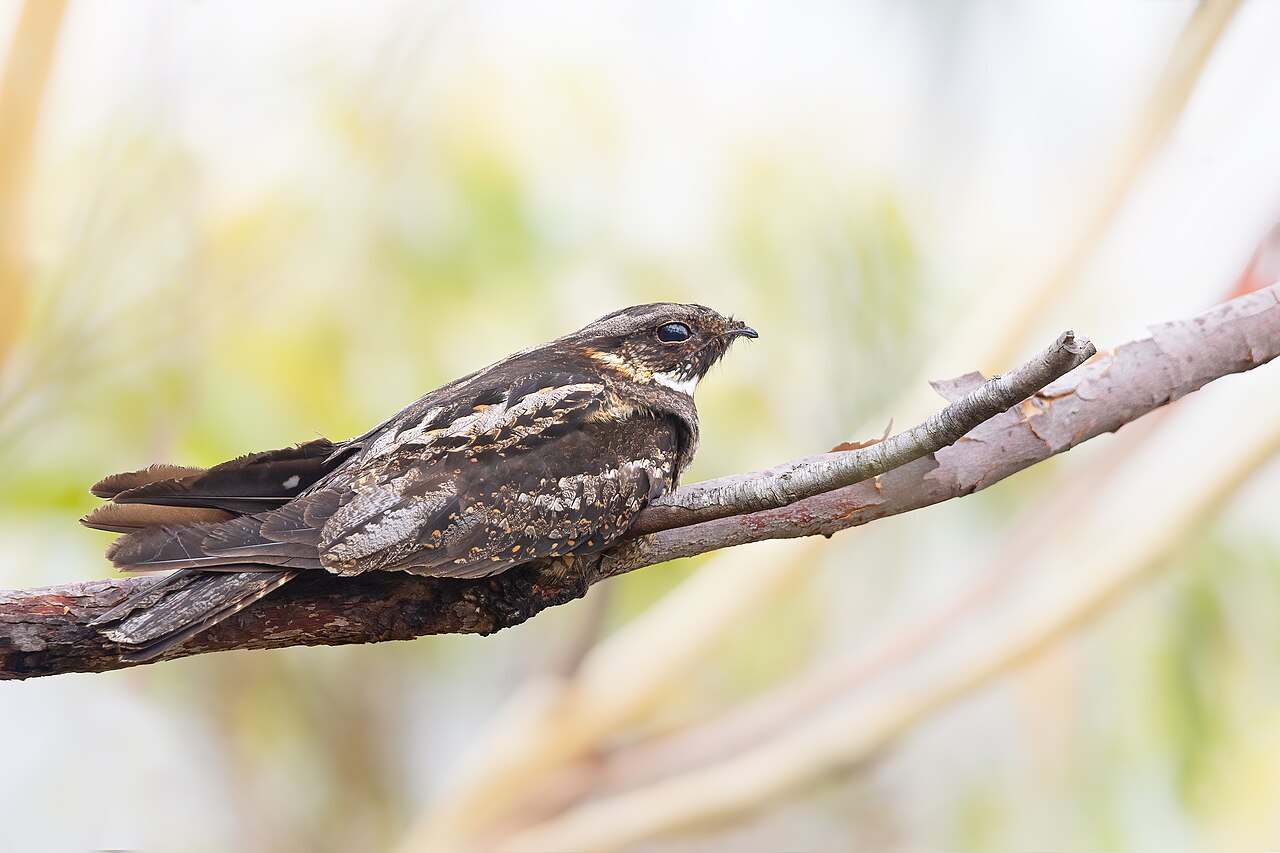
The white-throated manakin is a species of bird in the family Pipridae. It is found in Brazil, French Guiana, Guyana, Suriname, and Venezuela.
Region
Guiana Shield, northern South America
Typical Environment
Occurs in lowland and foothill tropical rainforests across northern Brazil (Amapá and adjacent states), French Guiana, Guyana, Suriname, and eastern Venezuela. Prefers humid terra firme forest but also uses foothill forest, tall second-growth, and forest edges with fruiting shrubs. Most often found in the shaded understory and midstory, especially near light gaps, streams, and leks. It avoids heavily degraded open areas but can persist where continuous forest remains nearby.
Altitude Range
0–1200 m
Climate Zone
Tropical
Ease of Keeping
Beginner friendly: 1/5
A small manakin of the Guiana Shield, the white-throated manakin is known for its striking male plumage and energetic courtship displays on leks. Males perform rapid hops and short flights with wing snaps to attract females. Like many manakins, it plays an important role in forest regeneration by dispersing seeds of small fruits. It was formerly placed in Pipra but is now in the genus Corapipo.


From Planches enluminées d'histoire naturelle (1765)

Temperament
shy and active
Flight Pattern
short rapid wingbeats
Social Behavior
Males gather at traditional leks where each defends a tiny display court. Displays include rapid hops, short dashes, and audible wing snaps; males provide no parental care. Females select mates at the lek, then nest alone, building a small cup in low vegetation and caring for the young without male assistance.
Migratory Pattern
Resident
Song Description
Vocalizations are thin, high-pitched whistles and buzzy notes, often given from low perches near the lek. Wing snaps and mechanical sounds are a conspicuous part of the display and may accompany brief calls.
Plumage
Male is glossy black with a crisp white throat that contrasts strongly with the dark body; female is olive-green with a paler whitish throat and underparts. Plumage is smooth with minimal streaking; wings are short and rounded. Juveniles resemble females.
Diet
Primarily consumes small, soft fruits and berries from understory shrubs and midstory trees, including melastomes and other arillate fruits. Supplements diet with small arthropods, which are gleaned from foliage or taken in short sallies. By swallowing fruits whole and passing the seeds, it acts as an effective seed disperser.
Preferred Environment
Forages in the shaded understory and lower midstory, especially at forest edges, light gaps, and along streams where fruiting plants are common. Often feeds near lek sites and may join mixed-species flocks opportunistically.