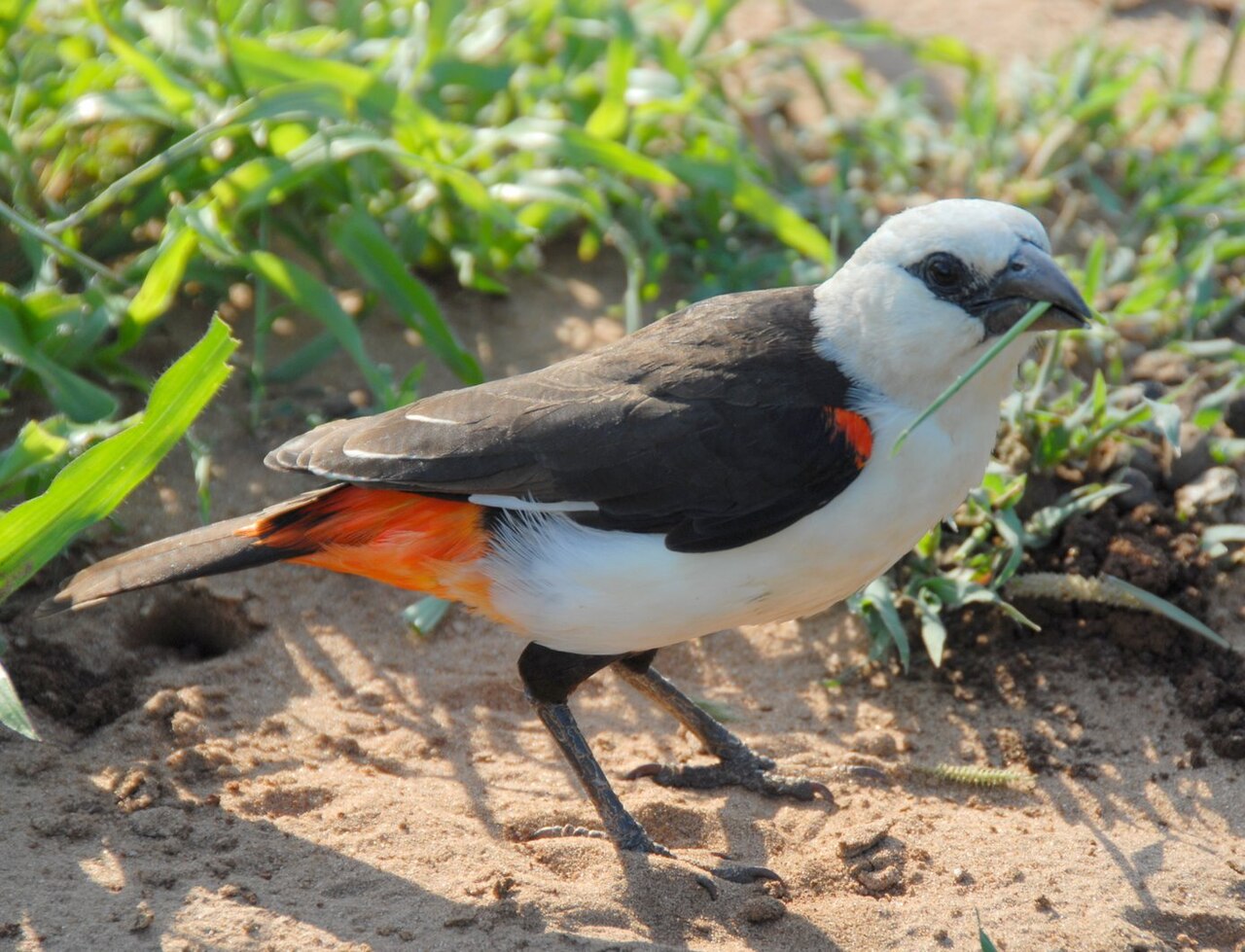
The white-headed barbet is a species of bird in the family Lybiidae. It is found in Angola, Cameroon, Central African Republic, Chad, Democratic Republic of the Congo, Kenya, Nigeria, South Sudan, Tanzania, and Uganda.
Region
Central and East Africa
Typical Environment
Occurs in open woodland, savanna with scattered trees, riverine forest, edges of secondary forest, and farmlands with fruiting trees. It tolerates human-altered landscapes and is frequently seen in orchards and gardens. Birds often perch conspicuously on upper branches and move between fruiting trees within territories. They avoid dense closed-canopy rainforest but use clearings and edges.
Altitude Range
Sea level to 2000 m
Climate Zone
Tropical
Ease of Keeping
Beginner friendly: 2/5
This heavy-billed barbet is noted for loud, rhythmic duets that help pairs advertise territories. Both sexes excavate nest cavities in dead wood and often reuse or enlarge them in subsequent years. It feeds largely on fruit and is an important seed disperser in savanna-woodland ecosystems.

Temperament
social and active
Flight Pattern
short rapid wingbeats with undulating flight
Social Behavior
Usually seen in pairs or small family groups that maintain year-round territories. Pairs perform antiphonal duets from exposed perches. They excavate nest cavities in dead branches or trunks and both parents share incubation and chick rearing.
Migratory Pattern
Resident
Song Description
A loud, rhythmic, repetitive series of hoots or chock notes delivered as a synchronized duet by the pair. Calls can carry long distances and are often given at dawn and dusk.
Plumage
Striking white head and throat contrasting with mostly black upperparts and flanks; underparts whitish to buffy. Broad, stout bill with bristles at the base; wings show pale patches in flight. Sexes are similar with juveniles duller and more brownish.
Diet
Primarily consumes figs and other soft fruits, supplemented by berries and drupes. Also takes insects such as beetles and caterpillars, especially when feeding young. Occasionally gleans from bark or foliage. Acts as an effective seed disperser by passing or regurgitating seeds after feeding.
Preferred Environment
Feeds in the canopy and mid-story of fruiting trees in woodland, forest edges, and wooded farmland. Will visit gardens and orchards and sometimes descends to lower branches or the ground for fallen fruit.