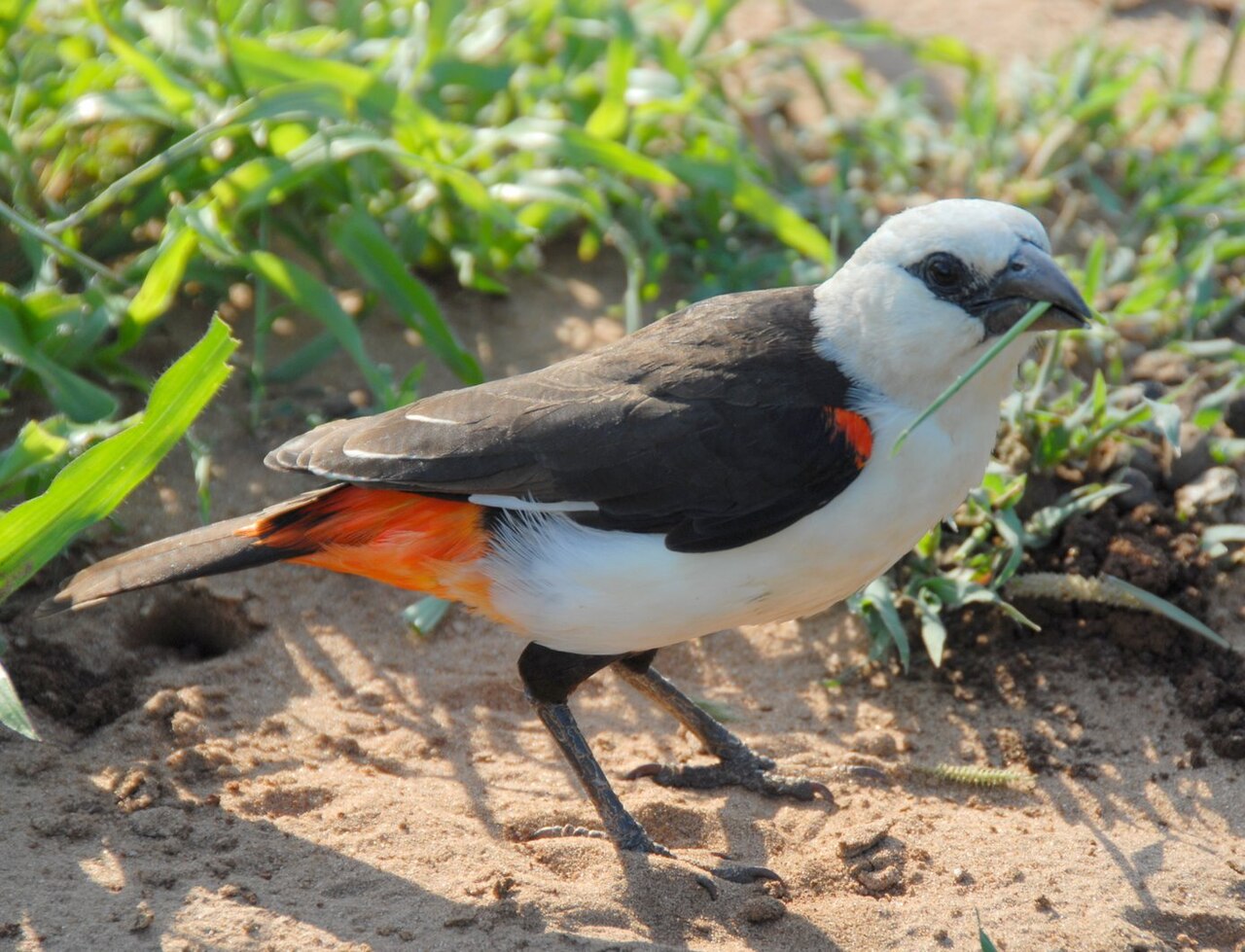
The white-headed brushfinch is a species of bird in the family Passerellidae.
Region
Tumbesian region of southwestern Ecuador and northwestern Peru
Typical Environment
Occurs on the Pacific slope in tropical dry forest, thorn scrub, and semi-arid woodland. It favors dense understory, forest edges, riparian thickets, and regenerating second growth, and may use hedgerows and shrub-dominated agricultural mosaics. Birds typically keep low to mid-levels in cover, venturing into more open areas when feeding. It tolerates moderate habitat disturbance if shrub layers remain.
Altitude Range
Sea level to 1800 m
Climate Zone
Tropical
Ease of Keeping
Beginner friendly: 1/5
A shy understory sparrow of the Tumbesian dry forests, the white-headed brushfinch often reveals itself with sharp chip notes as it moves through dense scrub. It frequently forages near the ground, flicking its tail and gleaning seeds and insects. Outside the breeding season it may join mixed-species flocks. Ongoing loss of tropical dry forest is a concern for local populations.


Temperament
skulking but active
Flight Pattern
short rapid wingbeats
Social Behavior
Usually in pairs or small family groups within dense shrub layers, maintaining territories during the breeding season. Builds a cup-shaped nest low in shrubs or thickets; both parents attend young. Outside breeding, it may associate loosely with mixed-species flocks along forest edges and second growth.
Migratory Pattern
Resident
Song Description
Song is a series of clear, bright whistles and trills delivered from inside cover or low perches. Calls include sharp chip and thin tsee notes used for contact within pairs or family groups.
Plumage
Clean white head contrasting with olive-brown upperparts and warm buff to grayish underparts; wings and tail dusky with olive edges.
Diet
Eats a mix of seeds, small fruits, and arthropods such as beetles, ants, and caterpillars. Forages by gleaning from leaves and stems and by hopping on or near the ground to pick items from litter. Will take berries from low shrubs and may probe bark crevices for hidden invertebrates. Diet composition shifts seasonally with fruiting and insect availability.
Preferred Environment
Feeds in dense scrub, forest edges, riparian thickets, and second-growth tangles where leaf-litter and low foliage are abundant. It often uses shaded ground and the lower strata of shrubs, occasionally venturing into more open patches along trails and clearings.