
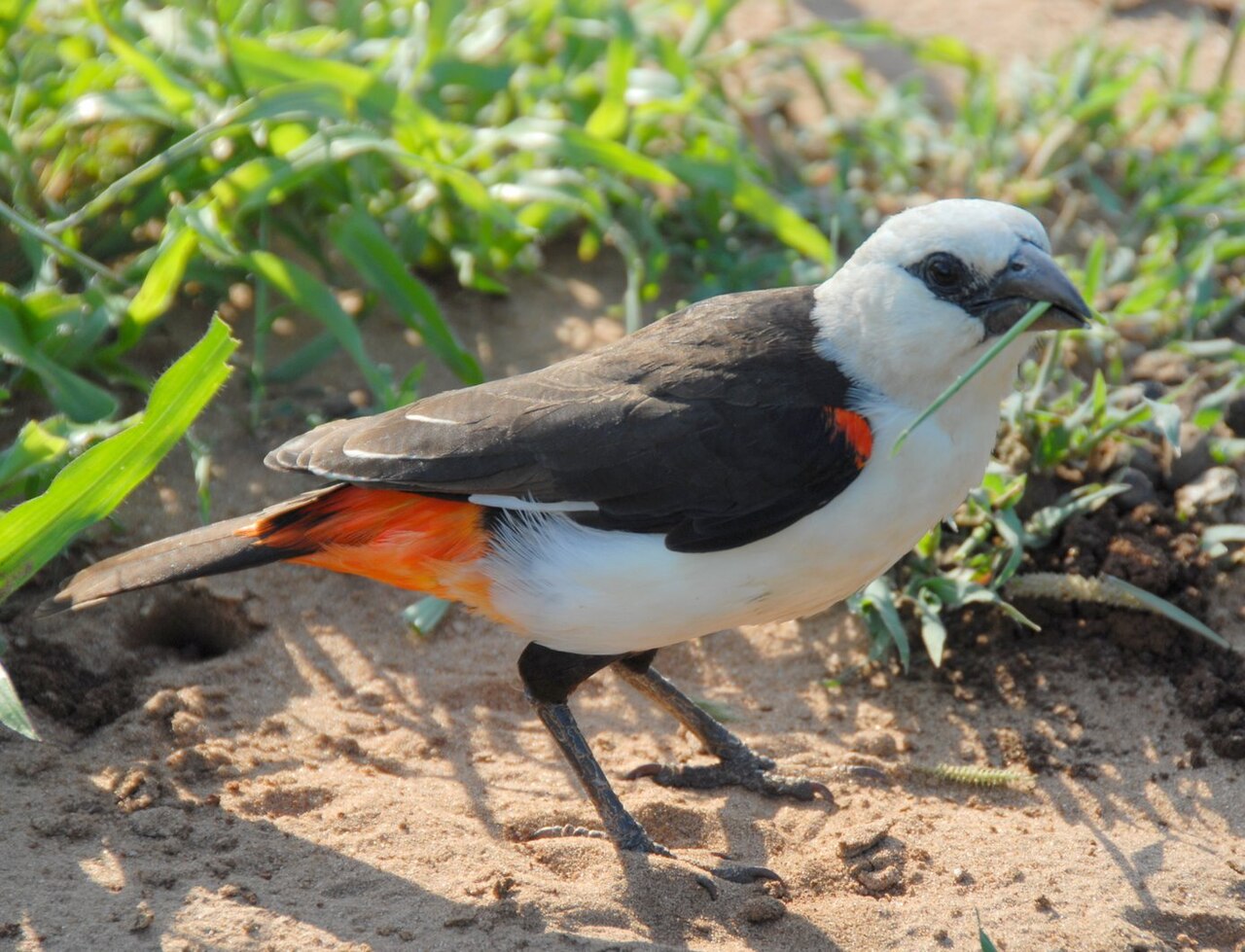
The white-headed buffalo weaver or white-faced buffalo-weaver is a species of passerine bird in the family Ploceidae native to East Africa. The buffalo part of its name derives from its habit of following the African buffalo, feeding on disturbed insects. Two subspecies are recognized.
Region
East Africa
Typical Environment
Occurs in dry savanna, thorn scrub, and open acacia woodland from southern Ethiopia and Somalia through Kenya to northern and central Tanzania, with localized presence in northeastern Uganda. It favors semi-arid landscapes with scattered trees and bushes and often frequents human-modified areas such as ranchlands. Birds are typically found near water and along edges where grassland meets thorny thickets. They commonly associate with herds of large mammals, capitalizing on disturbed insects. Seasonal movements are mostly local, tracking food and rainfall.
Altitude Range
Sea level to 2000 m
Climate Zone
Tropical
Ease of Keeping
Beginner friendly: 2/5
The white-headed buffalo weaver is a conspicuous East African weaver known for following large mammals like buffalo to snatch insects they flush. It builds bulky, thorny communal nests with multiple chambers in acacia trees. Two subspecies occur, differing slightly in head pattern and range. Its striking white head and orange-rufous rump make it easy to identify even at a distance.


Perched at the National Aviary
Temperament
social and active
Flight Pattern
short rapid wingbeats
Social Behavior
Often found in small groups and loose colonies, especially around nesting trees. Builds large, thorny stick nests with multiple chambers, sometimes reused and expanded over seasons. Pairs maintain territories around nest sites but forage socially, frequently near large mammals or livestock.
Migratory Pattern
Resident
Song Description
Vocalizations include harsh, chattering notes and rasping calls, often delivered in short bursts from exposed perches. The song is a mix of grating trills and chatters, carrying well across open savanna.
Plumage
Crisp white head and underparts contrasting with black back, wings, and tail; bright orange-rufous rump and undertail coverts. In flight, white wing patches are evident against the black wings. Sexes are similar; juveniles are duller with less stark contrast.
Diet
Feeds on a variety of insects such as beetles, grasshoppers, and termites, often taken from the ground or low vegetation. Also consumes fruits and berries, including figs, and will take seeds opportunistically. It frequently capitalizes on insects flushed by grazing mammals.
Preferred Environment
Forages on open ground, at the bases of shrubs, and in low branches within acacia woodland and thorn scrub. Common around grazed savannas, ranches, and village edges where resources are accessible.


