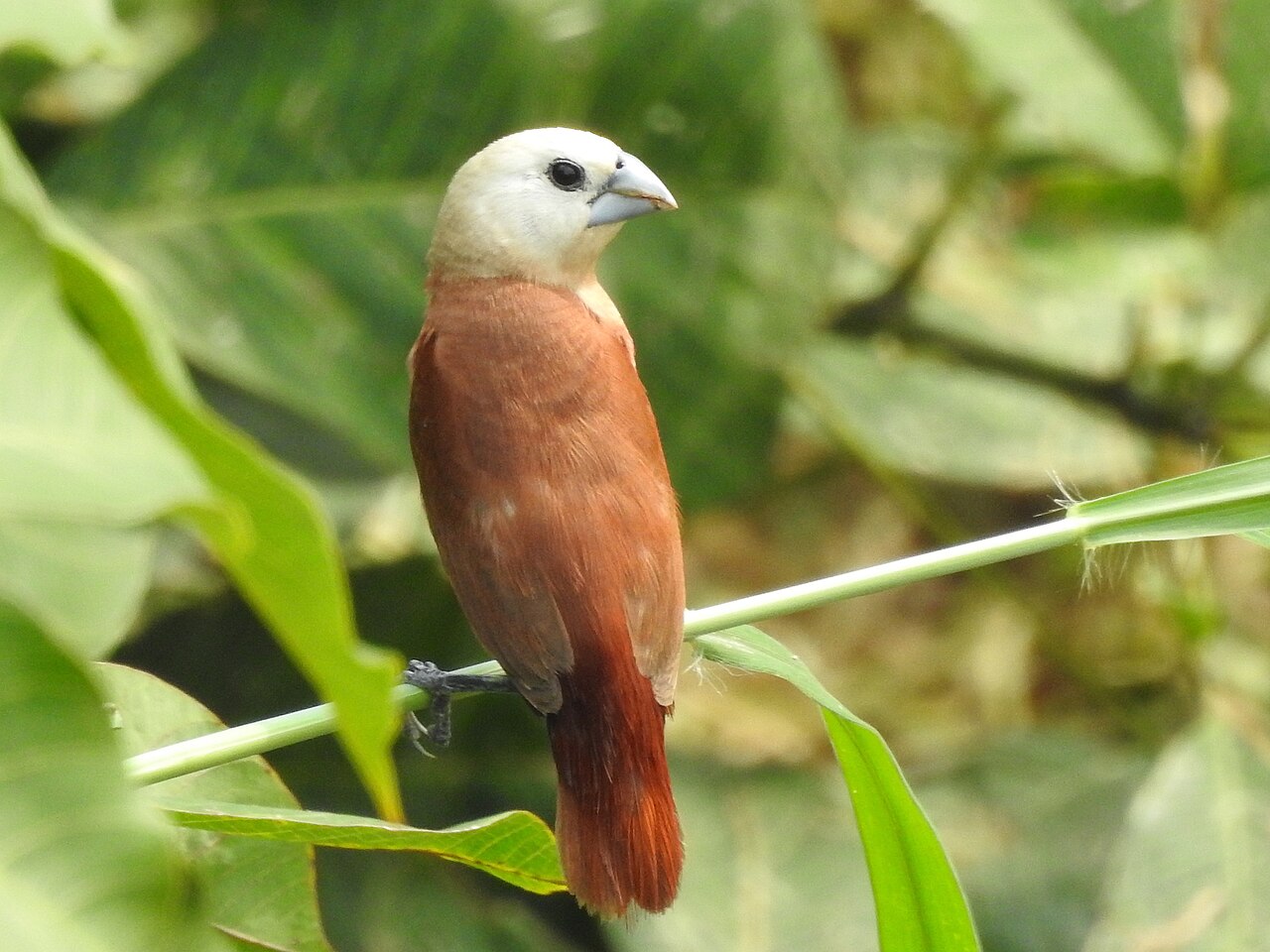
The white-headed bulbul is a songbird species in the bulbul family, Pycnonotidae.
Region
Mainland Southeast Asia and southern China
Typical Environment
Occurs patchily in southern China (e.g., Yunnan) and parts of Myanmar, Thailand, Laos, and Vietnam. It favors evergreen and semi-evergreen forest edges, secondary woodlands, and bamboo thickets. Often found along forested hillsides, river valleys, and light gaps where fruiting trees are abundant. Uses mid-canopy perches and forages from understory to mid-levels.
Altitude Range
Sea level to 1800 m
Climate Zone
Subtropical
Ease of Keeping
Beginner friendly: 1/5
The white-headed bulbul is a forest-edge specialist, easily recognized by its striking white head contrasting with a darker body. It often travels in small, noisy groups and frequents fruiting trees and bamboo stands. Habitat loss and fragmentation in Southeast Asia are its primary threats.

Temperament
social and active
Flight Pattern
short rapid wingbeats with quick undulating movement
Social Behavior
Often seen in small flocks outside the breeding season, keeping contact with soft calls while moving between fruiting trees. Breeding pairs build neat cup nests in shrubs or small trees. Both adults typically participate in incubation and feeding of the young.
Migratory Pattern
Resident
Song Description
Song is a series of bright, whistled phrases interspersed with chatters. Calls include sharp contact notes and scolding chatter when disturbed.
Plumage
Clean white head and throat contrasting with dusky-olive to grey-brown upperparts and paler underparts; feathers appear smooth with minimal streaking.
Diet
Feeds primarily on small fruits and berries, including figs and other soft, pulpy species. Supplements with insects and other small invertebrates, especially during the breeding season. Occasionally gleans from foliage or snatches prey in short sallies. Will join mixed-species flocks at abundant food sources.
Preferred Environment
Forages at forest edges, in secondary growth, and in bamboo or scrubby clearings where fruiting trees are common. Also visits orchards and wooded gardens near suitable habitat.