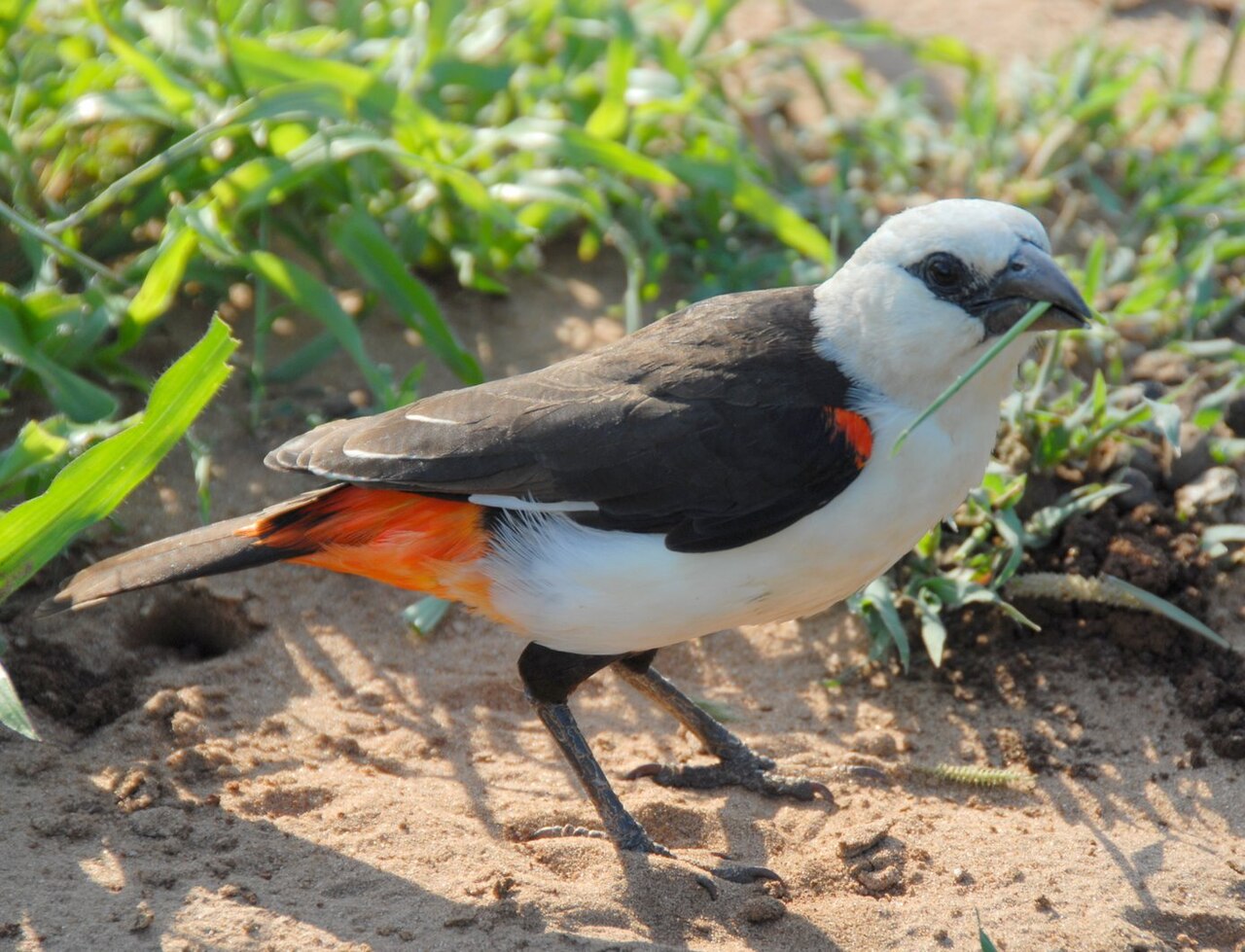
The white-gorgeted fantail is a species of bird in the family Rhipiduridae. It is endemic to the island of Malaita in the Solomon Islands. It was formerly considered as a subspecies of the white-winged fantail. Its natural habitat is subtropical or tropical moist lowland forests. It is threatened by habitat loss.
Region
Solomon Islands
Typical Environment
Occurs only on Malaita, where it inhabits subtropical and tropical moist lowland forests, forest edges, and secondary growth. It favors dense understory and midstory layers where it can perch and make short sallies to catch flying insects. It can persist in selectively logged forest if thickets remain, but extensive clearing reduces its suitability. Riparian corridors and forest gaps with tangled vegetation are frequently used.
Altitude Range
Sea level to 800 m
Climate Zone
Tropical
Ease of Keeping
Beginner friendly: 1/5
This small fantail is restricted to the island of Malaita in the Solomon Islands and is named for its crisp white throat ‘gorget’. It constantly fans and flicks its tail while sallying after insects in the forest understory. Formerly treated as a subspecies of the White-winged Fantail, it is now recognized as a distinct species. Ongoing deforestation and habitat degradation on Malaita pose the primary threat to its survival.
Temperament
active and alert
Flight Pattern
short rapid wingbeats with agile sallies
Social Behavior
Usually seen singly or in pairs, maintaining small territories in suitable forest. Pairs are monogamous during the breeding season and build a neat cup nest bound with spider silk, typically suspended from a forked twig. Family groups may remain loosely associated after fledging.
Migratory Pattern
Resident
Song Description
A series of thin, high-pitched whistles and tinkling phrases interspersed with rapid chattering notes. Calls include sharp scolds given while tail-fanning and foraging in the understory.
Plumage
Sooty to dark slate-brown upperparts with a sharply defined white throat and upper breast forming a ‘gorget’. Underparts otherwise dusky with paler belly; tail often shows pale or white outer edges that are flashed when fanned. Wings are dark with subtle pale fringes.
Diet
Primarily small flying insects such as flies, beetles, and moths, taken in short aerial sallies from low to mid-level perches. Also gleans spiders and small arthropods from foliage and vine tangles. Tail-fanning and wing-flicking help flush prey from cover.
Preferred Environment
Feed along shaded forest trails, edges, and clearings with abundant shrub and vine growth. Often forages along stream margins and in regenerating secondary forest where insect activity is high.