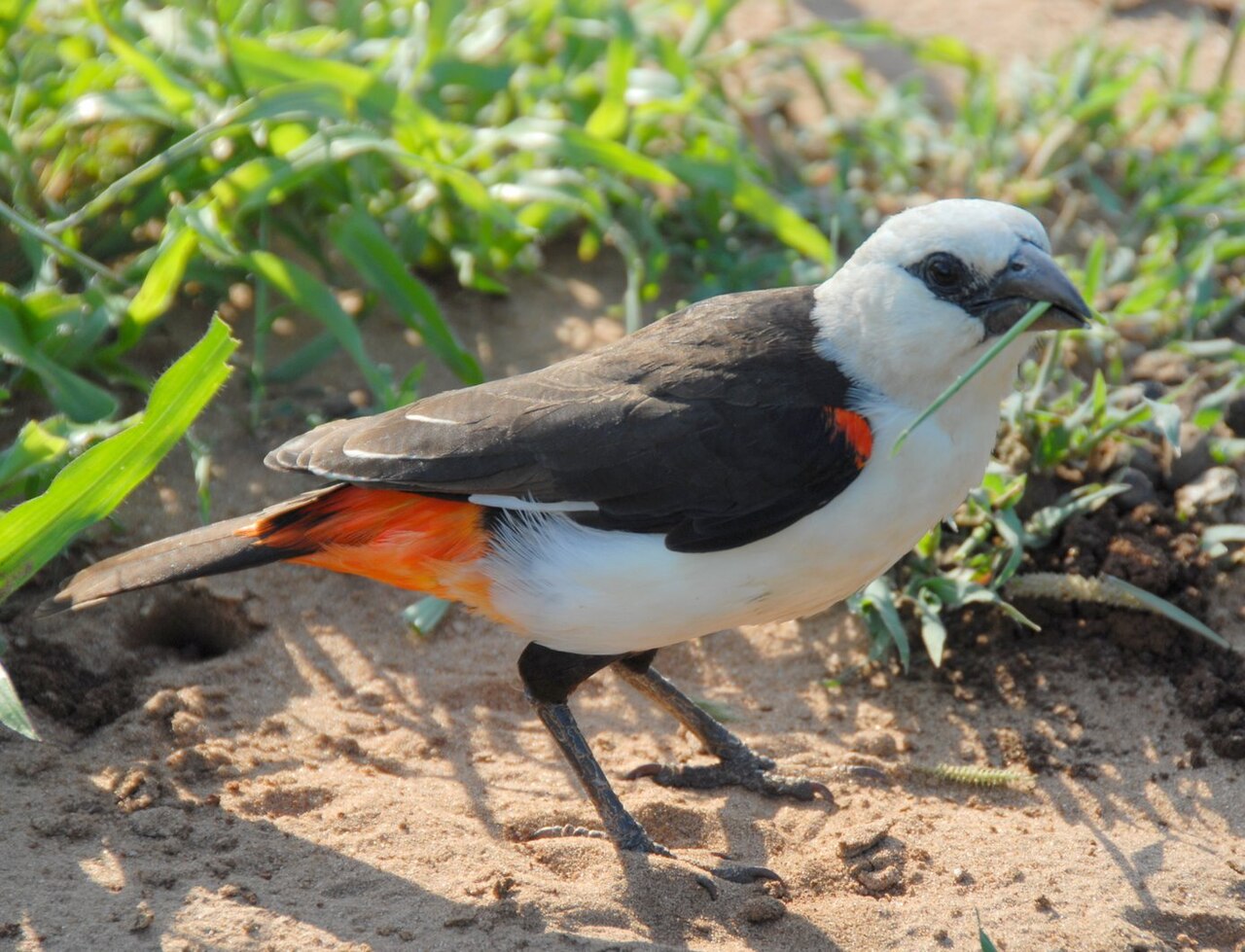
The white-fronted woodpecker is a species of bird in the family Picidae. It is found mainly in Bolivia, Paraguay and Argentina. Its natural habitats are subtropical or tropical dry forests, subtropical or tropical dry shrubland, and subtropical or tropical high-altitude shrubland.
Region
South-central South America
Typical Environment
Occurs mainly in the Gran Chaco and adjacent dry regions of Bolivia, Paraguay, and northern to central Argentina. It favors semi-arid thorn scrub, dry woodland, and areas with abundant columnar cacti. The species also uses forest edges, open ranchlands, and cultivated areas where scattered trees remain. In the Andean foothills it extends into drier montane shrublands. It nests in cavities excavated in cacti or dead wood and forages over trunks, branches, and cactus stems.
Altitude Range
200–2200 m
Climate Zone
Subtropical
Ease of Keeping
Beginner friendly: 1/5
This woodpecker is closely associated with arid and semi-arid habitats, often nesting in cacti as well as dry, thorny trees. It is a non-migratory species that adapts well to open scrub and ranchlands with scattered trees. Both sexes excavate nest cavities and share incubation duties. Its presence is often a good indicator of healthy dry Chaco and shrubland ecosystems.


Temperament
social and active
Flight Pattern
undulating, with bounding arcs between wingbeats
Social Behavior
Usually seen in pairs or small family groups, maintaining year-round territories. Both sexes excavate nest cavities in cacti or dead limbs and share incubation and chick-rearing. They are tolerant of disturbed landscapes provided suitable nest substrates remain. Displays include bill-waving, wing-flicking, and drumming.
Migratory Pattern
Resident
Song Description
Vocalizations include sharp, repeated chik or peek notes and a rolling chatter. Drumming is short and rapid on resonant wood or cactus stems, used for communication and territorial display.
Plumage
Contrasting black-and-white bird with a distinctly white forehead and face, and boldly barred black-and-white upperparts. Underparts are pale buff to whitish with fine dark barring or mottling. Males show a small red patch on the crown or nape; females lack or reduce this red area. Tail is mostly black, and wings are dark with pale spotting visible in flight.
Diet
Takes a wide range of insects, including ants, beetles, and larvae gleaned from bark crevices and cactus surfaces. Also consumes fruits and berries, notably cactus fruits and other seasonally available soft fruits. Occasionally probes for sap or takes seeds when fruit and insects are scarce. Foraging is methodical, involving pecking, probing, and gleaning.
Preferred Environment
Forages on trunks and branches of thorny trees and on large cacti within dry woodlands and scrub. Frequently uses open edges, fencerows, and scattered trees in ranchlands and agricultural mosaics. Will visit fruiting cacti and shrubs in semi-open habitats.