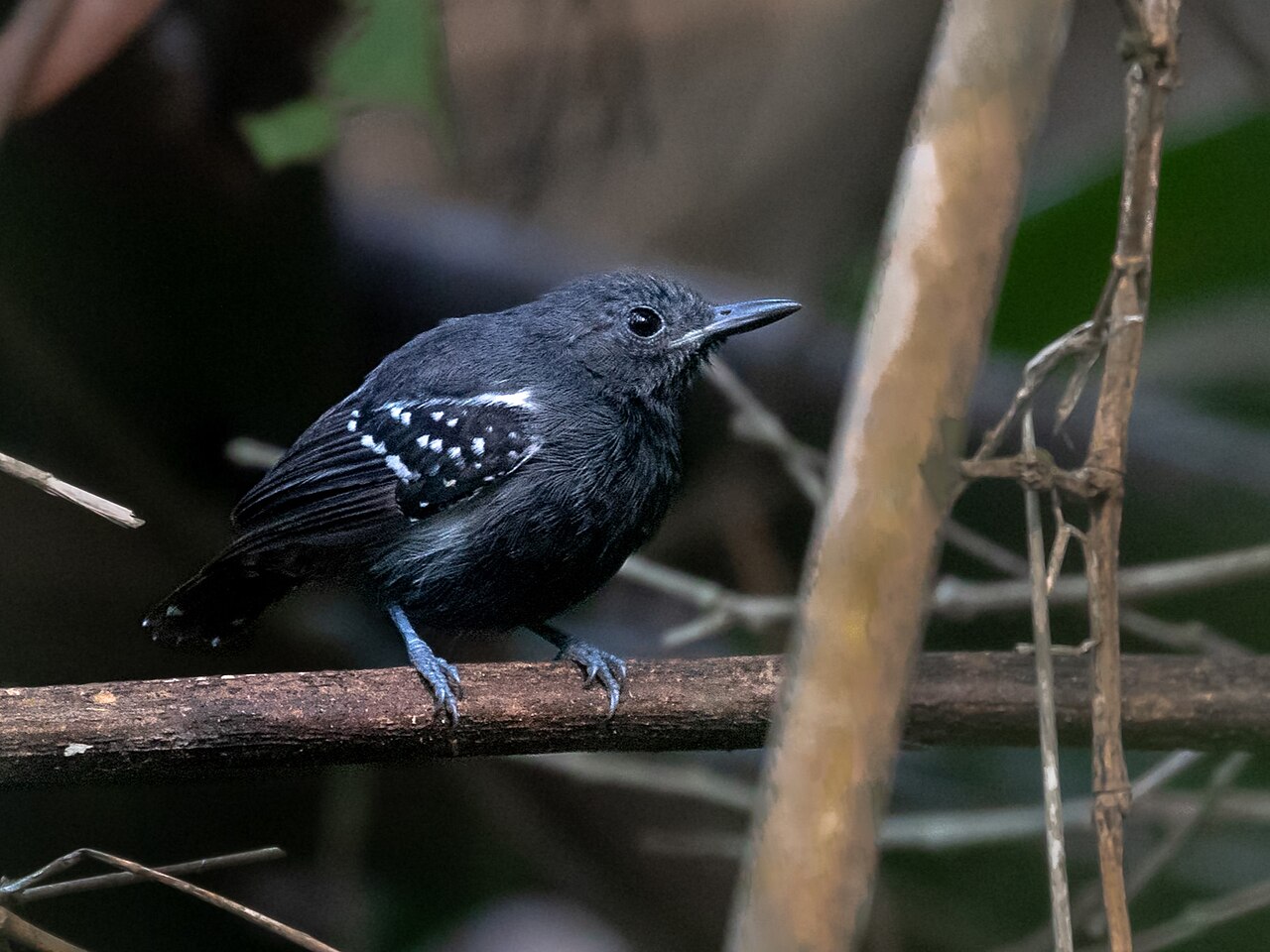
The white-faced whitestart or white-faced redstart is a species of bird in the family Parulidae. It is endemic to humid highland forests in the tepuis of south-western Venezuela. Due to its isolated range, it is very poorly known.
Region
Guiana Shield tepuis
Typical Environment
Occurs on isolated sandstone table mountains (tepuis) where cool, humid conditions prevail. It inhabits moss-laden montane evergreen and elfin forests, forest edges, and sheltered stream valleys. Birds forage primarily in the understory to mid-canopy, often along light gaps and breaks where insects are more easily flushed. The species avoids lowland forest and heavily disturbed habitats due to its preference for cloud-forest structure.
Altitude Range
1200–2400 m
Climate Zone
Highland
Ease of Keeping
Beginner friendly: 1/5
This elusive whitestart is confined to a handful of tepui highlands in southwestern Venezuela. Like other Myioborus warblers, it often fans and flashes its contrasting tail to flush insects from foliage. It frequently joins mixed-species flocks in the understory and mid-story. Because of its remote range, many aspects of its breeding and ecology remain poorly documented.
Temperament
active and alert
Flight Pattern
short rapid wingbeats with flitting, agile maneuvers
Social Behavior
Usually seen in pairs or family groups and commonly associates with mixed-species flocks while foraging. Likely territorial during breeding, advertising with song and tail displays. Nesting is presumed to be a cup concealed in mossy banks or roots, with both parents participating in care, similar to congeners.
Migratory Pattern
Resident
Song Description
High, thin, sibilant trills and chips delivered from low perches, interspersed with short buzzy phrases. Calls are sharp contact notes used to maintain cohesion while moving through dense understory.
Plumage
Compact warbler with a striking, clean white face contrasting with darker crown and throat, and dusky to slate upperparts. Underparts are warm yellow to rufous-orange, with strong contrast against the darker upperparts. Tail is mostly dark with bold white outer rectrices that are frequently fanned and flashed. Wings are dusky with subtle pale edging.
Diet
Primarily small arthropods such as flies, beetles, caterpillars, and spiders. Employs flush-pursuit foraging: fanning its contrasting tail and flicking wings to startle prey. Gleans from leaves and twigs and occasionally makes short sallies to capture flying insects. May opportunistically take small berries when insect prey is scarce.
Preferred Environment
Feeds in shaded understory to mid-levels of humid montane forest, especially along forest edges, stream margins, and light gaps. Often follows mixed-species flocks to exploit disturbed insects and shared vigilance.