
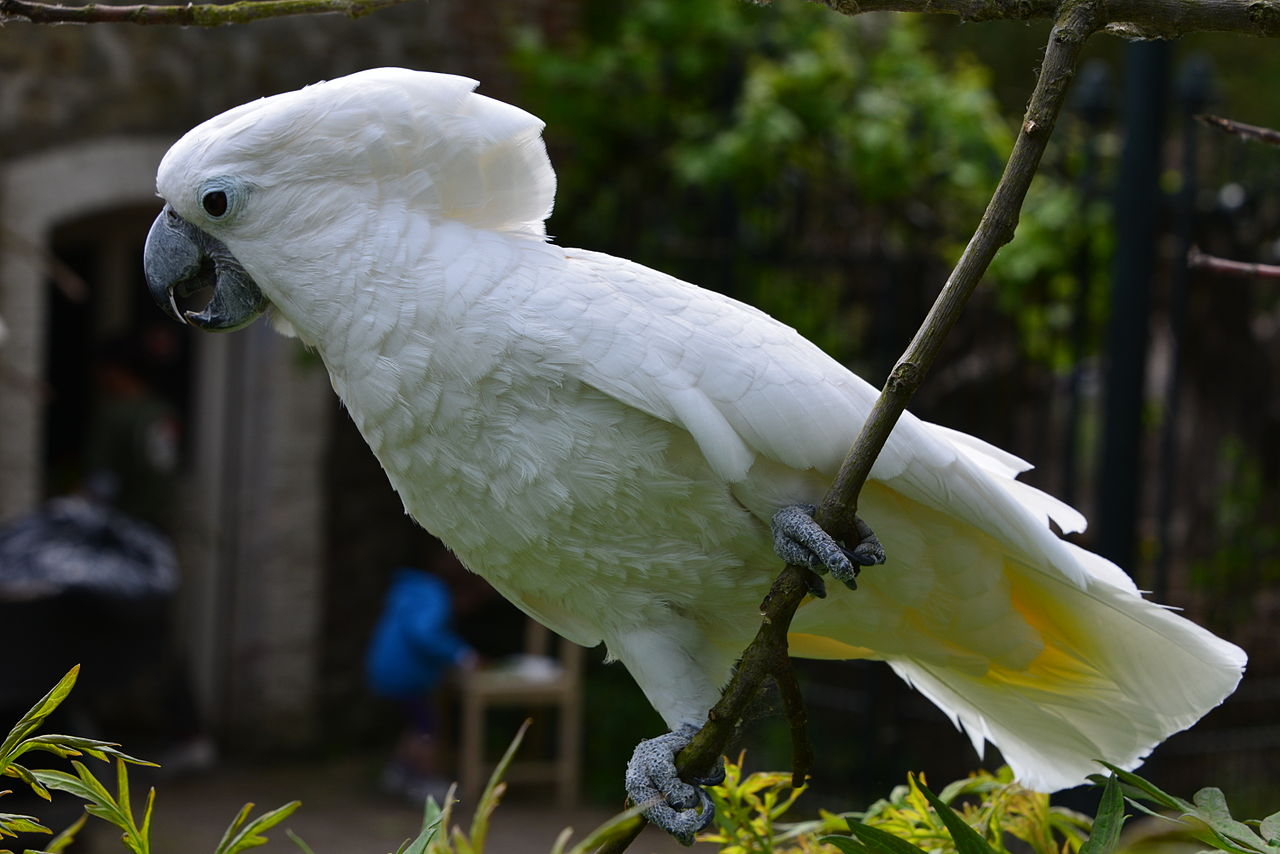
The white cockatoo, also known as the umbrella cockatoo, is a medium-sized all-white cockatoo endemic to tropical rainforest on islands of Indonesia. When surprised, it extends a large and striking head crest, which has a semicircular shape. The wings and tail have a pale yellow or lemon color which is exposed when they fly. It is similar to other species of white cockatoo such as yellow-crested cockatoo, sulphur-crested cockatoo, and salmon-crested cockatoo, all of which have yellow, orange or pink crest feathers instead of white.
Region
North Maluku (North Moluccas)
Typical Environment
Occurs on several islands of North Maluku, notably Halmahera and nearby satellites. It inhabits primary and mature secondary lowland rainforest, forest edges, and riverine corridors. Birds also use selectively logged forest and sometimes coconut and mixed-crop plantations when large trees remain. They roost communally in tall emergent trees and nest in natural cavities. Proximity to intact canopy and large-diameter nest trees is critical for breeding.
Altitude Range
Sea level to 900 m
Climate Zone
Tropical
Ease of Keeping
Beginner friendly: 2/5
Also called the umbrella cockatoo, it raises a large semicircular white crest when excited or alarmed. Highly intelligent and social, it forms strong pair bonds and requires extensive mental stimulation in captivity. Illegal trapping and habitat loss have caused major declines, and it is protected in international trade. Its powerful bill can crack hard nuts and pry into bark for insects.


Temperament
social and noisy
Flight Pattern
strong flier with deep wingbeats, short glides between trees
Social Behavior
Typically seen in pairs or small family groups, gathering in larger flocks at communal roosts. Forms long-term monogamous pairs that defend nest sites in tree cavities. Both sexes share incubation and chick-rearing duties. Juveniles may accompany parents for extended periods after fledging.
Migratory Pattern
Resident
Song Description
Loud, piercing screeches and repeated strident calls carry far through the forest. Also gives softer chatters and whistles during close social interactions. Alarm calls are rapid, harsh notes given with crest fully raised.
Plumage
All-white plumage with soft, fluffy texture; large expandable umbrella-shaped crest. Underwings and undertail show pale lemon-yellow wash when spread.
Diet
Feeds on fruits, nuts, seeds, and berries, using a strong bill to open hard-shelled items. Supplements diet with leaf buds and flowers when available. Will also take insects and larvae found under bark or in rotting wood, especially during breeding. Occasionally raids cultivated crops and fallen fruits near villages.
Preferred Environment
Forages mainly in the mid to upper canopy of lowland rainforest and along edges. Frequently uses fruiting trees and follows seasonal availability. In modified landscapes, it may feed in agroforests and coconut groves where tall trees persist.


