

The white swamphen, also known as the Lord Howe swamphen, Lord Howe gallinule or white gallinule, is an extinct species of rail which lived on Lord Howe Island, east of Australia. It was first encountered when the crews of British ships visited the island between 1788 and 1790, and all contemporary accounts and illustrations were produced during this time. Today, two skins exist: the holotype in the Natural History Museum of Vienna, and another in Liverpool's World Museum. Although historical confusion has existed about the provenance of the specimens and the classification and anatomy of the bird, it is now thought to have been a distinct species endemic to Lord Howe Island and most similar to the Australasian swamphen. Subfossil bones have also been discovered since.
Region
Southwest Pacific
Typical Environment
Restricted to Lord Howe Island, where it frequented wetlands, swampy margins, and damp grasslands near lagoons. It likely foraged along sedge beds and in open clearings at forest edges. Observers noted it ventured into grassy areas to feed, often near freshwater. As with many island rails, it showed reduced wariness of humans and limited flight capability.
Altitude Range
Sea level to 400 m
Climate Zone
Subtropical
Ease of Keeping
Beginner friendly: 1/5
Also called the Lord Howe swamphen or white gallinule, this rail was endemic to Lord Howe Island and is now extinct. It is known from two historical skins and subfossil bones, and was closely related to the Australasian swamphen. Contemporary accounts suggest unusually pale to white plumage was common, likely due to a genetic tendency toward leucism. The species was reportedly tame and was heavily hunted by visiting sailors in the late 18th century.


Illustration of the Liverpool specimen, the holotype of P. stanleyi (a junior synonym of P. albus), by Keulemans, 1875

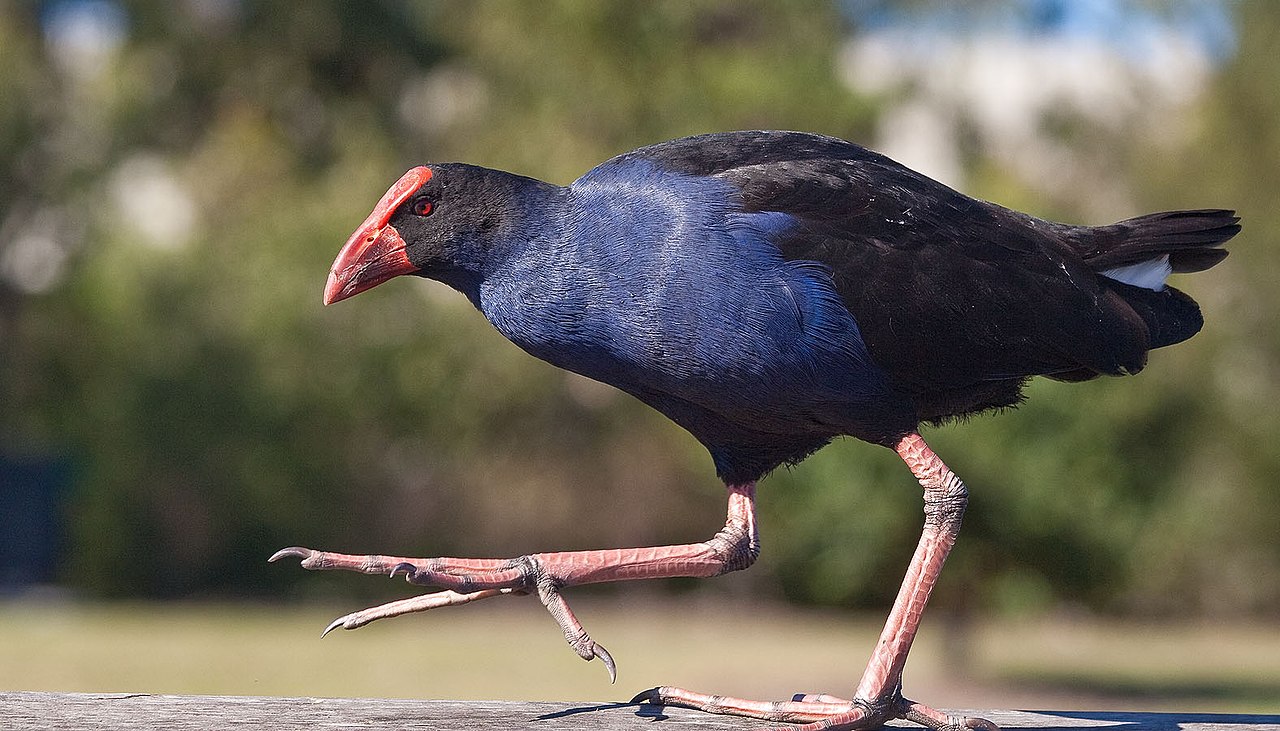

Illustration by Henrik Grönvold, 1928; the legs were probably red in life

Illustration by an unknown artist (in the collection of Thomas Watling), showing the bird's three colour stages


Three live birds by Arthur Bowes Smyth c. 1788, the first known illustration of this species
Temperament
bold and approachable
Flight Pattern
short rapid wingbeats; reluctant flier
Social Behavior
Likely lived in pairs or small family groups, similar to other swamphens. Nests were probably platform structures in dense sedges or reeds near water. Both adults may have shared incubation and chick-rearing duties. Ground-dwelling habits and tameness made it vulnerable to human predation.
Migratory Pattern
Resident
Song Description
Vocalizations were probably a series of loud squeals, grunts, and cackles, akin to the Australasian swamphen. Calls carried over wetlands and were used for contact and alarm. Soft clucks and croaks likely occurred during foraging and at the nest.
Plumage
Predominantly white to pale plumage, often with a faint bluish wash and irregular darker mottling; feathers appeared soft and slightly loose-textured.
Diet
Fed on shoots of sedges and grasses, tender plant stems, leaves, and seeds. Supplemented its diet with insects, snails, and other small invertebrates, and may have opportunistically taken eggs or carrion. Often manipulated food with its long toes, bringing items to the bill. Foraged by walking and probing in wet ground and shallow water.
Preferred Environment
Wet meadows, swamp edges, and lagoons with dense emergent vegetation provided cover and foraging opportunities. It also used adjacent open grassy areas and forest margins, especially where fresh water was available.


