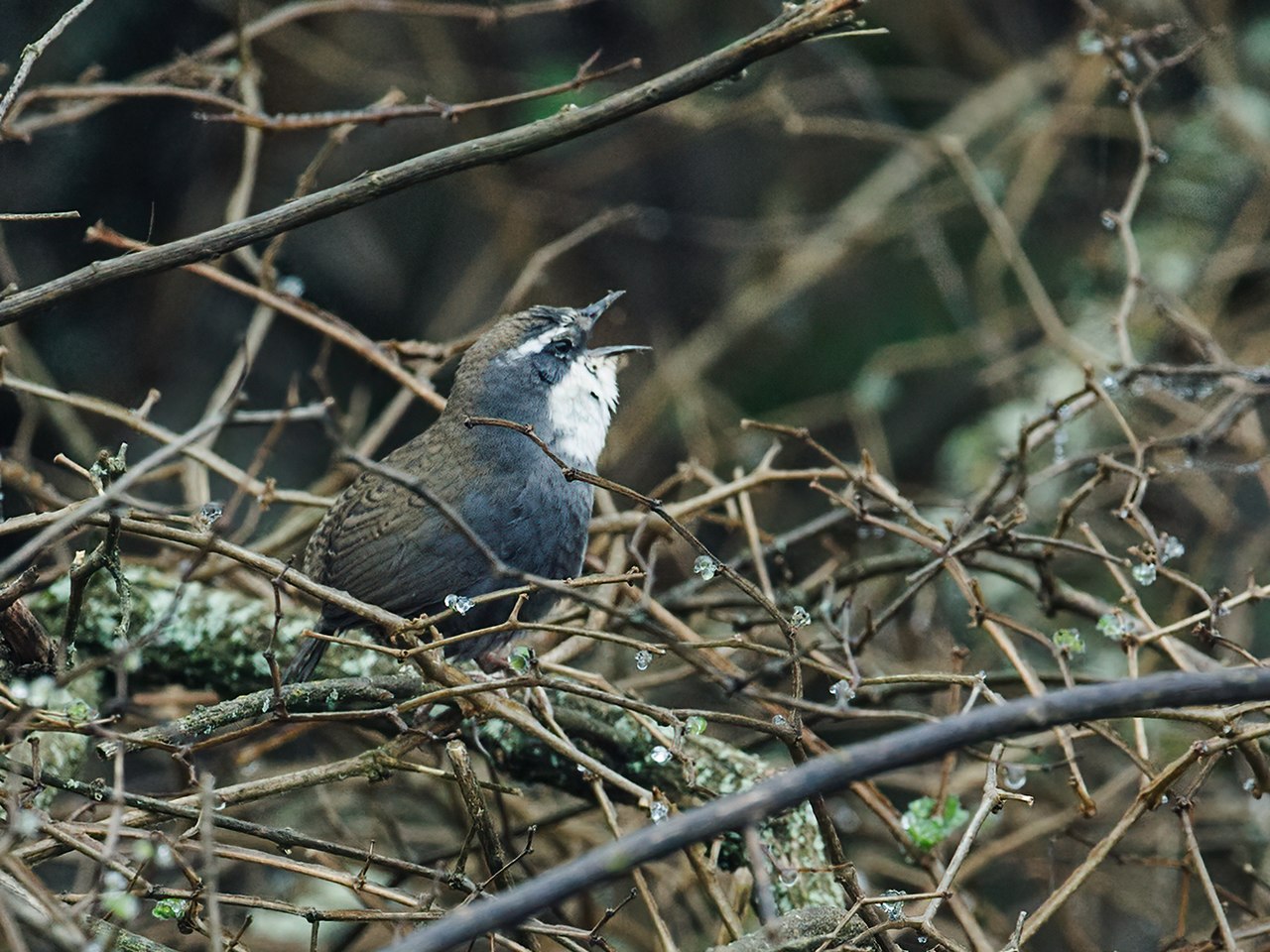
The white-browed scrub robin, also known as the red-backed scrub-robin, is a species of bird in the family Muscicapidae. It is native to sub-Saharan Africa, especially East and southern Africa. Within range, its Turdus-like song is one of the often-heard sounds of the bush. The flitting of the tail is characteristic of this species, but also of some near relatives.
Region
Sub-Saharan Africa
Typical Environment
Found in dry savanna, thorn scrub, miombo and mopane woodland, and riverine thickets. It favors dense low cover interspersed with patches of open ground for foraging. Common along edges of cultivation, tracks, and in secondary or degraded bush. It generally avoids closed-canopy forest and very open treeless grasslands.
Altitude Range
Sea level to 2000 m
Climate Zone
Tropical
Ease of Keeping
Beginner friendly: 1/5
A familiar voice of East and southern African bush, its rich, thrush-like song carries far from thickets and scrub. It habitually cocks and flicks its long tail, flashing white outer tail feathers. Also known as the red-backed scrub-robin, it occurs in a range of dry, brushy habitats and often sings from prominent perches.


front: E. l. zambesiana Sharpe, 1882,back: E. l. munda (Cabanis, 1880), illustrated by Joseph Smit Note: yellow leg colour inaccurate

Visiting termite galleries
Temperament
solitary and territorial
Flight Pattern
short rapid wingbeats with low, darting flights between bushes
Social Behavior
Usually found alone or in pairs, maintaining and defending territories year-round. Pairs build cup-shaped nests low in dense shrubs or grass tussocks. Both adults feed the young, and tail-flicking serves in displays and as an alarm signal.
Migratory Pattern
Resident
Song Description
A rich, melodious, thrush-like series of whistles and phrases delivered from exposed perches. Often includes mimicry and repeated motifs, with sharp call notes used in alarm. Song is persistent at dawn and in the cooler hours.
Plumage
Warm rufous lower back and rump, brown to grey-brown upperparts with fine pale streaking, and whitish underparts with brown streaking across the breast. Long tail is dark with broad white outer feathers and tips, often flicked to reveal the pattern. Wings show a subtle rufous panel. Overall slim, with a neat, upright stance.
Diet
Primarily feeds on insects such as beetles, ants, termites, caterpillars, and grasshoppers, as well as spiders and other small invertebrates. It gleans from the ground and low vegetation, often flipping leaf litter. Occasionally sallies out to catch disturbed prey and may take small berries when available.
Preferred Environment
Forages on or near the ground in dense scrub, thornbush, and woodland edges. Frequently works along paths, burnt patches, and the bases of shrubs where prey is concentrated.