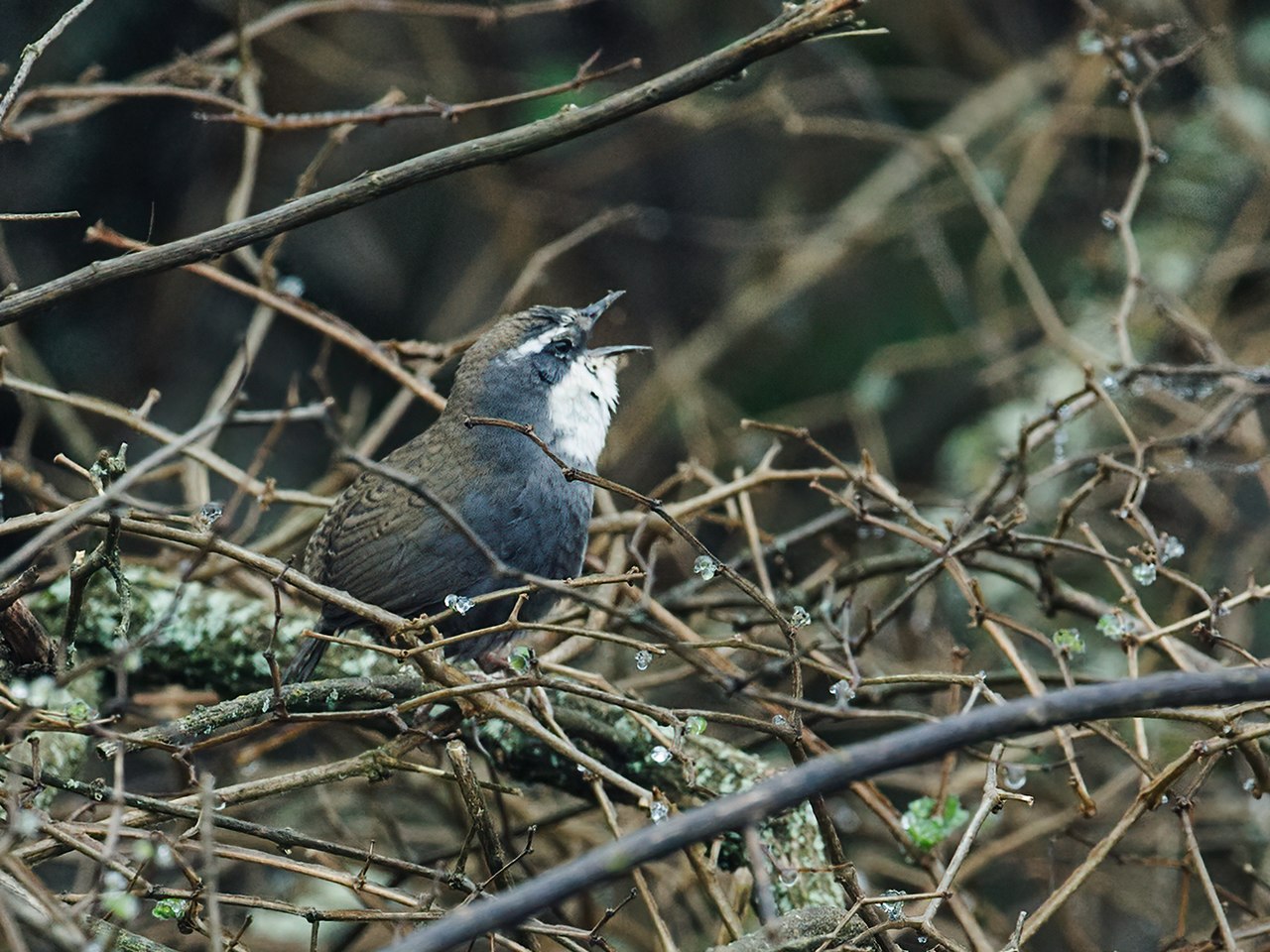
The white-browed shama is a species of bird in the family Muscicapidae. It is endemic to the Philippines found only on the islands of Luzon,Marinduque and the Polillo Islands. The Visayan shama, formerly considered a subspecies, was split as a distinct species in 2021.
Region
Northern Philippines
Typical Environment
Inhabits primary and secondary lowland to lower montane forests, favoring dense understory and thickets. Often found along forest edges, bamboo clumps, and shaded stream gullies where cover is abundant. It tolerates some disturbance but is most numerous in intact forest. Birds typically keep low, moving through tangles and perching in shaded midstory to sing.
Altitude Range
Sea level to 1500 m
Climate Zone
Tropical
Ease of Keeping
Beginner friendly: 1/5
The white-browed shama is a secretive forest songbird known for its rich, melodious whistles and ability to mimic other birds. It is endemic to the northern Philippines, occurring naturally only on Luzon, Marinduque, and the Polillo Islands. The Visayan shama was formerly treated as a subspecies but was elevated to full species status in 2021.


An illustration
Temperament
shy and skulking
Flight Pattern
short rapid wingbeats through dense cover
Social Behavior
Usually solitary or in pairs, maintaining territories within dense forest undergrowth. Nests are cup-shaped and placed low in shrubs, bamboo, or vine tangles. Pairs communicate with soft calls and the male sings prominently from concealed perches during the breeding period.
Migratory Pattern
Resident
Song Description
A rich, fluty series of whistles and phrases delivered with impressive variety. Often includes mimicry of other forest birds, with songs given from hidden perches at dawn and dusk.
Plumage
Males are mostly dark and glossy with a clean, contrasting white eyebrow; females are browner with a paler buffy eyebrow and duller tones overall. Underparts are darker on males with subtle warm tones on the flanks; females show warmer brown underparts. Both sexes have relatively long tails typical of shamas.
Diet
Primarily feeds on insects and other small arthropods such as beetles, caterpillars, spiders, and ants. Will occasionally take small snails or supplement with berries when available. Forages by gleaning from leaves and branches and by hopping on the forest floor, sometimes sallying out to catch prey.
Preferred Environment
Dense understory, vine tangles, and bamboo thickets within humid forest. Frequently works along shaded trails and streamside vegetation where prey is abundant.