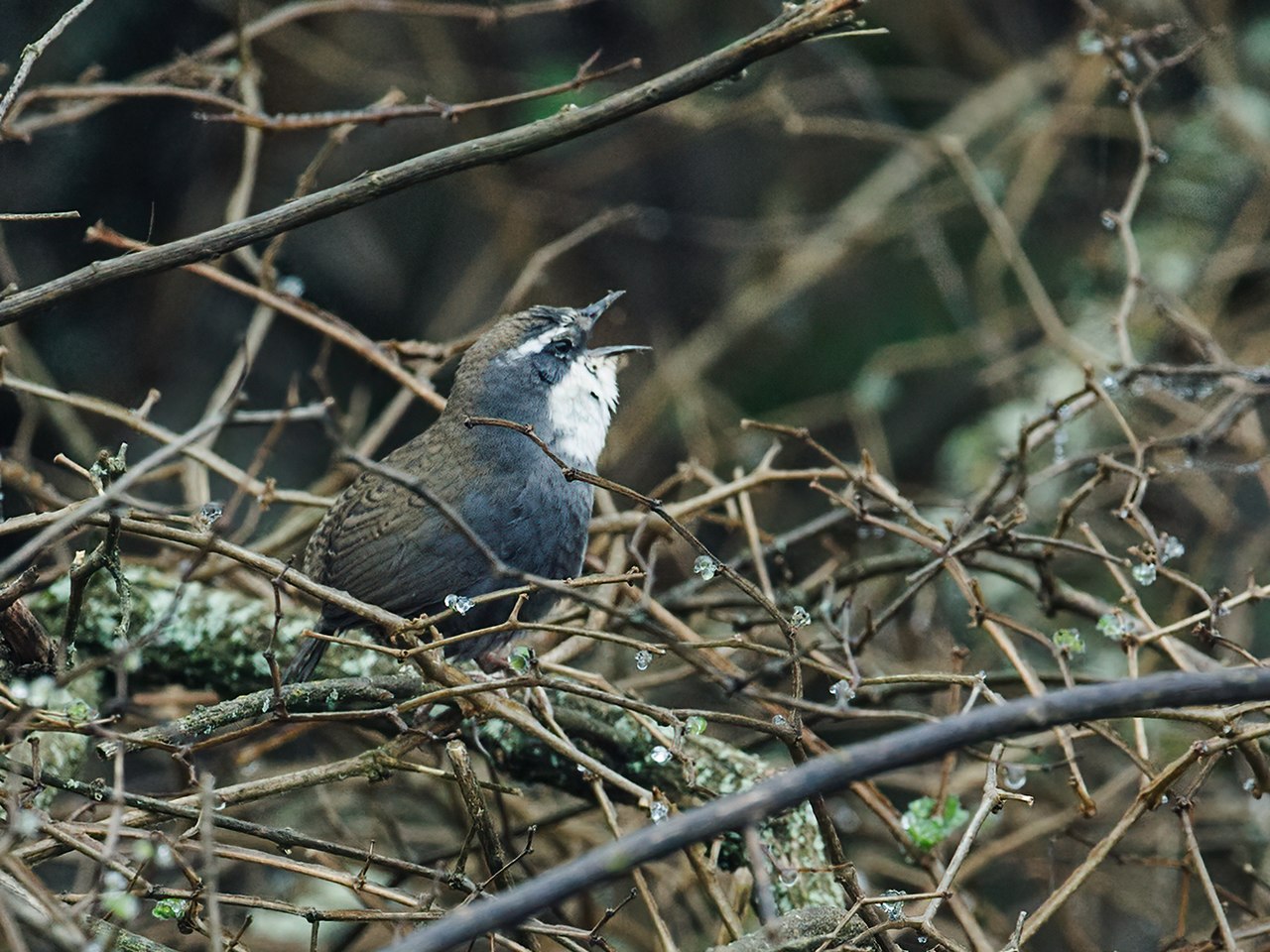
The white-browed scrubwren is a passerine bird found on the New England Tablelands and coastal areas of Australia. Placed in the family Pardalotidae in the Sibley-Ahlquist taxonomy, this has met with opposition and indeed is now known to be wrong; they rather belong to the independent family Acanthizidae.
Region
Eastern and southern Australia
Typical Environment
This species occupies dense understory in forests, woodlands, coastal heath, and tea-tree thickets, as well as rainforest edges and urban gardens with thick shrub layers. It favors areas with ample ground litter and tangled vegetation for cover. It is common along the coastal fringe and tablelands and extends into well-vegetated suburban parks. Nests are usually built low in shrubs or in dense groundcover.
Altitude Range
Sea level to 1500 m
Climate Zone
Temperate
Ease of Keeping
Beginner friendly: 1/5
The white-browed scrubwren is a small, skulking passerine of the family Acanthizidae, notable for its bold white eyebrow and dark facial mask. It often forages close to the ground in dense undergrowth and is a familiar bird in coastal scrub and gardens of eastern and southern Australia. Many populations show cooperative breeding, with helpers assisting at the nest.


The scrubwrens by Neville William Cayley, including S. humilis on the right.

Female of race frontalis calling
Temperament
inquisitive yet skulking
Flight Pattern
short rapid wingbeats with low, darting flights
Social Behavior
Usually found in pairs or small family groups, often accompanied by helpers that assist in feeding young. Builds a domed nest low in dense vegetation. Territorial during breeding but may join loose mixed flocks outside the breeding season.
Migratory Pattern
Resident
Song Description
Song consists of simple whistles and trills interspersed with soft warbles. Calls include sharp scolds and chattering notes given from cover when alarmed.
Plumage
Olive-brown upperparts with paler greyish underparts and buff flanks; white throat and often fine streaking or mottling on the breast. The face shows a striking white supercilium over a dark mask. Tail often held cocked; feathers appear soft and subtly barred.
Diet
Primarily takes small invertebrates such as insects, spiders, and larvae gleaned from leaf litter and low foliage. It probes bark crevices and overturns leaf litter with quick movements. Occasionally consumes small seeds or berries, especially outside the breeding season.
Preferred Environment
Feeds close to the ground in dense shrubbery, forest understory, and coastal heath. Readily forages in well-vegetated gardens and edges of parks where cover is abundant.