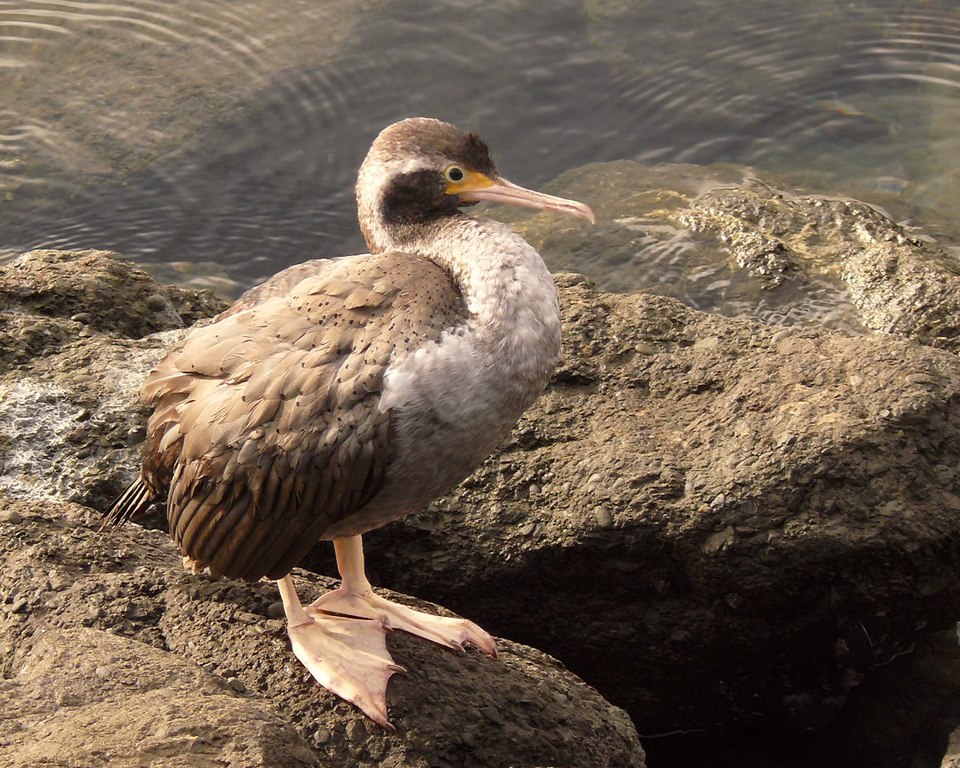
The spotted quail-thrush is a species of bird in the family Cinclosomatidae. It is endemic to Australia.
Region
Eastern and Southeastern Australia
Typical Environment
Found from southeastern Queensland through New South Wales to eastern Victoria and northeastern Tasmania’s drier forests. Occupies dry to moist eucalypt forests, open woodland, and heathy or shrubby understories with abundant leaf litter. Prefers relatively undisturbed ground layer for foraging and nesting. Often occurs on slopes and ridges, using logs and rocks as cover.
Altitude Range
Sea level to 1200 m
Climate Zone
Temperate
Ease of Keeping
Beginner friendly: 1/5
The spotted quail-thrush is a ground-dwelling songbird of eastern Australia, often detected by its clear, whistled calls rather than by sight. Males show striking black-and-white facial and breast markings, while females are browner and more cryptic. It forages by flicking through leaf litter for invertebrates and relies heavily on camouflage, freezing when disturbed. Pairs defend territories year-round and nest on or close to the ground.

Temperament
shy and secretive
Flight Pattern
short rapid wingbeats, low over ground
Social Behavior
Usually seen singly or in pairs that hold territories year-round. Nests are placed on or near the ground, often tucked among leaf litter or at the base of shrubs. Pairs are monogamous and both sexes contribute to territory defense; the female primarily undertakes incubation.
Migratory Pattern
Resident
Song Description
Song is a series of clear, ringing whistles delivered at measured intervals, often from a low perch or hidden on the ground. Calls include sharp ticking notes and soft contact whistles.
Plumage
Mottled brown upperparts with fine spotting and barring; underparts pale with distinct spotting. Male shows a white throat bordered by a bold black malar stripe and a black breast band; female is duller with less contrasting markings. Long tail with white on outer feathers is flashed in brief flights.
Diet
Feeds mainly on ground-dwelling invertebrates such as beetles, ants, spiders, and caterpillars. Will also take small snails and occasionally seeds or small berries. Forages by hopping and scratching through leaf litter, probing around logs and rocks.
Preferred Environment
Primarily forages on the forest floor in eucalypt woodland and heathy understories with dense leaf litter. Often uses edges of tracks, fallen timber, and rock outcrops where prey is concentrated.