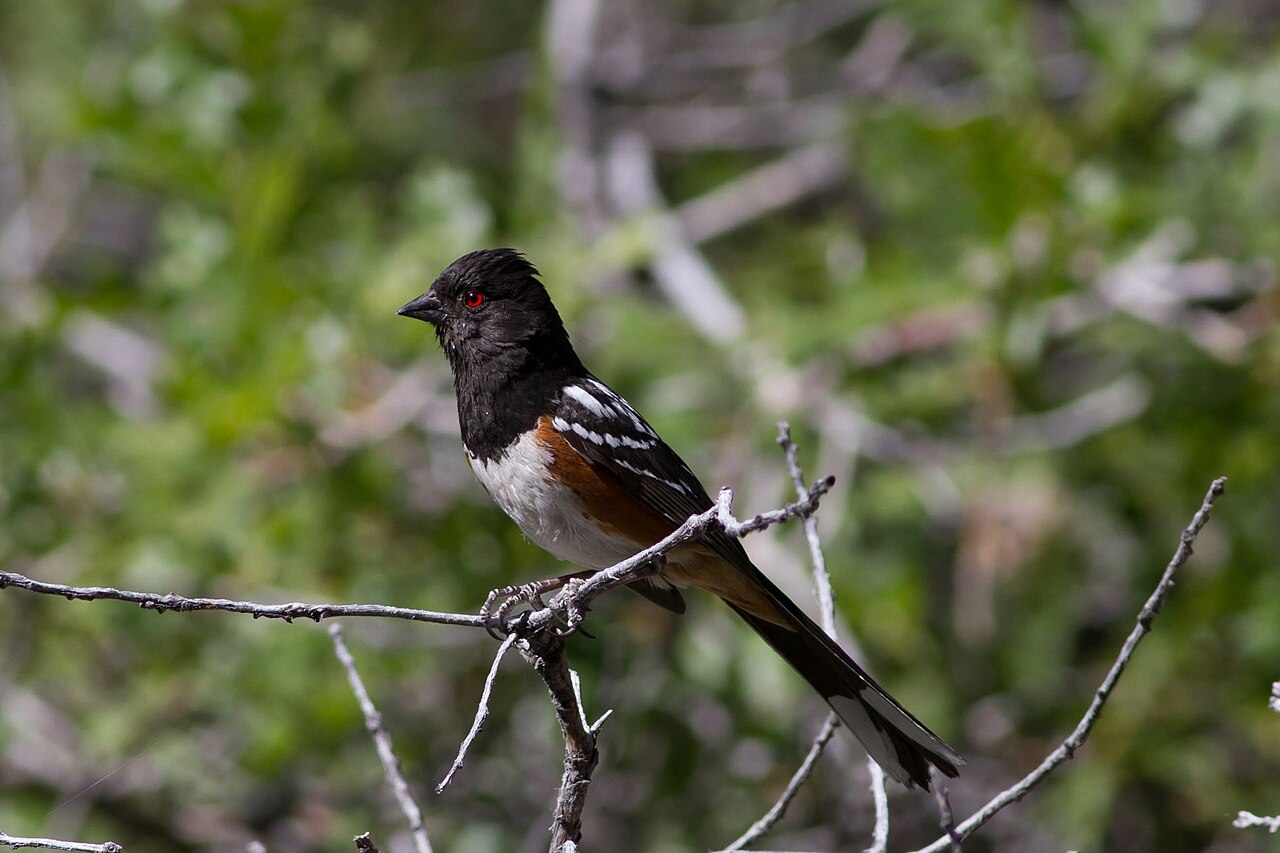
The spotted tanager is a species of bird in the tanager family Thraupidae. It is found in Bolivia, Brazil, Ecuador, French Guiana, Guyana, Peru, Suriname, and Venezuela. Its natural habitats are subtropical or tropical moist lowland forests and subtropical or tropical moist montane forests.
Region
Amazon Basin and northern Andes
Typical Environment
Occurs widely from the Guianas and Venezuela through northern and western Amazonia into eastern Andean foothills of Colombia, Ecuador, Peru, and northern Bolivia. It inhabits subtropical and tropical moist lowland and foothill forests, favoring the mid-story to canopy. The species also uses forest edges and tall secondary growth where fruiting trees are present. It is typically most numerous in large, contiguous tracts of humid forest.
Altitude Range
0–2000 m
Climate Zone
Tropical
Ease of Keeping
Beginner friendly: 1/5
The spotted tanager is a canopy-loving Neotropical songbird known for its striking, heavily spotted plumage. It often joins mixed-species foraging flocks, moving quickly through humid forest crowns. Formerly placed in the genus Tangara, it is now commonly treated as Ixothraupis based on genetic studies. Its sensitivity to forest degradation makes intact habitat important for its persistence.


Temperament
social and active
Flight Pattern
short rapid wingbeats
Social Behavior
Frequently forages in pairs or small groups and readily joins mixed-species flocks in the canopy. Nests are cup-shaped and concealed in dense foliage. Breeding pairs are typically monogamous and defend small territories around the nest.
Migratory Pattern
Resident
Song Description
Vocalizations are thin, high-pitched chips and sibilant notes delivered in quick series. Songs are light, tinkling trills interspersed with short, buzzy phrases, often given while foraging.
Plumage
Bright green upperparts and head densely overlaid with black spotting; underparts pale whitish to buff with distinct dark spots and streaks. Wings and tail are darker with green edging, enhancing the speckled look. Overall effect is a crisp, finely spotted pattern across the body.
Diet
Consumes a mix of small fruits and berries, complemented by arthropods gleaned from leaves and twigs. It picks fruit delicately and also probes clusters for hidden insects and spiders. Occasionally sallies short distances to snatch flying insects. Diet composition shifts with seasonal fruit availability.
Preferred Environment
Primarily feeds in the canopy and upper mid-story of humid forest, especially at fruiting trees. Also uses forest edges and tall secondary growth where food is abundant. Often feeds alongside other tanagers and canopy insectivores.