The spotted sandpiper is a small shorebird. Together with its sister species the common sandpiper, it makes up the genus Actitis. They replace each other geographically; stray birds may settle down with breeders of the other species and hybridize.
Region
North, Central, and South America
Typical Environment
Breeds widely across North America along rivers, lakes, ponds, and wetlands with open, pebbly or sandy shores. During migration and winter it occurs from the southern United States through the Caribbean and Central America into much of South America. It favors edges of freshwater but also uses coastal mudflats, estuaries, and sandy beaches. Suitable habitat includes areas with scattered rocks, driftwood, and low vegetation for nesting and cover.
Altitude Range
Sea level to 3500 m
Climate Zone
Other
Ease of Keeping
Beginner friendly: 1/5
Spotted sandpipers constantly bob their tails, a distinctive "teetering" behavior that helps with identification. They exhibit sex-role reversal and frequent polyandry: females may mate with multiple males, which then incubate the eggs and raise the young. In breeding plumage, their underparts are boldly spotted, a feature that largely disappears outside the breeding season. They sometimes hybridize with the closely related Common Sandpiper where ranges overlap.


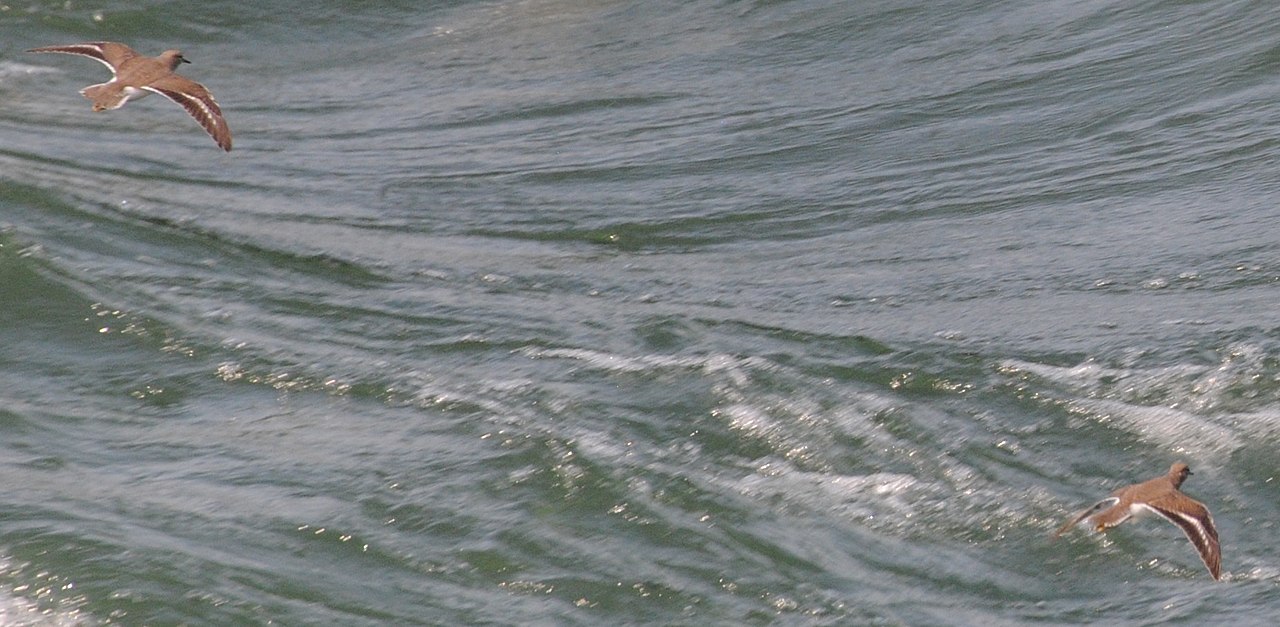
'Record shot' of spotted sandpipers at Île Sainte-Hélène in Montreal, Canada, showing diagnostic features such as the all-brown back and tail (i.e. no black, unlike many other sandpipers), white leading and trailing edge to the wings, partial white wingbar, and white edging to tail.

Eggs, Collection Museum Wiesbaden


Temperament
solitary and territorial
Flight Pattern
low, rapid wingbeats over water with shallow, stiff strokes
Social Behavior
Typically forages alone or in loose spacing along shorelines and defends feeding territories during breeding. Nests on the ground near water; clutches are often tended by males, with females sometimes laying multiple clutches for different mates. Chicks are precocial and leave the nest shortly after hatching.
Migratory Pattern
Seasonal migrant
Song Description
Vocalizations are a clear, whistled peet-weet or weet-weet given in flight or when alarmed. Display flights include repeated piping notes; overall song is simple and repetitive rather than melodious.
Plumage
Brownish-olive upperparts with fine barring; breeding birds show bold dark spots on white underparts, which become plain white in nonbreeding plumage. Feathers are sleek, with a crisp contrast between upperparts and clean white underparts outside breeding.
Diet
Primarily consumes aquatic and terrestrial insects such as mayflies, midges, beetles, and flies. Also takes small crustaceans, worms, and occasionally small fish or tadpoles. It picks prey from the surface, probes in soft substrates, and sometimes lunges at prey in the shallows.
Preferred Environment
Feeds along the edges of rivers, streams, lakes, and ponds where exposed sand, gravel, or mud is available. During migration and winter, frequently uses estuaries, tidal flats, and sandy beaches.