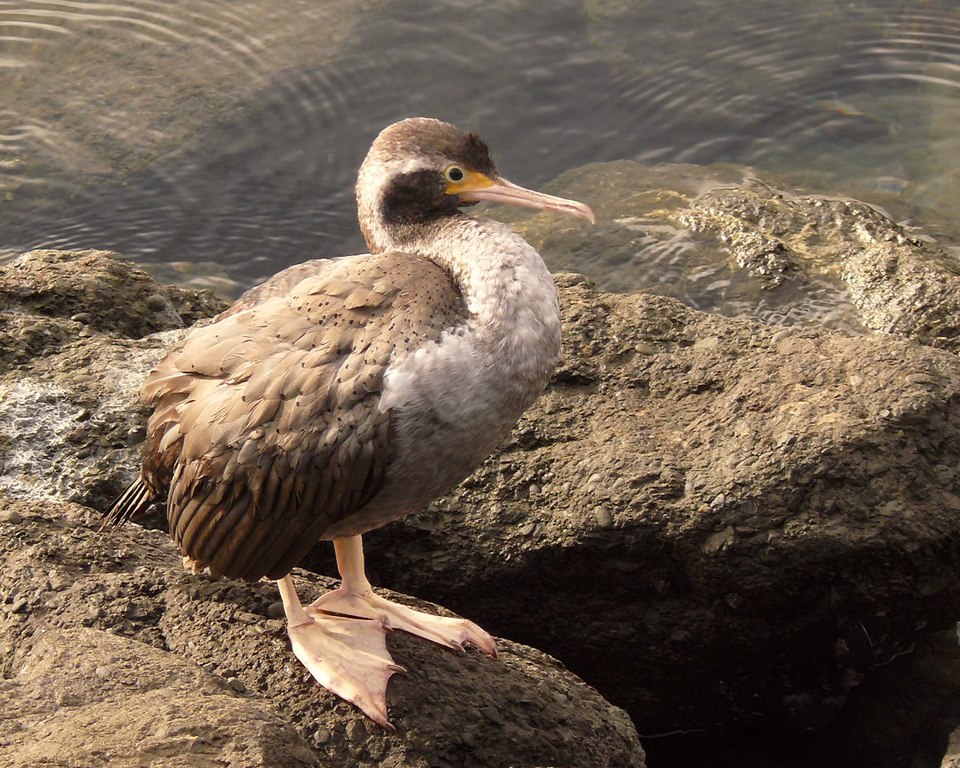
The spotted redshank is a wader (shorebird) in the large bird family Scolopacidae. It breeds across northern Scandinavia and the northern Palearctic and migrates south to the Mediterranean, the southern British Isles, France, tropical Africa, and tropical Asia for the winter. It is an occasional vagrant to Australia and North America.
Region
Palearctic breeding range with Afro-Eurasian wintering grounds
Typical Environment
Breeds across northern Scandinavia and the northern Palearctic, favoring boggy taiga and low Arctic tundra near pools and fens. Outside the breeding season it migrates to coastal and inland wetlands around the Mediterranean, western Europe, sub-Saharan Africa, the Middle East, the Indian subcontinent, and parts of Southeast Asia. It frequents estuaries, tidal mudflats, shallow lagoons, flooded meadows, rice fields, and the margins of lakes and rivers. On migration it often pauses at freshwater marshes and managed wetlands.
Altitude Range
Sea level to 1800 m
Climate Zone
Temperate
Ease of Keeping
Beginner friendly: 1/5
In breeding plumage the spotted redshank is strikingly dark, almost black with fine spotting, turning smooth grey and white in winter. It uses its long, slightly upturned bill to probe soft mud and shallow water for prey, and often wades deeper than many similar waders. In flight it shows a distinctive white wedge up the back. It is a scarce vagrant to North America and Australia outside its usual Eurasian-African range.


Composite image for identification
Temperament
wary but often gregarious outside breeding season
Flight Pattern
strong, direct flight with rapid, shallow wingbeats
Social Behavior
Breeds solitarily or in loose neighborhoods on wet tundra, nesting on the ground in a shallow scrape lined with vegetation. Clutch size is typically four; males often take a larger share of incubation and brood care. Outside the breeding season it forms small to large flocks, frequently mixing with other Tringa species.
Migratory Pattern
Seasonal migrant
Song Description
Display song is a series of clear, rippling whistles delivered in flight over the breeding grounds. The common call is a sharp, ringing chew-it or tu-it, often given in repeated notes when alarmed or in flight.
Plumage
Breeding adults are sooty-black with fine white spangling; non-breeding birds are smooth grey above and white below with pale fringes. Juveniles show finely barred and scaled grey-brown upperparts. In all plumages the bill is long and slightly upturned and the legs are long.
Diet
Feeds mainly on aquatic invertebrates including insect larvae, beetles, worms, small crustaceans, and mollusks. It also takes small fish and tadpoles when available. Forages by probing and picking in shallow water and soft mud, sometimes sweeping the bill side-to-side or using foot-trembling to stir prey.
Preferred Environment
Typically feeds along the edges of tidal flats, saltpans, shallow lagoons, flooded fields, and freshwater marshes. During migration and winter it often uses man-made wetlands such as rice paddies and sewage lagoons.