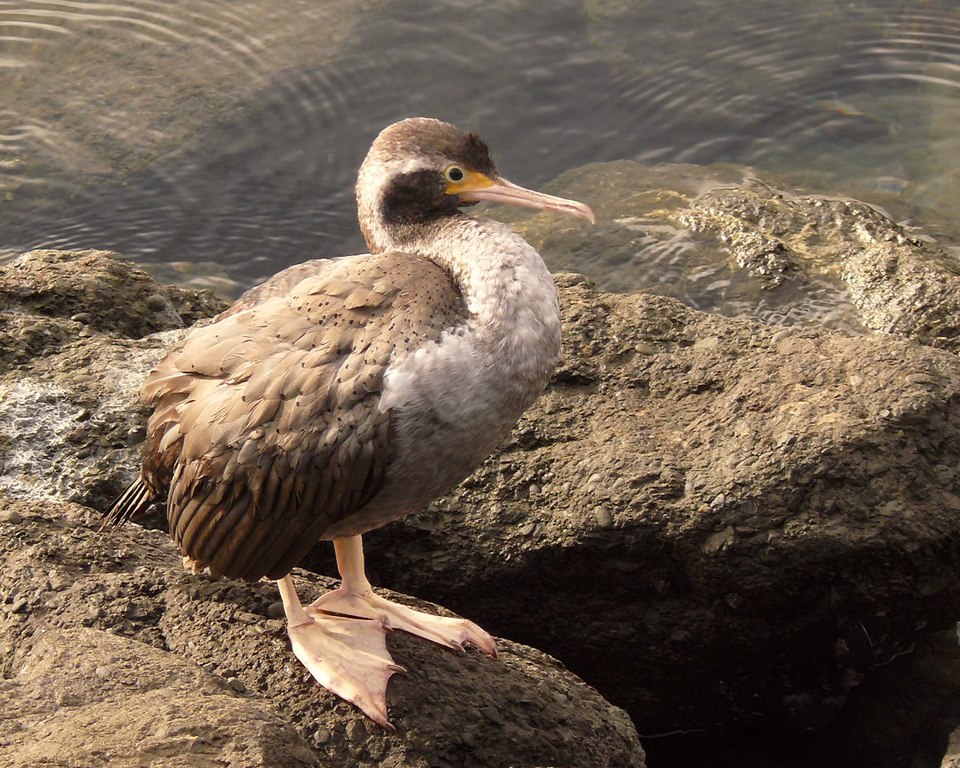
The spotted shag or pārekareka is a species of cormorant endemic to New Zealand. Though originally classified as Phalacrocorax punctatus, it is sufficiently different in appearance from typical members of that genus that for a time it was placed in a separate genus, Stictocarbo, along with a similar species, the Pitt shag. Subsequent genetic studies show that the spotted shag's lineage is nested within the typical shags.
Region
New Zealand coasts
Typical Environment
Occurs around much of New Zealand’s mainland coast and offshore islands, favoring rocky headlands, sheltered bays, and coastal cliffs. It nests on steep sea cliffs and ledges in colonies that can number hundreds of pairs. At sea it forages close to shore over reefs, kelp beds, and inshore waters, but may range several kilometers from colonies. It rarely ventures far inland and is strongly associated with marine habitats.
Altitude Range
Sea level to 200 m
Climate Zone
Temperate
Ease of Keeping
Beginner friendly: 1/5
The spotted shag, or pārekareka, is a sleek coastal cormorant found only in New Zealand. In breeding plumage it sports an elegant double crest and vivid blue-green facial skin and eye-ring. Traditionally placed in its own genus Stictocarbo due to its distinctive look, genetics show it is nested within the typical Phalacrocorax shags. It breeds on coastal cliffs in dense colonies and forages by agile pursuit-diving in nearshore waters.


Juvenile, note spots on back and wings

In flight, in breeding plumage (note the double crests)

Queen Charlotte Sound, New Zealand
Temperament
social and colonial
Flight Pattern
strong direct flight low over water with rapid wingbeats
Social Behavior
Breeds in dense cliff colonies where pairs construct nests of sticks and seaweed cemented with guano. Generally monogamous within a season, with both adults incubating and feeding the young. Outside breeding, it can gather in loose flocks at roosts and favored feeding areas.
Migratory Pattern
Resident
Song Description
Usually quiet at sea, but colonies are noisy with guttural grunts, croaks, and hisses during displays and territorial interactions. Calls are harsh and rasping rather than melodious.
Plumage
Smooth, pale grey to bluish-grey upperparts finely spotted with black, contrasting with cleaner, paler underparts; darker tail. In breeding plumage shows a refined double crest and metallic sheen with crisp facial patterning.
Diet
Feeds mainly on small fish, but also takes crustaceans and other marine invertebrates. It is a pursuit diver, using its powerful feet and partially spread wings to chase prey underwater. Foraging is typically solitary or in small groups, with dives interspersed by brief surface pauses.
Preferred Environment
Nearshore marine waters over reefs, kelp forests, and along rocky coastlines. Also forages in sheltered harbors and bays where water clarity allows effective visual hunting.