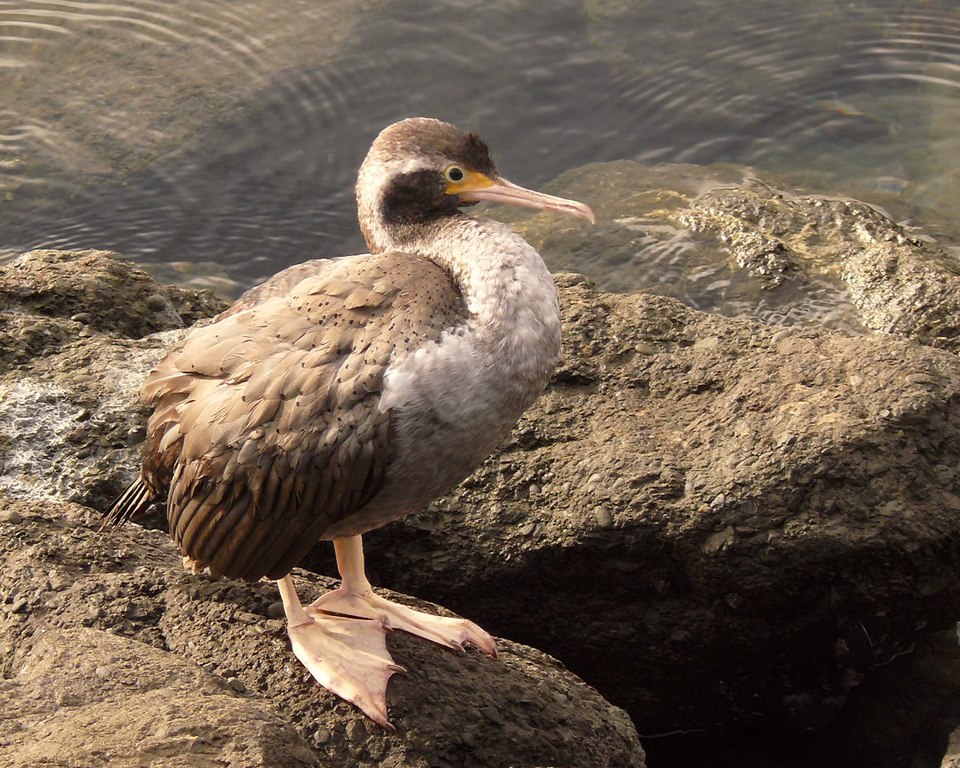
The spotted puffbird is a species of puffbird in the family Bucconidae, the puffbirds, nunlets, and nunbirds. It is found in Bolivia, Brazil, Colombia, Ecuador, French Guiana, Guyana, Peru, Suriname, and Venezuela.
Region
Amazon Basin and the Guianas
Typical Environment
Occurs widely in lowland tropical forests of northern South America, including terra firme and seasonally flooded várzea. Favors forest edges, light gaps, river margins, and secondary growth with dense understory. Common in vine tangles, bamboo thickets, and along forested streams where suitable perches are available. Often stays at low to mid-levels in the understory and lower midstory.
Altitude Range
0–1200 m
Climate Zone
Tropical
Ease of Keeping
Beginner friendly: 1/5
Spotted puffbirds are sit-and-wait predators that perch quietly for long periods before darting out to seize prey. Their loose, fluffy plumage gives them a ‘puffed’ appearance, which inspired the family’s common name. They typically nest in burrows excavated in earthen banks or occasionally in termitaria.


Temperament
solitary and territorial
Flight Pattern
short rapid wingbeats between perches
Social Behavior
Usually encountered alone or in pairs, perched quietly for extended periods. Pairs maintain territories and communicate with soft whistles. Nests are typically burrows excavated in earthen banks or occasionally in arboreal termitaria, where both sexes participate in excavation and incubation.
Migratory Pattern
Resident
Song Description
Gives soft, mellow whistles delivered singly or in short series, often at dawn. Calls are clear, slightly descending notes that carry through the understory but are unobtrusive.
Plumage
Brown to rufescent-brown overall with fine whitish spotting and streaking on the head, wings, and underparts; feathers appear loose and fluffy.
Diet
Primarily hunts large arthropods such as beetles, katydids, grasshoppers, and spiders, taken by sallying from a low perch. Occasionally captures small vertebrates like lizards or frogs. Prey is often subdued by striking it against the perch before swallowing.
Preferred Environment
Forages from shaded perches in the understory and along forest edges, riverbanks, and clearings. Frequently uses vine tangles, bamboo, and sapling thickets that provide concealed vantage points.