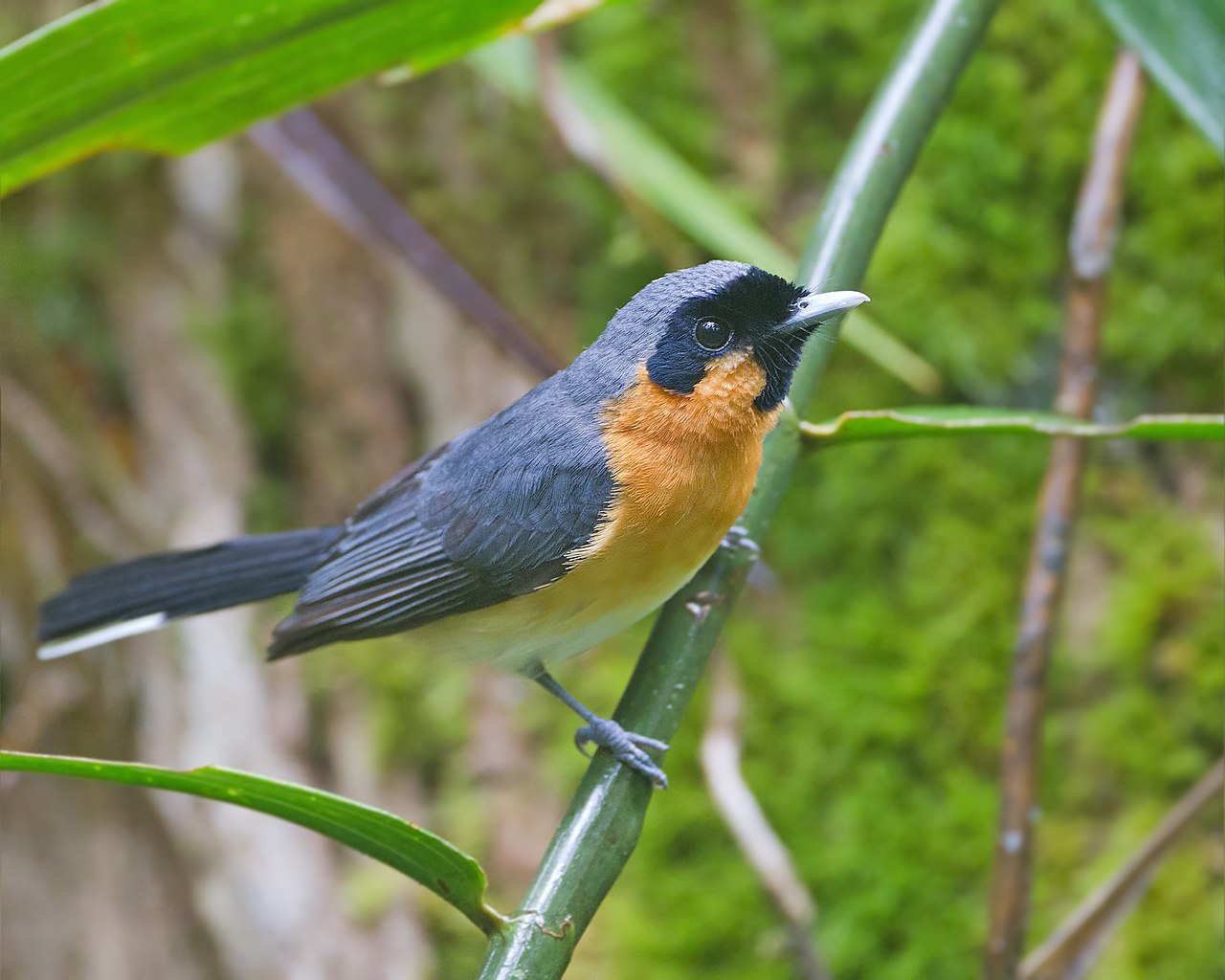
The spectacled flowerpecker is a species of bird belonging to the flowerpecker family, Dicaeidae. It was first observed in 2009 in the forests of Borneo, but due to limited information and the lack of a specimen for scientific study, it was not formally described or given a scientific name until 2019.
Region
Borneo
Typical Environment
Endemic to the island of Borneo, where it inhabits primary and tall secondary lowland and hill rainforests. It is most often encountered in the mid to upper canopy, especially at fruiting mistletoes and other small-berried plants. Records span protected areas and intact forest tracts in Malaysian Borneo and likely suitable habitats in Brunei and Indonesian Kalimantan. Because it forages high in the canopy, it can be easily overlooked even where present.
Altitude Range
Sea level to 1200 m
Climate Zone
Tropical
Ease of Keeping
Beginner friendly: 1/5
Formally described in 2019, the spectacled flowerpecker was first photographed only in 2009, highlighting how canopy specialists can remain hidden in well-studied forests. It is a small, elusive fruit specialist that spends most of its time high in the upper canopy, often around fruiting mistletoes. Its distinctive white eye-arcs give the impression of tiny spectacles and are the key field mark. As a mistletoe berry feeder, it likely plays a role in seed dispersal within Borneo’s rainforests.

Temperament
solitary and unobtrusive
Flight Pattern
short rapid wingbeats between canopy clumps
Social Behavior
Usually seen singly or in pairs while moving quietly through the upper canopy. Often associates with fruiting mistletoes and may join mixed-species foraging flocks briefly. Nesting is poorly documented, but like other flowerpeckers it likely builds a small pendant pouch nest. Breeding phenology remains little known.
Migratory Pattern
Resident
Song Description
Voice consists of thin, high-pitched ticks and short sibilant notes that can be hard to locate in the canopy. Vocalizations are modest and not elaborate; calls are often given while foraging.
Plumage
Plain grey-brown above with paler underparts; overall smooth, unpatterned plumage aside from facial markings.
Diet
Primarily small fruits and berries, especially mistletoes (Loranthaceae), which it often swallows whole. Also takes nectar opportunistically and may glean tiny arthropods. By passing intact seeds, it likely contributes to mistletoe dispersal. Foraging is active and methodical among fruiting clumps high in the canopy.
Preferred Environment
Upper canopy of mature lowland and hill dipterocarp forests, particularly at fruiting parasitic plants. Occasionally descends to mid-story when food is available along forest edges or ridgelines.