
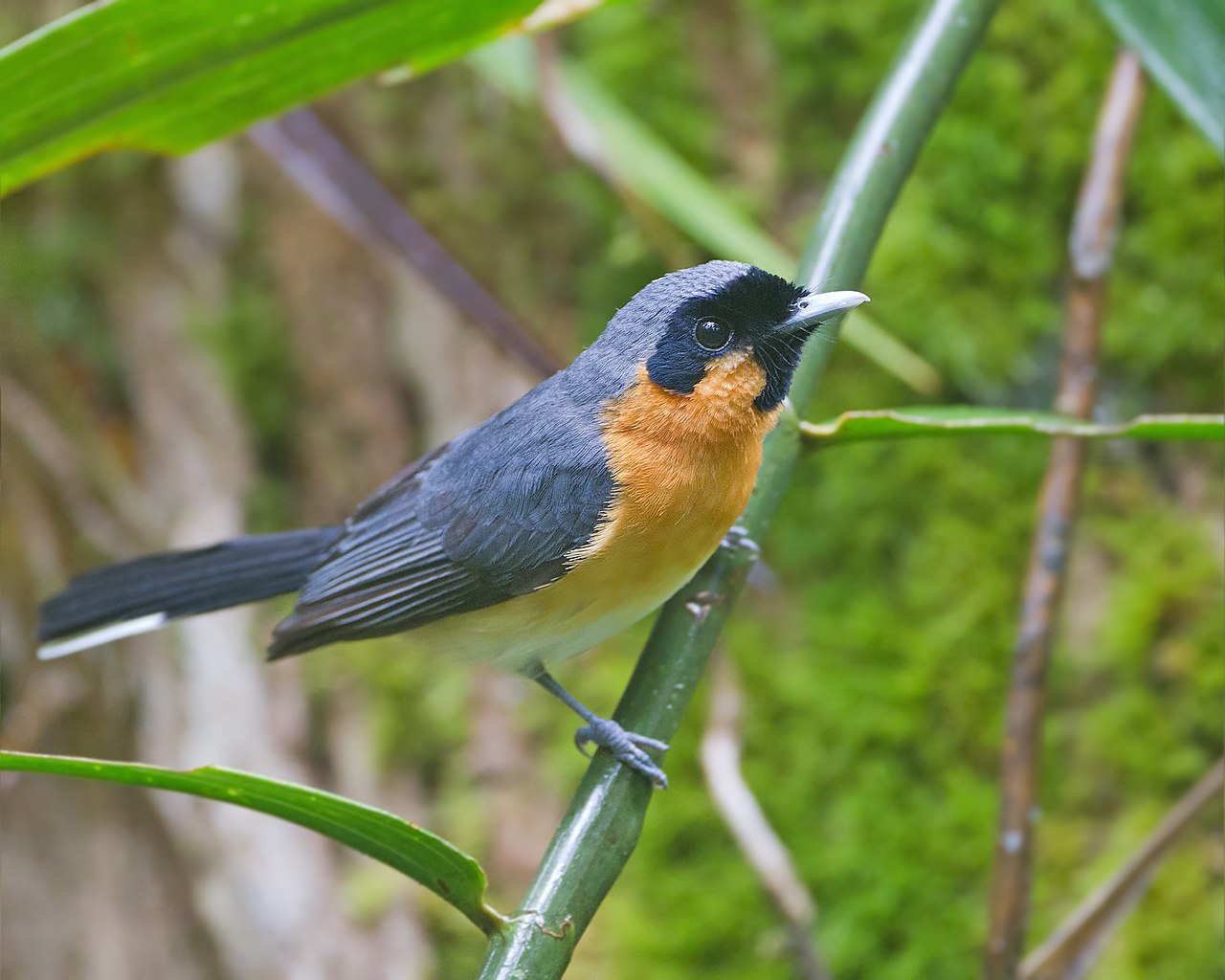
The spectacled monarch is a species of bird in the family Monarchidae. It is found in Australia, Indonesia, and Papua New Guinea. Its natural habitats are subtropical or tropical moist lowland forests, subtropical or tropical mangrove forests, and subtropical or tropical moist montane forests.
Region
Australasia
Typical Environment
The spectacled monarch occurs from eastern and northern Australia through New Guinea and parts of eastern Indonesia. It inhabits subtropical and tropical moist lowland forests, mangroves, swamp forests, and montane rainforest. The species favors dense, shaded interiors as well as edges, riparian thickets, and rainforest gullies. It typically forages in the understorey to midstory but will move into the subcanopy when following insect swarms. Some populations make seasonal or local movements, especially those in eastern Australia.
Altitude Range
Sea level to 1800 m
Climate Zone
Tropical
Ease of Keeping
Beginner friendly: 1/5
Named for the bold white eye-ring that gives a ‘spectacled’ look, this monarch flycatcher is agile in the forest midstory. It often joins mixed-species flocks and forages by gleaning and short sallies. The delicate cup nest is bound with spider silk and camouflaged with plant fibers. Sexes are similar, with juveniles duller and more mottled.

Temperament
active and alert
Flight Pattern
short rapid wingbeats with agile sallies
Social Behavior
Usually seen singly or in pairs during the breeding season and often joins mixed-species foraging flocks. Builds a small, finely woven cup nest in a forked branch, often suspended over water or along shaded gullies. Both parents participate in incubation and feeding of the young.
Migratory Pattern
Partial migrant
Song Description
A series of clear, thin whistles and sweet, piping notes delivered from midstory perches. Also gives sharp, scolding calls when alarmed and soft contact notes while foraging.
Plumage
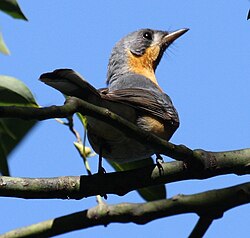
Smooth, neat plumage with slate-grey to bluish-grey upperparts and paler underparts. The breast and flanks show a warm buff to rufous wash grading to a paler belly. A clean white eye-ring forms distinct ‘spectacles’ on the otherwise grey face, and the throat is pale to whitish.
Diet
Primarily feeds on small arthropods such as beetles, flies, caterpillars, and spiders. It gleans prey from leaves and twigs and makes short aerial sallies to snatch flying insects. Occasionally takes small berries or other soft plant matter, but animal prey dominates. Foraging is methodical, with frequent pauses and short dashes between perches.
Preferred Environment
Forages in shaded rainforest midstory, along riparian corridors, and within mangrove edges. Often uses vine tangles and foliage clusters for gleaning and will move along edges where insects are abundant.


