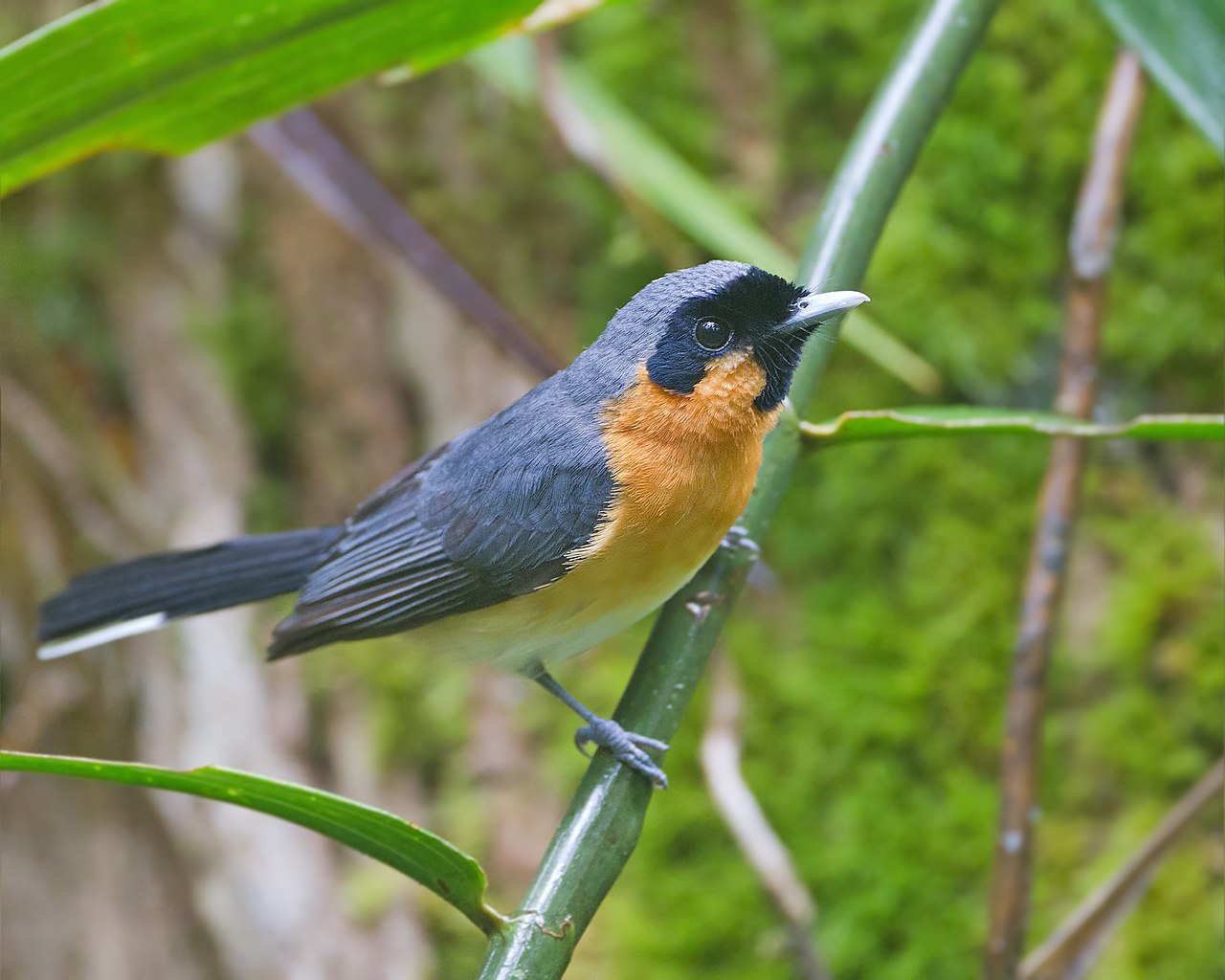
The spectacled imperial pigeon is a species of bird in the family Columbidae. It is endemic to the Maluku Islands.
Region
Maluku Islands, Indonesia
Typical Environment
Occupies primary and secondary evergreen forests of the North Maluku archipelago, favoring tall lowland and foothill canopy. Also uses forest edges, riverine forest, and fruiting trees in gardens and agroforests when undisturbed. It is largely arboreal, descending rarely except to drink. Numbers can be patchy, tracking seasonal availability of fruit. It may make short overwater flights between nearby islands.
Altitude Range
Sea level to 1200 m
Climate Zone
Tropical
Ease of Keeping
Beginner friendly: 1/5
Named for its conspicuous pale eye ring that looks like a pair of spectacles, this canopy-dwelling pigeon is an important seed disperser for forest trees, including figs and nutmegs. It often flies high over the forest to commute between fruiting trees and may gather in loose groups where food is abundant. Habitat loss and hunting can affect local numbers, but it persists in suitable lowland and foothill forests. Its mellow, booming calls carry far through the canopy.

Temperament
wary and arboreal
Flight Pattern
strong flier with rapid, direct wingbeats
Social Behavior
Usually seen singly, in pairs, or in loose small groups, especially at fruiting trees. Nests high in trees on a simple stick platform, typically laying a single egg like many pigeons. Courtship involves soft coos and short display flights within the canopy.
Migratory Pattern
Resident
Song Description
Vocalizations are low, resonant, booming coos delivered in spaced sequences that carry through the forest. Calls are most frequent at dawn and late afternoon and may be heard over long distances.
Plumage
Smooth gray to slate upperparts with a paler gray head and neck, subtly paler underparts, and darker flight feathers and tail with a contrasting terminal band. Feathers appear clean and uniform in tone, giving a sleek, large-pigeon look.
Diet
Primarily eats fleshy fruits, notably figs (Ficus) and nutmegs (Myristica), as well as other drupes and berries. Swallows fruits whole and later disperses seeds, playing a key role in forest regeneration. Will shift locally to track fruiting trees.
Preferred Environment
Feeds in the upper and mid canopy of mature and secondary forests. Also visits forest edges and fruiting trees in village groves where disturbance is low.