The smew is a species of duck and is the only living member of the genus Mergellus. The genus is closely related to Mergus and is sometimes included in it; genetic studies have shown that it is the sister taxon to Mergus and Lophodytes. The smew has hybridised with the common goldeneye.
Region
Northern Eurasia
Typical Environment
The smew breeds across the northern taiga from Scandinavia through northern Russia to eastern Siberia, favoring forested lakes and slow rivers. In winter it moves south and west to ice-free lakes, reservoirs, large rivers, sheltered coasts, and estuaries in Europe and Asia. It seeks clear waters where visibility aids underwater hunting. During cold spells it concentrates on open leads and coastal brackish areas. Migratory movements are strongly influenced by freeze-up and thaw cycles across its range.
Altitude Range
Sea level to 1500 m
Climate Zone
Continental
Ease of Keeping
Beginner friendly: 2/5
The smew is the only living member of the genus Mergellus and is closely related to the mergansers. Males are famed for their striking black-and-white pattern, while females and immatures show a rich chestnut head and grey body. It nests in tree cavities, often using old woodpecker holes or nest boxes near forested lakes and rivers. Smew have been recorded hybridizing with the common goldeneye.


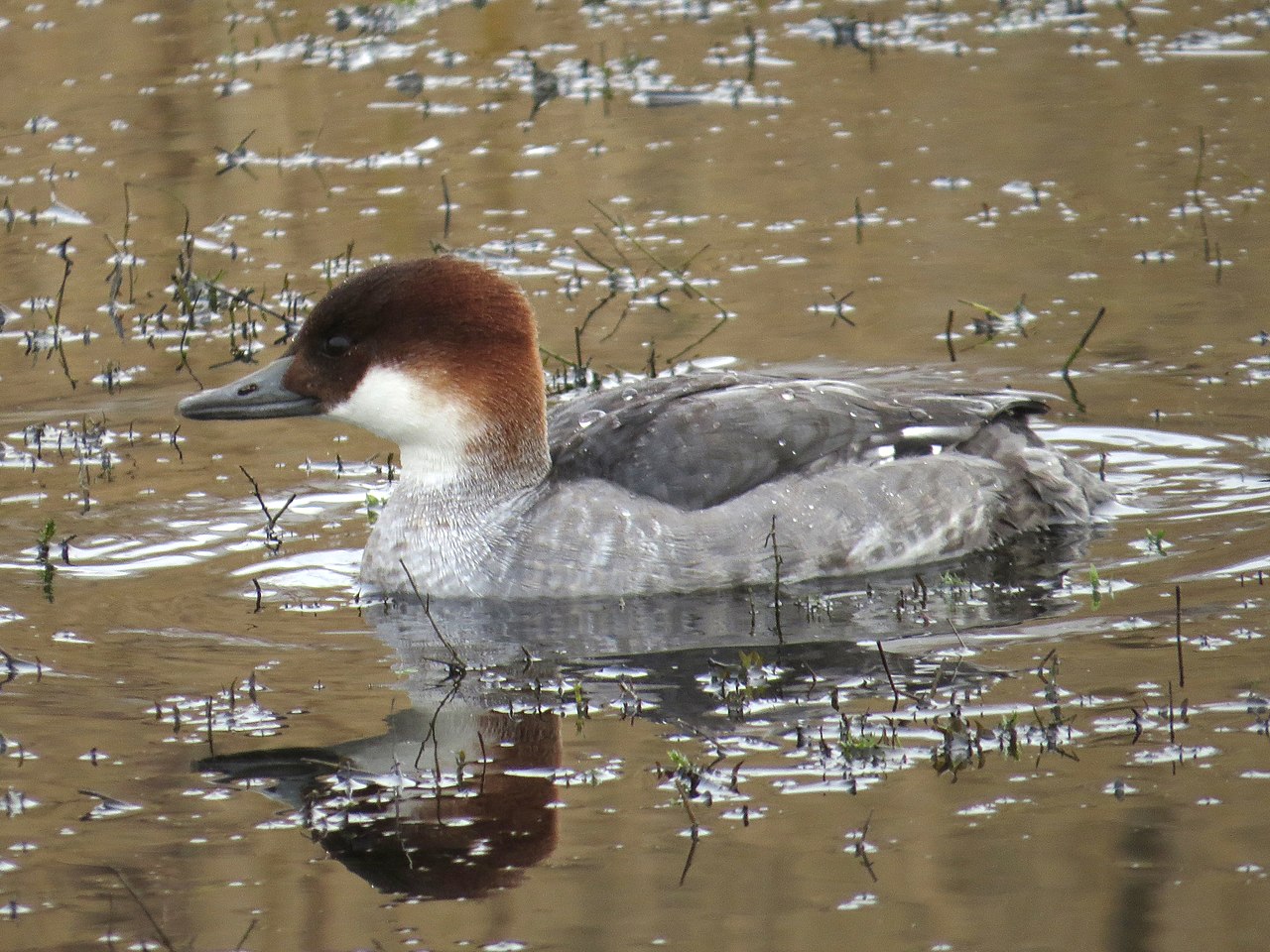
Mergellus albellus female, Northumberland, England.


Temperament
wary but sociable in winter
Flight Pattern
strong, fast direct flight with rapid wingbeats
Social Behavior
Outside the breeding season smew often gather in small to medium-sized flocks on open water, sometimes alongside other diving ducks. They nest in tree cavities near water, frequently using old woodpecker holes or nest boxes, and form monogamous pairs during the breeding season. Broods are led to nearby water soon after hatching, and females are attentive but secretive.
Migratory Pattern
Seasonal migrant
Song Description
Generally quiet, the male gives soft, whistling notes and mellow trills during courtship displays. Females utter harsher chatters and low grunts, especially when alarmed or calling to ducklings.
Plumage
Male shows crisp white plumage with bold black mask, fine black lines on the head and back, and contrasting black scapulars; female/immature is grey with a rich chestnut head and white throat. Feathers appear smooth and tight, giving a sleek, clean-lined look. In all plumages the compact crest can be slightly raised.
Diet
Primarily a fish-eater, taking small fish such as sticklebacks, smelts, and fry of perch and roach. It also consumes aquatic insects, crustaceans, and other invertebrates when available, especially outside peak fish availability. Smew dive and pursue prey underwater using their feet, often swallowing small fish below the surface. Clear water is preferred to locate prey visually.
Preferred Environment
Feeds on clear lakes, slow-moving rivers, reservoirs, and sheltered coastal lagoons or estuaries in winter. It often forages near the edges of ice or along vegetated margins where small fish concentrate.