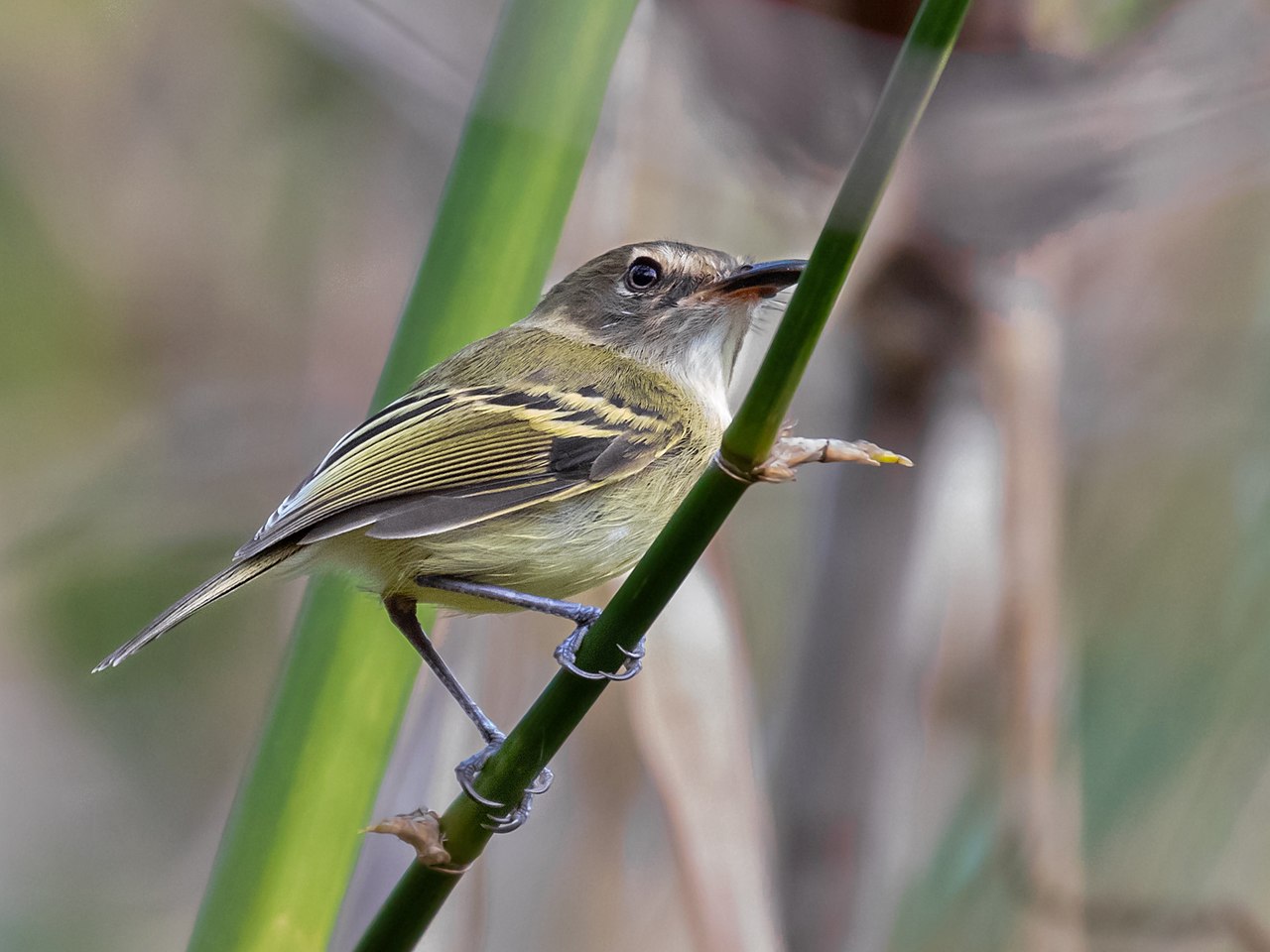
The smoky warbler is a species of Old World warbler in the family Phylloscopidae. It is found in the eastern Himalayas, the Tibetan Plateau, and as an occasional vagrant to Myanmar.
Region
Himalayas and Tibetan Plateau
Typical Environment
Occurs from Nepal and Bhutan through northeastern India into southern Tibet, with occasional vagrants to northern Myanmar. Favors dense montane broadleaf and mixed forests, especially rhododendron, birch, and oak scrub, as well as bamboo thickets and forest edges. During the breeding season it stays in cool, moist, high-elevation thickets; in winter it may move downslope to slightly more open woodland and secondary growth. It tolerates shrubby gullies and clearings near water and often forages along trails and ridgelines.
Altitude Range
1800–3700 m
Climate Zone
Highland
Ease of Keeping
Beginner friendly: 1/5
A small leaf warbler of the eastern Himalayas and Tibetan Plateau, the smoky warbler keeps low and mid-level in dense montane scrub and forest edges. It often joins mixed-species flocks outside the breeding season and makes short, quick foraging sallies. Its thin, high-pitched trills can be hard to localize in windy alpine rhododendron thickets. It undertakes local altitudinal movements, descending to lower slopes in winter.

Temperament
active and somewhat skulking
Flight Pattern
short rapid wingbeats
Social Behavior
Breeds in pairs, building a domed or cup nest low in dense vegetation or on the ground in thick cover. Outside the breeding season it often forages singly or in small groups and regularly joins mixed-species flocks with other montane insectivores. Territorial during breeding, with males singing from concealed perches.
Migratory Pattern
Partial migrant
Song Description
Song is a thin, rapid, high-frequency trill or series of sibilant notes that can be easily masked by wind. Calls include sharp, high 'tsip' notes and soft, rapid twittering during foraging.
Plumage
Dusky, sooty-toned underparts with olive-brown to dark brown upperparts and a somewhat smudgy appearance overall; lacks obvious wing bars.
Diet
Feeds primarily on small insects and their larvae, including caterpillars, aphids, and beetles, as well as spiders and other tiny arthropods. Gleans from leaves and twigs, often hover-gleaning to pick prey from the undersides of foliage. Occasionally makes short sallies to catch disturbed insects in mid-air.
Preferred Environment
Forages in dense shrubs, rhododendron thickets, bamboo, and along forest edges from the understory to mid-canopy. Frequently works along sheltered gullies and leeward sides of ridges where insects concentrate.