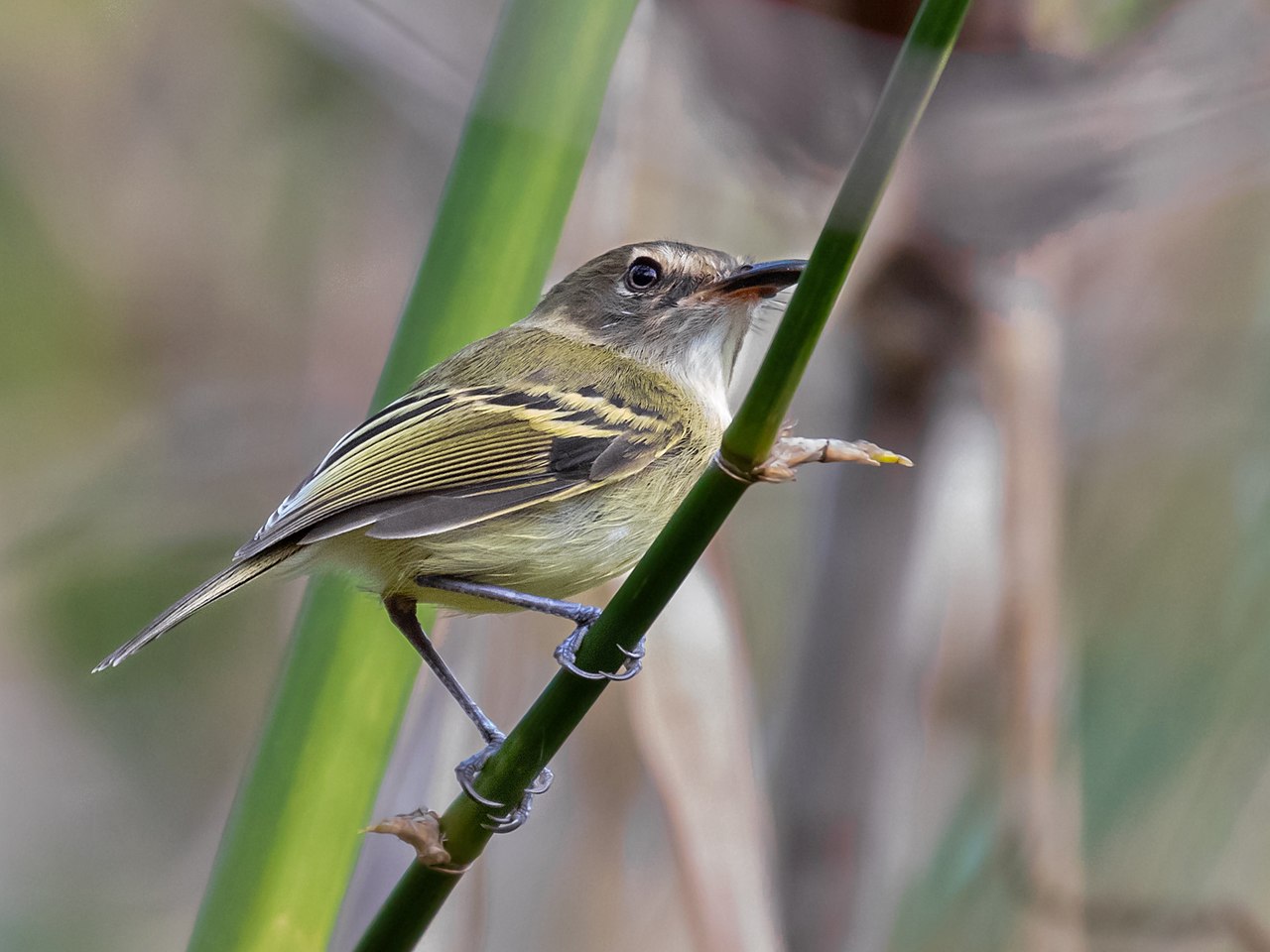
The smoke-colored pewee is a species of bird in the family Tyrannidae. The species is characterized by a uniform dusky-grey plumage.
Region
Andes and Central American highlands
Typical Environment
Occurs from the highlands of Costa Rica and western Panama south through the Andes of Venezuela, Colombia, Ecuador, Peru, and Bolivia, extending locally into northwestern Argentina. It inhabits humid montane and cloud forests, forest edges, and second growth, and also uses riparian corridors and clearings with scattered trees. Birds often forage from mid-story to canopy level, using open perches on exposed branches. It adapts to lightly disturbed habitats, including shade-grown plantations, when nearby forest persists.
Altitude Range
800–3200 m
Climate Zone
Highland
Ease of Keeping
Beginner friendly: 1/5
This tyrant flycatcher is noted for its uniform smoke-grey plumage and perches quietly before sallying out to catch flying insects. It favors montane and cloud forests and is often seen along edges and clearings. Its soft, whistled phrases are most often heard at dawn and dusk. Despite a wide range, it can be locally uncommon where mature forest has been lost.


Contopus fumigatus, Smoke-colored Pewee (juveniles) perched on wire

Smoke-colored pewee displays its slight crest and grey coloration

Smoke-colored Pewee perches on a small twig, displaying its size. 2015-06-04. Alambi Cloud Forest Lodge, Tandayapa, Pichincha Province, Ecuador
Temperament
solitary and territorial
Flight Pattern
short rapid wingbeats with frequent sallies from exposed perches
Social Behavior
Typically seen alone or in pairs during the breeding season, defending feeding and nesting territories. Builds a small cup nest on a horizontal limb or fork, often camouflaged with moss and lichens. Clutch size is small and both adults may participate in care. Outside breeding, it may loosely associate with mixed-species flocks while foraging.
Migratory Pattern
Resident
Song Description
Song consists of soft, whistled phrases and thin, plaintive notes delivered from a high perch, most active at dawn and dusk. Calls include short, dry chips and thin peee or pwee notes. Vocalizations carry modestly through the forest but are distinctive when nearby.
Plumage
Uniform dusky to smoke-grey overall with slightly paler throat and belly; wings show faint, narrow wingbars and subtle edging. Feathers appear smooth and satiny rather than streaked or mottled.
Diet
Primarily captures flying insects such as flies, beetles, wasps, and moths in aerial sallies from a perch. Occasionally gleans insects from foliage and may take small berries opportunistically. Feeding bouts are characterized by short flights out and back to the same or nearby perch.
Preferred Environment
Forages along forest edges, light gaps, and semi-open mid-story to canopy levels where flight corridors are available. Often uses exposed dead branches, snags, or high outer limbs as hunting stations, including along streams and trails.