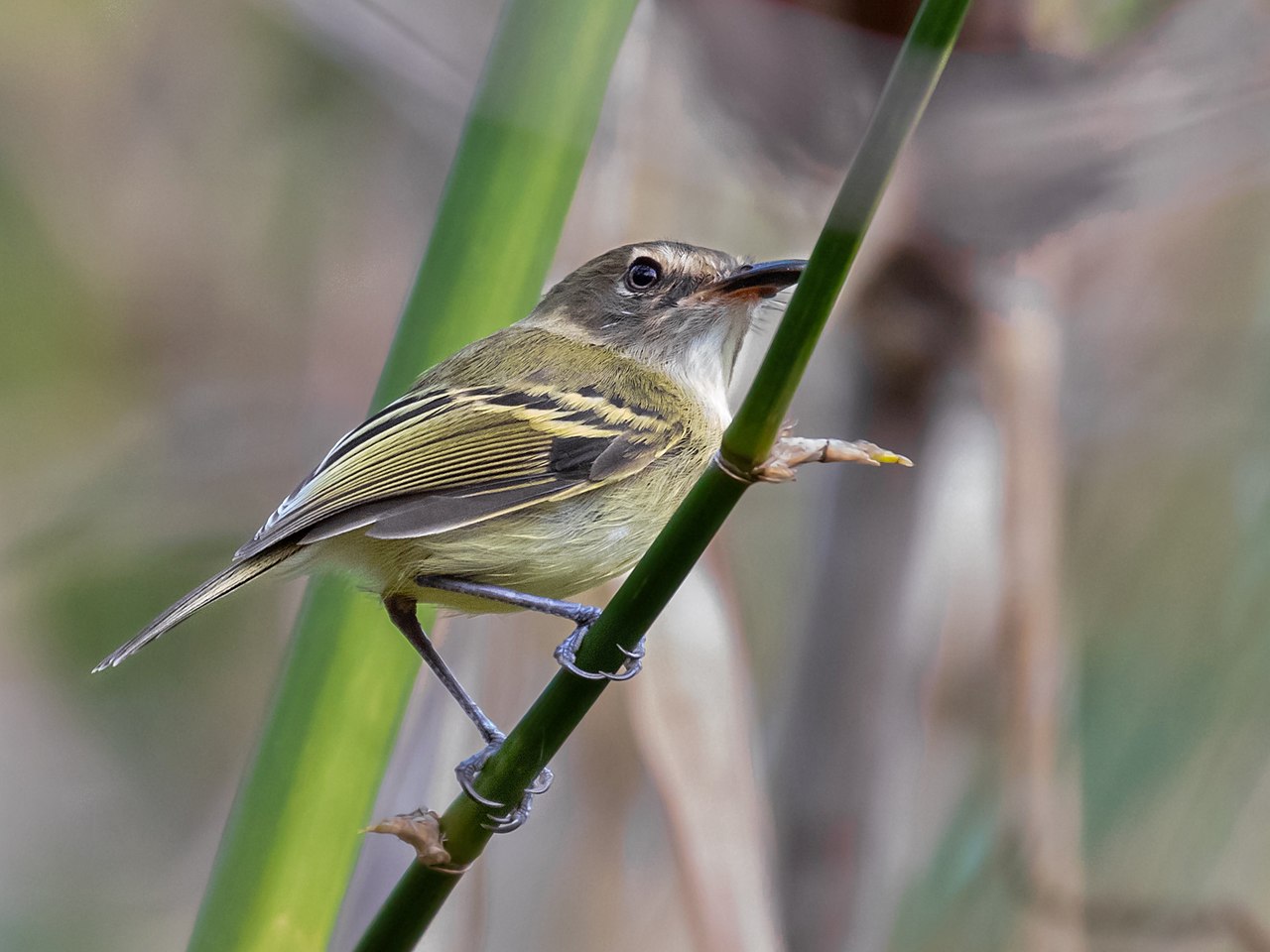
The smoky bush tyrant is a species of bird in the family Tyrannidae, the tyrant flycatchers. It is found in Colombia, Ecuador, Peru and Venezuela.
Region
Northern Andes
Typical Environment
Occurs in humid montane and cloud forests, forest edges, and shrubby clearings in the Andes of Colombia, Ecuador, Peru, and Venezuela. It favors gaps, landslides, and roadsides with scattered perches overlooking open space. Often found along streams and ravines where flying insects concentrate. Uses secondary growth and partially disturbed habitats, provided nearby forest cover remains. Typically encountered singly or in pairs.
Altitude Range
1800–3500 m
Climate Zone
Highland
Ease of Keeping
Beginner friendly: 1/5
The smoky bush tyrant is a large, dark flycatcher of Andean cloud forests, often seen perched upright on exposed branches along forest edges and landslides. It hunts by sallying out to snatch flying insects, then returning to the same lookout. Despite its size among flycatchers, it can be inconspicuous due to its sooty coloration and quiet, thin calls.


Temperament
solitary and territorial
Flight Pattern
short rapid wingbeats with quick sallies from exposed perches; strong direct flights between perches
Social Behavior
Usually seen alone or in pairs, maintaining territories along forest edges and steep ravines. Nests are placed in sheltered sites such as ledges, banks, or dense shrubs near open gaps. Both members of a pair may defend the nesting area. Associates loosely with mixed-species flocks only at edges.
Migratory Pattern
Resident
Song Description
Vocalizations are soft, thin whistles and short, high-pitched notes delivered from exposed perches. Phrases are repeated at intervals and can be easily overlooked amid louder Andean species.
Plumage
Mostly sooty to slate-gray with a slightly paler throat and breast; wings and tail dark with subtle brownish edging; undertail coverts may show a faint warmer tone.
Diet
Feeds primarily on flying insects such as flies, beetles, and wasps, captured by aerial sallies from prominent perches. Will also glean insects from foliage and branches during short forays. Occasionally takes other arthropods and may consume small berries opportunistically.
Preferred Environment
Hunts along forest edges, open canopy gaps, landslides, and roadsides where flight space allows aerial capture. Often forages above ravines and streams where insects are abundant, returning repeatedly to favorite perches.