
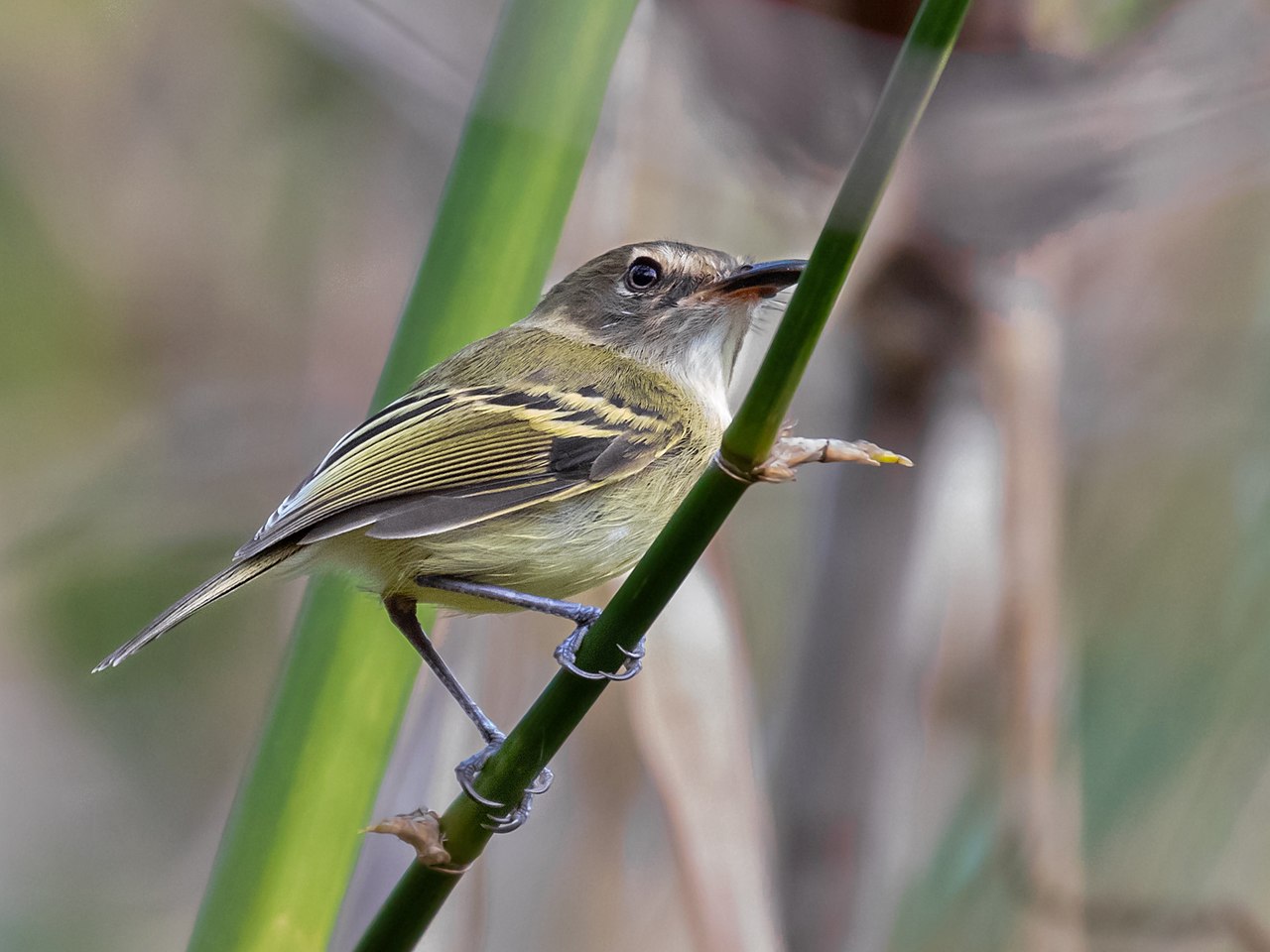
The smoky-fronted tody-flycatcher is a species of bird in the family Tyrannidae, the tyrant flycatchers. It is found in Brazil, French Guiana, Suriname, and Venezuela.
Region
The Guianas and northern Amazon Basin
Typical Environment
Occurs in lowland humid forests across Brazil (northern), French Guiana, Suriname, and parts of Venezuela. Favors forest edges, secondary growth, riverine thickets, vine tangles, and light gaps within terra firme and seasonally flooded forests. Common along streams and in shrubby understory near clearings and old roads. Typically found at low to mid-understory levels, often 1–6 m above ground. It tolerates moderate habitat disturbance and persists in mosaics of secondary woodland and plantations if dense understory is present.
Altitude Range
0–800 m
Climate Zone
Tropical
Ease of Keeping
Beginner friendly: 1/5
This tiny tyrant flycatcher hunts insects with quick sallies from low perches and often joins mixed-species flocks in the forest understory. Its name refers to the dusky, “smoky” wash on the forehead, a helpful field mark among similar tody-flycatchers. It builds a small, enclosed pendant nest suspended from slender branches or vine tangles. Pairs are frequently encountered together, calling back and forth as they forage.


Temperament
active and alert
Flight Pattern
short rapid wingbeats
Social Behavior
Usually seen singly or in pairs, maintaining small territories within dense understory. Frequently accompanies mixed-species flocks, especially with other understory insectivores. The nest is a small, enclosed pendant purse woven from plant fibers and suspended from fine branches or vines, with both members of the pair involved in nesting activities.
Migratory Pattern
Resident
Song Description
Gives thin, high-pitched tsip notes and soft trills delivered in short series. The voice is subtle but persistent, often used in antiphonal exchanges between pair members. Alarm calls are sharper and more insistent when disturbed near the nest.
Plumage
Olive-green upperparts with a dusky, smoky-washed forecrown, pale yellow underparts, and two narrow pale wingbars. The wings and tail are darker with light edging. Feathers appear neat and compact, suiting its tiny, rounded profile.
Diet
Feeds primarily on small insects and other arthropods such as flies, beetles, tiny caterpillars, and spiders. Captures prey by short sallies from low perches and by gleaning from leaves and twigs. Often targets prey on the underside of foliage and within vine tangles. Rarely, it may take very small berries when insect prey is scarce.
Preferred Environment
Forages in dense understory of forest edges, young second growth, river margins, and shrubby clearings. Typically uses perches 1–6 m above ground, moving methodically through tangles and low branches. Readily exploits light gaps and edge habitats where insects are abundant.


