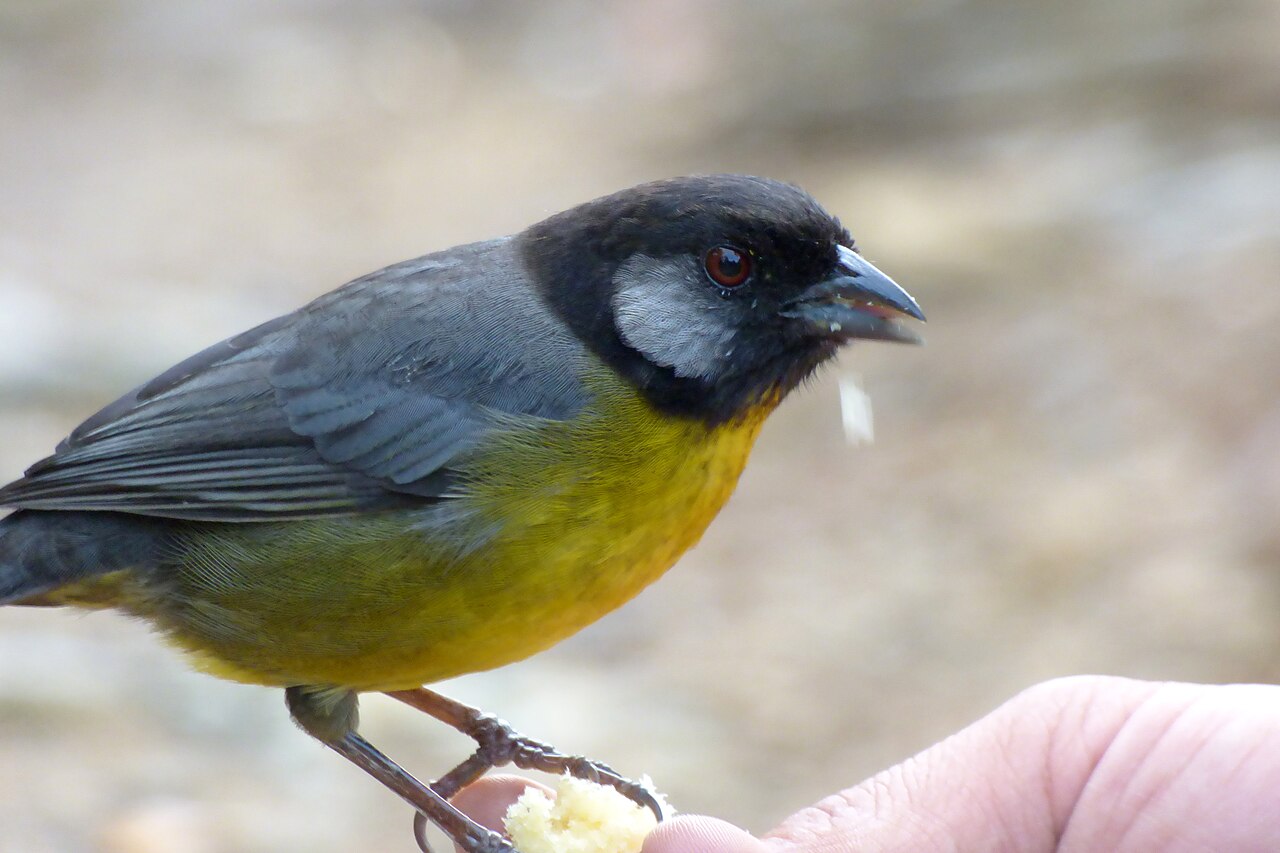
The Santa Cruz shrikebill, or Nendo shrikebill, is a songbird species in the family Monarchidae. The Santa Cruz shrikebill was split from the black-throated shrikebill in 2008 but some authorities still consider it to be its subspecies, C. n. sanctaecrucis.
Region
Southwest Pacific (Solomon Islands)
Typical Environment
Occurs on the Santa Cruz (Nendö) group, where it inhabits primary and mature secondary lowland rainforest as well as dense humid thickets. It typically forages in the lower to middle strata, especially in vine tangles, along trunks, and among dead leaf clusters. It may tolerate lightly disturbed forest edges and old gardens if sufficient understory remains. Riparian forest with dense vegetation is also used.
Altitude Range
Sea level to 500 m
Climate Zone
Tropical
Ease of Keeping
Beginner friendly: 1/5
Also called the Nendo shrikebill, it is a monarch flycatcher endemic to the Santa Cruz Islands of the Solomon Islands. It was split from the black-throated shrikebill in 2008, though some authorities still treat it as a subspecies (C. nigrogularis sanctaecrucis). Its hefty, laterally compressed bill is used to pry bark and probe dead leaves for hidden insects. The species is elusive and favors dense lowland forest, making it easy to overlook.
Temperament
shy and skulking
Flight Pattern
short rapid wingbeats between perches
Social Behavior
Usually found singly, in pairs, or family groups, often keeping to dense cover. Likely territorial during breeding, with pairs maintaining small home ranges. Cup nest placed low to mid-level in dense vegetation; both parents are thought to care for the young, as in related monarchs.
Migratory Pattern
Resident
Song Description
Gives sharp, clear whistles interspersed with harsher chack notes from within thickets. The song is simple and repeated, carrying modestly through forest understory.
Plumage
Mostly dull olive-brown above with paler, buffy underparts and a slightly duskier throat; feathers appear plain with minimal streaking. The texture is smooth with a subtle gloss on the upperparts. The heavy, laterally compressed bill is conspicuous.
Diet
Primarily takes insects and other arthropods such as beetles, caterpillars, and spiders. Uses its strong bill to pry bark, probe clusters of dead leaves, and glean from vines and twigs. Occasionally sallies short distances to snatch prey and may take small invertebrates from the ground litter.
Preferred Environment
Forages in dense understory and midstory of humid forest, especially in vine tangles and tangled secondary growth. Often works along trunks and branches, inspecting dead leaf packets and crevices.